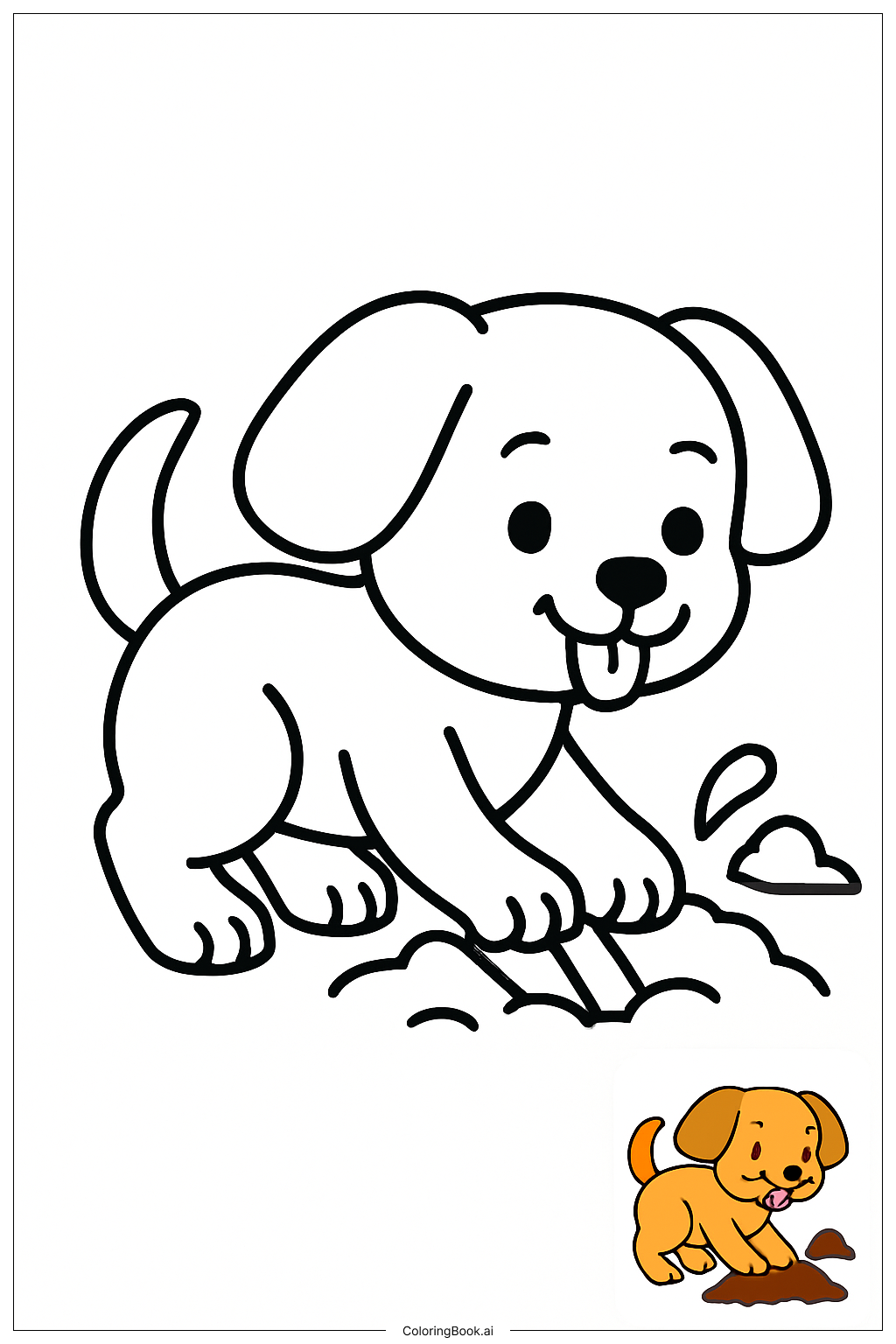
Coloring tips: How to color Dog Digging Hole coloring page well?
Start with the dog's body before moving to the background. Choose a warm brown, golden yellow, or classic black and white mix for the dog's fur. Use short, curved strokes to suggest fur texture. For the dirt and soil, use shades of tan, brown, and dark sienna to show depth in the hole. The flying dirt clumps can be lighter brown at the edges to show motion. Color the grass around the scene in bright green, with darker green for shadows near the ground. The dog's nose can be dark brown or black, and its eyes a warm amber or brown. Add a light blue sky in the background if space allows. Keep the overall palette warm and earthy to give the scene a fun outdoor feel. Kids can also get creative and use any colors they like to make the dog their own special pet.
Coloring challenges: Which parts are difficult to color and need attention for Dog Digging Hole coloring page?
• Fur Texture and Layering: The dog's coat has many fine lines and overlapping fur details. Staying within each small section without smudging into neighboring areas takes patience. Using a sharp colored pencil or a fine-tipped marker will help keep the fur looking neat and realistic instead of blotchy.
• Soil and Dirt Shading: The hole and the flying dirt clumps require blending multiple shades of brown to look three-dimensional. Using only one flat brown will make the scene look dull. Try layering light tan first, then adding medium brown, and finishing with dark brown or sienna in the deepest shadow areas to create a convincing earthy look.
• Small Detail Areas: The dog's face includes small features like the eyes, nose, and mouth that are easy to accidentally color over. These tiny areas need careful control, especially around the pupils and the outline of the muzzle. A fine-tipped tool works best here to avoid losing the expressive details that bring the dog to life.
• Motion and Flying Dirt: The dirt flying up around the dog adds energy to the image but can be tricky to color. Each clump of dirt needs subtle shading to look like it is actually moving through the air. Leaving small white highlights on each dirt piece can help suggest movement and light catching the particles mid-flight.
• Grass and Ground Contrast: Separating the green grass from the brown earth clearly is important so the scene does not look muddy. Using a clean edge where the grass meets the soil, and choosing clearly different tones for each area, will make the whole image pop with clarity and depth.
Benefits of coloring books: Advantages of drawing Dog Digging Hole coloring page
Coloring this dog digging scene offers a wide range of fun and developmental benefits for children. Focusing on the small details of the dog's fur, face, and flying dirt helps build fine motor skills and hand control, which are important for writing and everyday tasks. Choosing colors for the fur, soil, and grass encourages creative thinking and decision-making in a low-pressure way. Kids learn about color mixing and shading as they figure out how to make the dirt look deep or the grass look bright. The playful subject matter keeps young colorists engaged and motivated to finish the page. Completing the image also builds a healthy sense of accomplishment and pride. For children who love animals, this page sparks imagination and may inspire storytelling about why the dog is digging and what it might find. The focused, quiet activity of coloring also helps children practice patience and concentration, making it a wonderful screen-free activity for kids of all skill levels.