Coloring tips: How to color Dog Vet Visit coloring page well?
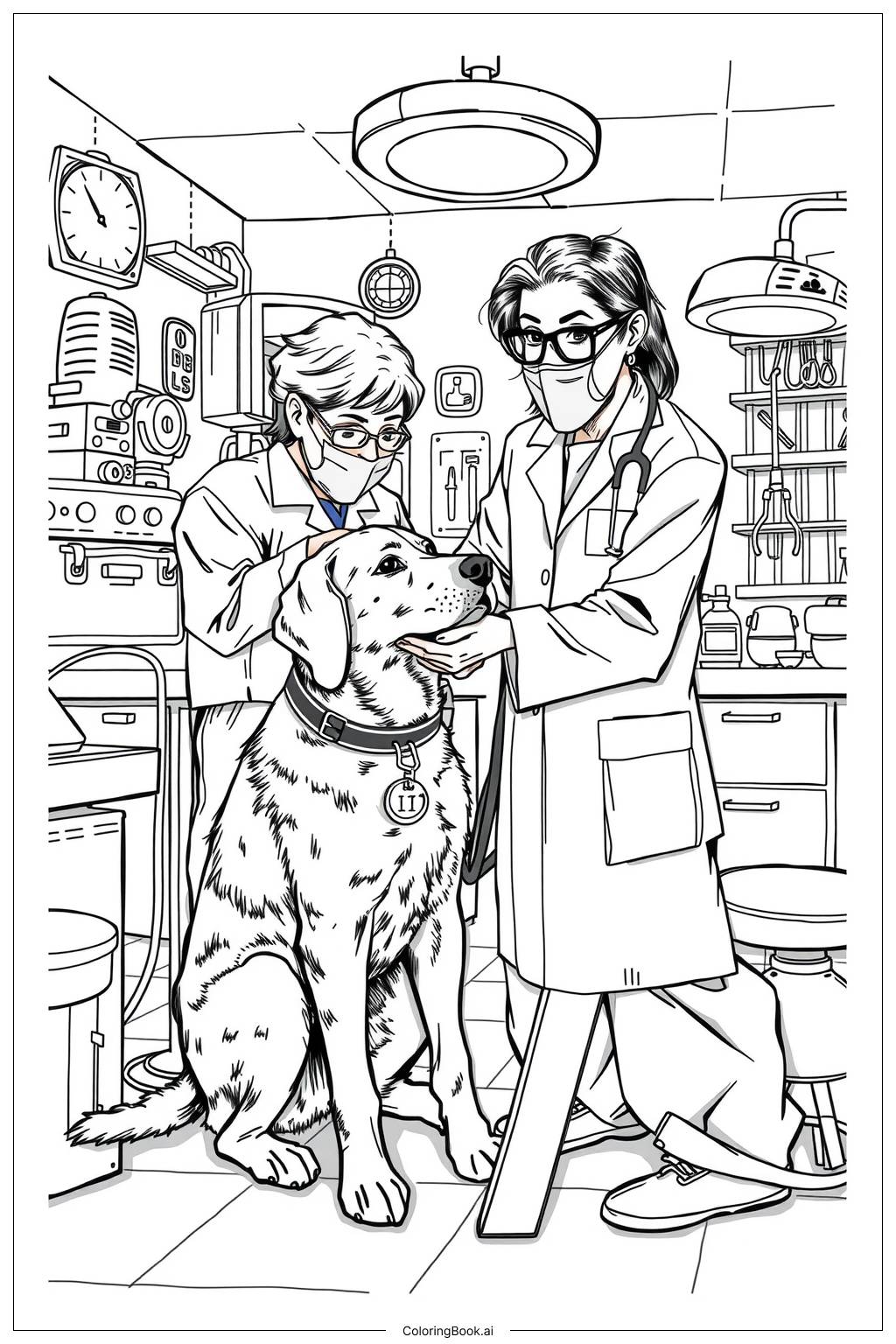
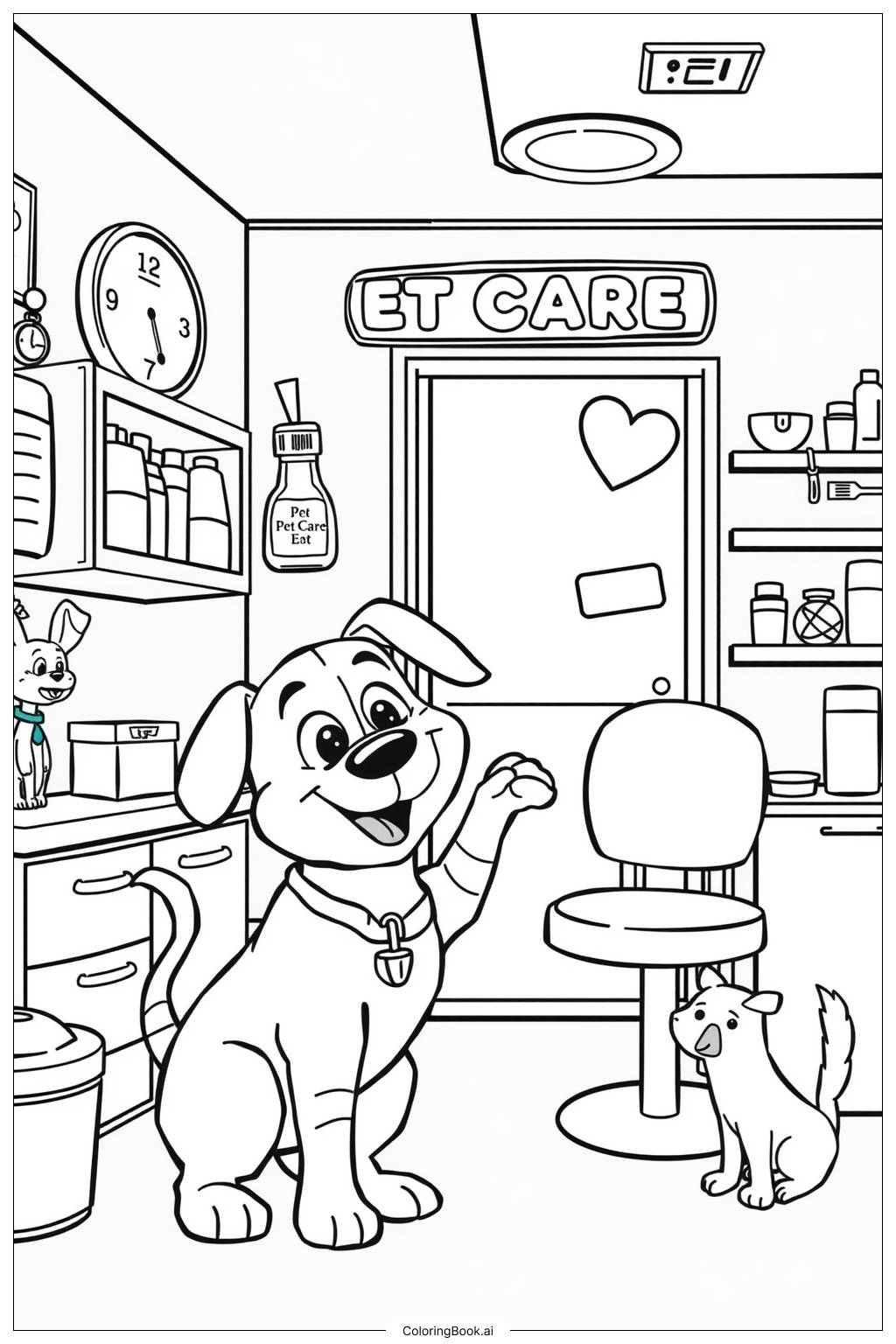
Start with the dog's fur. Use warm browns, golden yellows, or soft creams depending on the breed you imagine. Add patches of darker brown or black for extra detail. Color the veterinarian's coat bright white, and use navy blue or dark green for the scrubs underneath. Give the vet a warm skin tone and friendly features. Use light gray or silver for the stethoscope. Color the examination table with a cool light blue or soft green covering. For the background, use soft neutral tones like beige or pale yellow for the walls. Add pops of color to small details like the treat jar, medical posters, and the overhead lamp. Keep the overall palette cheerful and bright to match the happy mood of the scene.
Coloring challenges: Which parts are difficult to color and need attention for Dog Vet Visit coloring page?
• Dog Fur Texture: The dog's coat has layered fur lines that can be tricky to color neatly. Use short, light strokes that follow the direction of the fur to create a realistic and fluffy look. Blending two shades of the same color adds depth without making the fur look flat.
• Small Clinic Details: The scene includes many tiny objects like the stethoscope, treat jar, wall posters, and lamp. These small areas require a fine-tipped marker or a sharpened colored pencil to fill in accurately without going outside the lines. Rushing through these details can make the overall image look messy.
• White Coat Shading: Coloring the veterinarian's white coat is deceptively difficult. Pure white can look unfinished, so adding very light gray or pale blue shading along the edges and folds gives the coat dimension and makes it look more realistic.
• Skin Tones and Facial Features: The faces of both the vet and the pet owner require careful color choices. Skin tones need gentle blending to look natural. Facial features like eyes, lips, and eyebrows are very small, so using the sharpest pencil tip you have will help keep them clean and expressive.
• Background Balance: The clinic background has multiple elements competing for attention. Choosing colors that are lighter and less saturated for the walls and floor helps the main characters — the dog and the vet — stand out as the clear focal point of the image.
Benefits of coloring books: Advantages of drawing Dog Vet Visit coloring page
Coloring this Dog Vet Visit page offers a wonderful mix of fun and learning for kids of all ages. It helps children become familiar with what happens during a vet visit, making the experience feel less scary and more exciting. This builds emotional comfort and positive associations with animal health care.
For younger children, filling in the large, simple shapes of the dog and the vet's coat builds fine motor skills and hand-eye coordination. Choosing colors and staying within the lines develops focus and patience.
For older kids, tackling the smaller details like the stethoscope, medical tools, and facial expressions encourages precision and attention to detail. It also sparks creativity as they decide on the dog's breed, coat color, and the mood of the scene.
Coloring together as a family or in a classroom creates great opportunities to talk about pet care, kindness to animals, and the important role veterinarians play. It turns a simple art activity into a meaningful conversation starter.
Overall, this page nurtures creativity, builds knowledge, and provides a calm, satisfying activity that children and adults alike can enjoy at their own pace.