Coloring tips: How to color Western Desert Road Sign coloring page well?
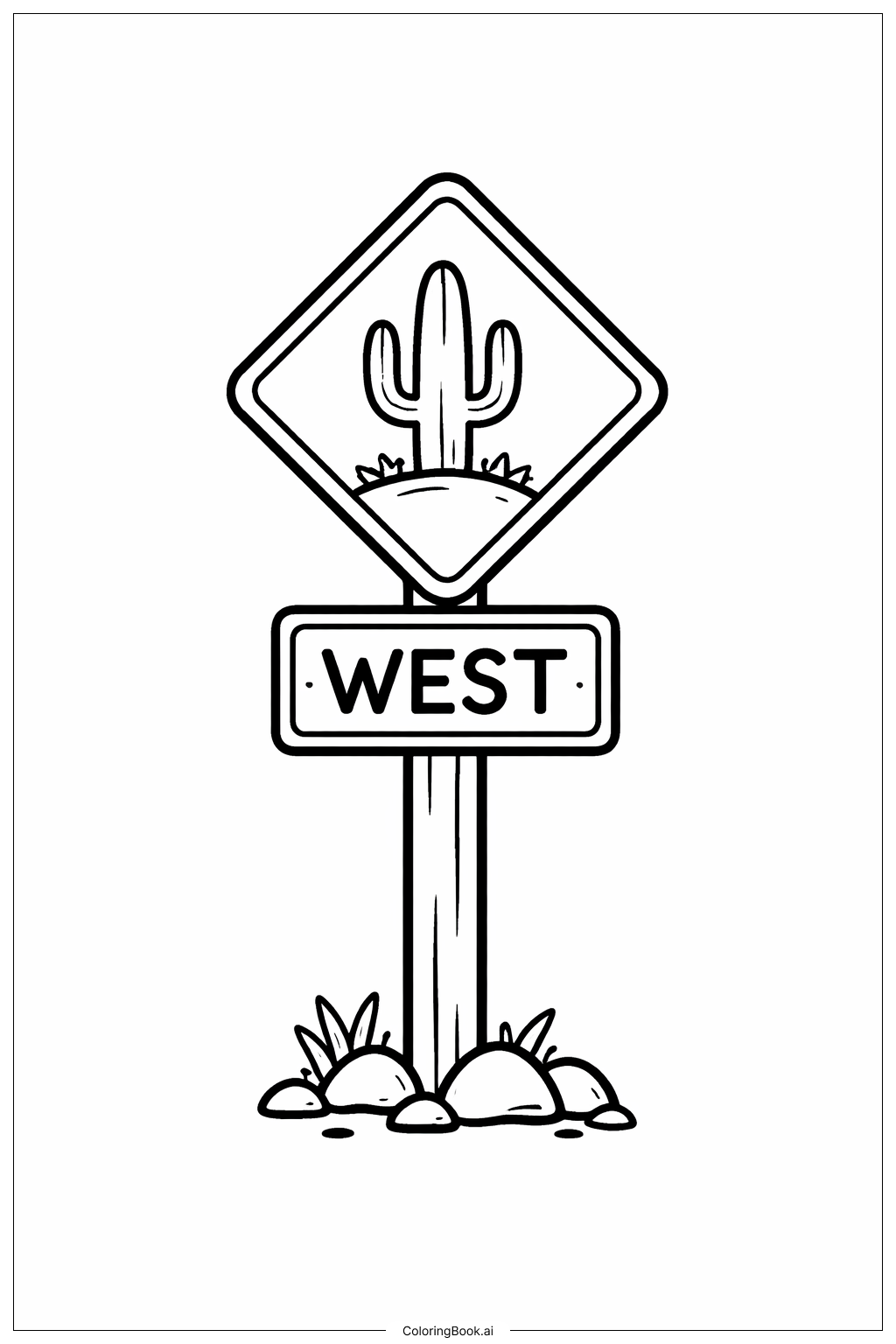
Start with the sky. Use a bright blue or a warm gradient of orange and pink for a sunset effect. Color the sun yellow or deep orange. For the desert ground, try sandy tan, light brown, or dusty gold tones. The cacti look great in shades of green, from bright lime to deep forest green. Add some texture to the rocks using gray, brown, and beige. The road sign post can be colored in light brown or dark wood tones. Use darker shades to show cracks and wear on the wood. The sign itself can be painted in white, yellow, or faded red, depending on the mood you want. For the distant mesas, try muted purples and reds. Tumbleweeds work well in pale tan or dusty gray. Feel free to use bold, bright colors or go for a more realistic, earthy palette. Both approaches look amazing on this desert scene. Have fun and make it your own!
Coloring challenges: Which parts are difficult to color and need attention for Western Desert Road Sign coloring page?
• Weathered Wood Texture: The road sign post has a worn and aged look with cracks, knots, and uneven surfaces. Recreating this texture with color requires using multiple shades of brown and carefully layering them. Beginners may find it tricky to blend these tones smoothly without making the wood look flat or too uniform.
• Desert Ground Gradients: The sandy desert floor shifts in color from bright highlights to deep shadows. Capturing this natural gradient — from pale gold in sunlit areas to darker amber in shaded spots — takes patience and careful blending. Using only one flat color will make the ground look dull and two-dimensional.
• Cactus Details and Shading: Cacti have rounded, three-dimensional forms with subtle ridges and spines. Coloring them realistically means adding highlights on one side and shadows on the other. The small spine details are especially fine and require a sharp pencil or thin marker to color carefully without smudging.
• Background Depth and Distance: The mesas and distant hills in the background need to appear far away. This is achieved by using lighter, cooler, and less saturated colors the farther back they go. Getting this sense of depth right — called atmospheric perspective — is a challenge, especially for younger artists still learning about spatial relationships in art.
• Sign Lettering and Border: The road sign contains text and a border frame. Staying inside the fine lines of the letters while keeping colors neat and consistent is one of the hardest parts of this image, requiring a steady hand and good control over coloring tools.
Benefits of coloring books: Advantages of drawing Western Desert Road Sign coloring page
Coloring this Western Desert Road Sign page offers a wonderful mix of fun and learning. Kids and adults alike can explore the rich colors of the American Southwest while building important skills along the way. For younger children, carefully filling in the cacti, rocks, and sandy ground helps develop fine motor skills and hand-eye coordination. Staying within the lines of the sign letters is great practice for building focus and concentration. Older kids and adults can challenge themselves with shading, blending, and creating depth across the desert landscape, which strengthens their understanding of color theory and artistic technique. The scene also sparks imagination and curiosity. Children may want to learn more about desert ecosystems, frontier history, and the culture of the American West after coloring this page. It's a quiet, creative activity that reduces stress and encourages mindfulness — a perfect break from screens. Whether colored with crayons, colored pencils, or markers, this page gives everyone a chance to express themselves through art while exploring an iconic piece of Western scenery. It's both educational and deeply enjoyable for all ages.