Coloring tips: How to color Western Native And Rider coloring page well?
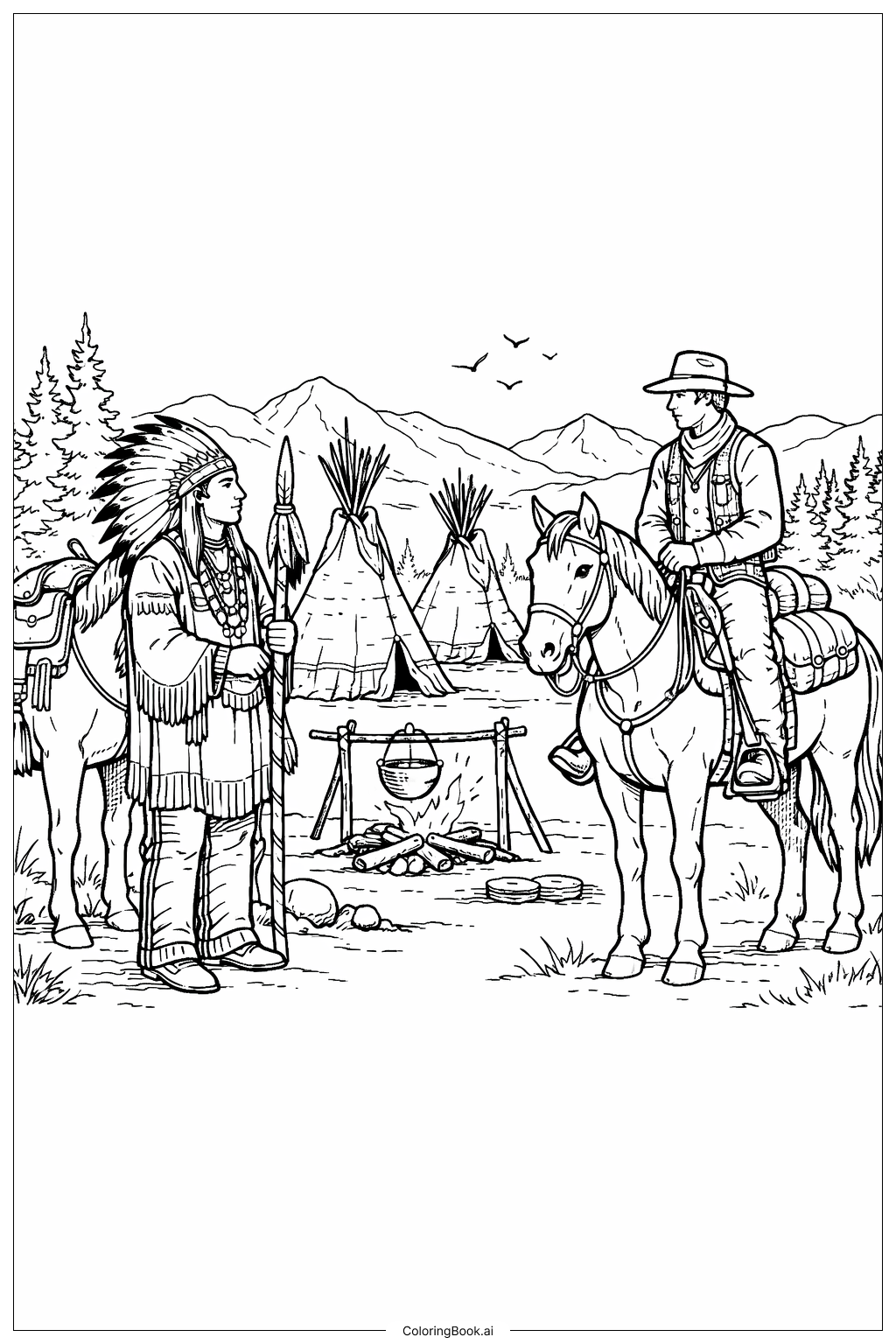
Use bright and warm colors for the Native American man's clothing and feathers, such as reds, yellows, and blues. You can color the cowboy’s clothes with earthy tones like browns, tans, and greens. Give the horses natural colors like brown, black, or white. For the teepees, use patterns with different colors to show decoration. The campfire can be colored with oranges and reds, and the pot can be dark gray or black. The trees should be green, and the mountains can be light blue or gray with white peaks. The sky should be light blue with black or dark birds.
Coloring challenges: Which parts are difficult to color and need attention for Western Native And Rider coloring page?
1. The details in the Native American's headdress and clothing require careful coloring to keep patterns clear. 2. The cowboy's clothing has many parts like vest, shirt, and boots that need to be colored separately. 3. The horses’ bodies, tails, and manes need smooth and natural coloring to look realistic. 4. The campfire and hanging pot have small shapes that need attention to avoid coloring outside the lines. 5. The background with trees, mountains and birds has many small details that might be tricky to color evenly.
Benefits of coloring books: Advantages of drawing Western Native And Rider coloring page
Coloring this picture helps improve focus and attention to detail. It also teaches about different cultures and history of the Western frontier. Coloring patterns on clothing and the feathers can enhance creativity. Using different colors for horses and nature helps with color recognition and blending skills. This activity is fun and relaxing, giving children a chance to experiment with colors and develop fine motor skills.