Coloring tips: How to color Science Volcano Model coloring page well?
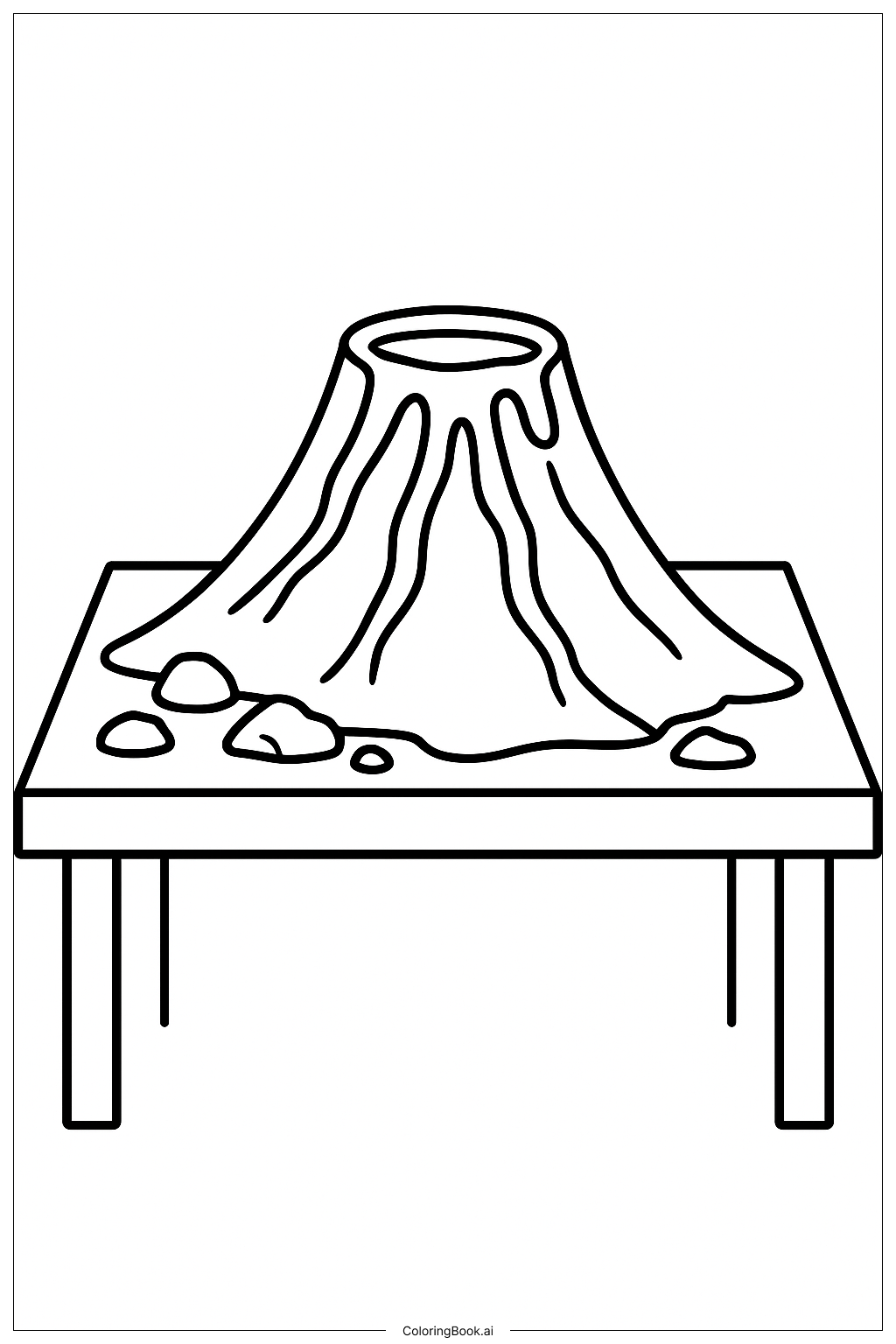
Use shades of brown and gray for the table and rocks to make them look natural. The volcano itself can be colored with reds, oranges, and yellows to show hot lava and volcanic activity. Use darker colors near the top and lighter colors as you move downward to show the flow of lava. The lines representing lava flows can be bright red or orange to stand out. You can add some green around the base to show plants growing after the eruption. Try blending colors to give the volcano a burning effect.
Coloring challenges: Which parts are difficult to color and need attention for Science Volcano Model coloring page?
1. Coloring the lava flows may be tricky because you need to choose bright colors like red and orange, and blend them well to show the flow of lava.
2. The table's straight lines and legs need careful coloring to avoid going outside the lines and to show the three-dimensional shape.
3. Making the rocks look natural with shading can be challenging, as you need to use different gray and brown tones.
4. Showing the texture of the volcano's surface with the lines might require careful coloring to keep the lines clear while filling the areas between them.
5. Balancing bright lava colors with more muted table and rock colors might be difficult to make the picture look good overall.
Benefits of coloring books: Advantages of drawing Science Volcano Model coloring page
Coloring this volcano model helps children learn about science while developing their fine motor skills. They practice using colors to show natural elements like lava and rocks, which improves their understanding of nature and volcanic activity. The activity encourages creativity in blending warm colors for lava and cool colors for the table and rocks. It also helps with focus and patience because coloring the small details requires careful work. Overall, this picture is a fun way to learn about volcanoes and improve coloring abilities.