Coloring tips: How to color Science Astronomer Observatory coloring page well?
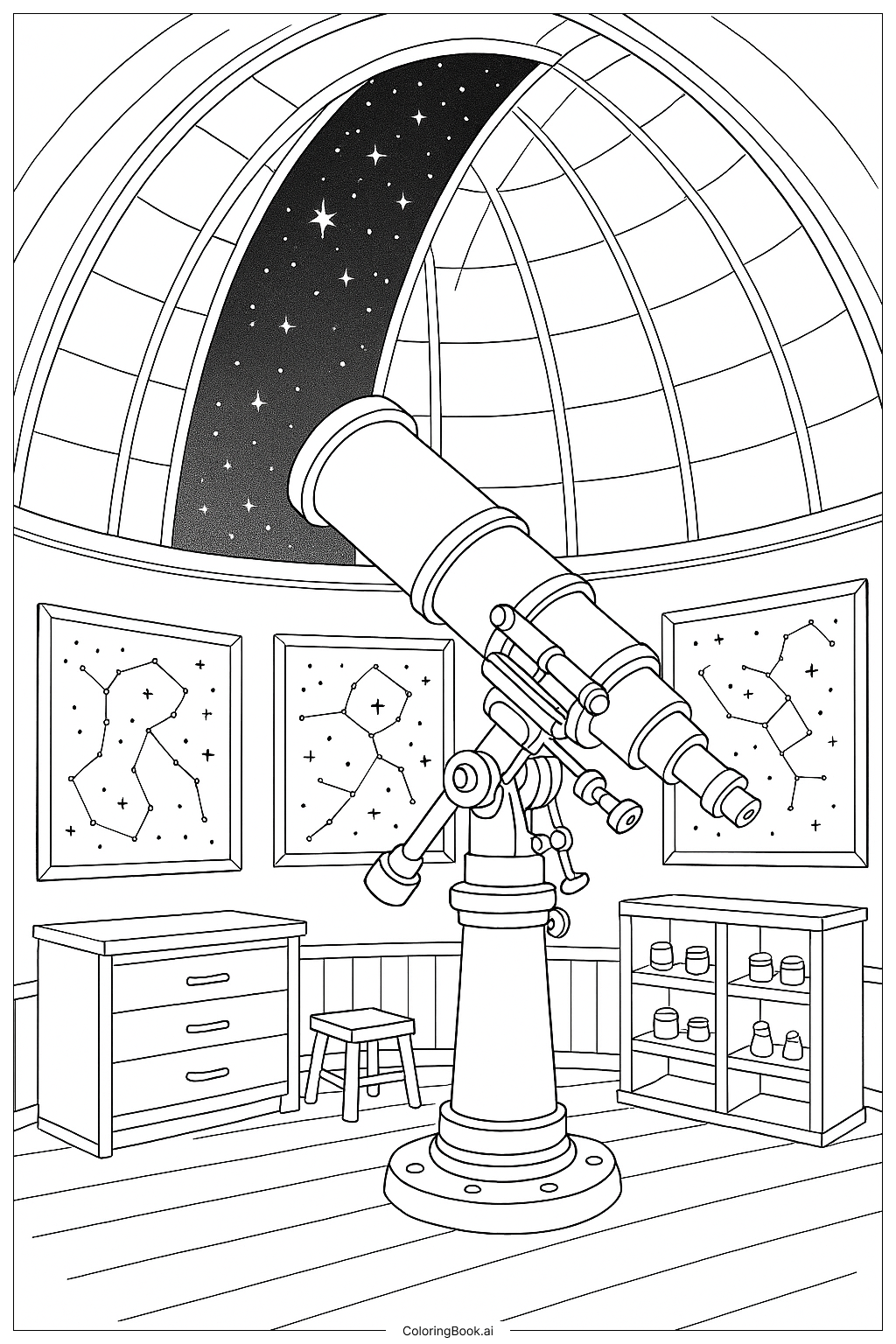
Start with the night sky. Use deep navy blue or indigo as your base sky color. Add stars using bright white or pale yellow dots. For galaxies and nebulae, blend soft purples, pinks, and blues together. Color the observatory dome in light gray or stone beige. The dome opening can be dark inside to show depth. Use warm brown or tan for the observatory walls. Color the telescope in metallic silver or dark gray. Give the astronomer a lab coat in white or light blue, with dark pants. Use earthy greens and browns for the trees and hills. Add golden yellow or orange for lamplight if there are lanterns nearby. Use soft colors for books and instruments to keep detail visible. Let the night sky be the most colorful and dramatic part of the whole scene.
Coloring challenges: Which parts are difficult to color and need attention for Science Astronomer Observatory coloring page?
• Night Sky Gradients: Blending the night sky from deep navy at the top to a lighter blue or purple near the horizon can be tricky. Young colorists may find it hard to create a smooth gradient without streaks. Try using colored pencils in gentle circular motions, layering dark blue over purple and blending slowly.
• Tiny Star Details: The sky is filled with small stars of different sizes. Coloring around them carefully without covering them up takes patience and a steady hand. Use a fine-tipped tool or simply leave the star shapes uncolored for a bright white effect.
• Observatory Dome Texture: The curved surface of the dome needs shading to look round and three-dimensional. Applying darker tones along the edges and lighter tones in the center helps create this effect, but it requires careful control of pressure.
• Telescope Metallic Look: Making the telescope look shiny and metallic is a fun challenge. Using silver, dark gray, and white highlights together can create a realistic metal surface. Place highlights on one side and shadows on the other to show reflection.
• Small Scientific Instruments: Books, charts, and instruments in the scene have fine lines and small details. Coloring these neatly without going outside the lines calls for careful attention and a sharpened pencil or thin marker. Take your time on these small areas for a polished finished look.
Benefits of coloring books: Advantages of drawing Science Astronomer Observatory coloring page
Coloring this Science Astronomer Observatory page offers wonderful benefits for children and young learners. It sparks curiosity about science, space, and astronomy in a fun and creative way. As kids choose colors for stars, planets, and galaxies, they begin to think about the real universe and ask big questions about what lies beyond our world.
The detailed scene helps build fine motor skills and hand-eye coordination. Working carefully around small stars, telescopes, and instruments trains steady hands and focused attention. These skills are valuable in school and everyday life.
Coloring also encourages patience and concentration. Spending time on a complex scene teaches children to slow down, focus, and feel proud of their finished work. Completing the page gives a real sense of achievement.
The science theme makes this page educational too. Children naturally learn about observatories, telescopes, and the night sky while they color. Parents and teachers can use this page to start conversations about space exploration and famous astronomers.
Finally, choosing colors for a night sky full of stars and galaxies lets children express their imagination freely. There are no wrong color choices in space, making this a relaxing and confidence-building activity for Boys, Girls, and Adults alike.