Coloring tips: How to color Science Paleontology Field Camp coloring page well?
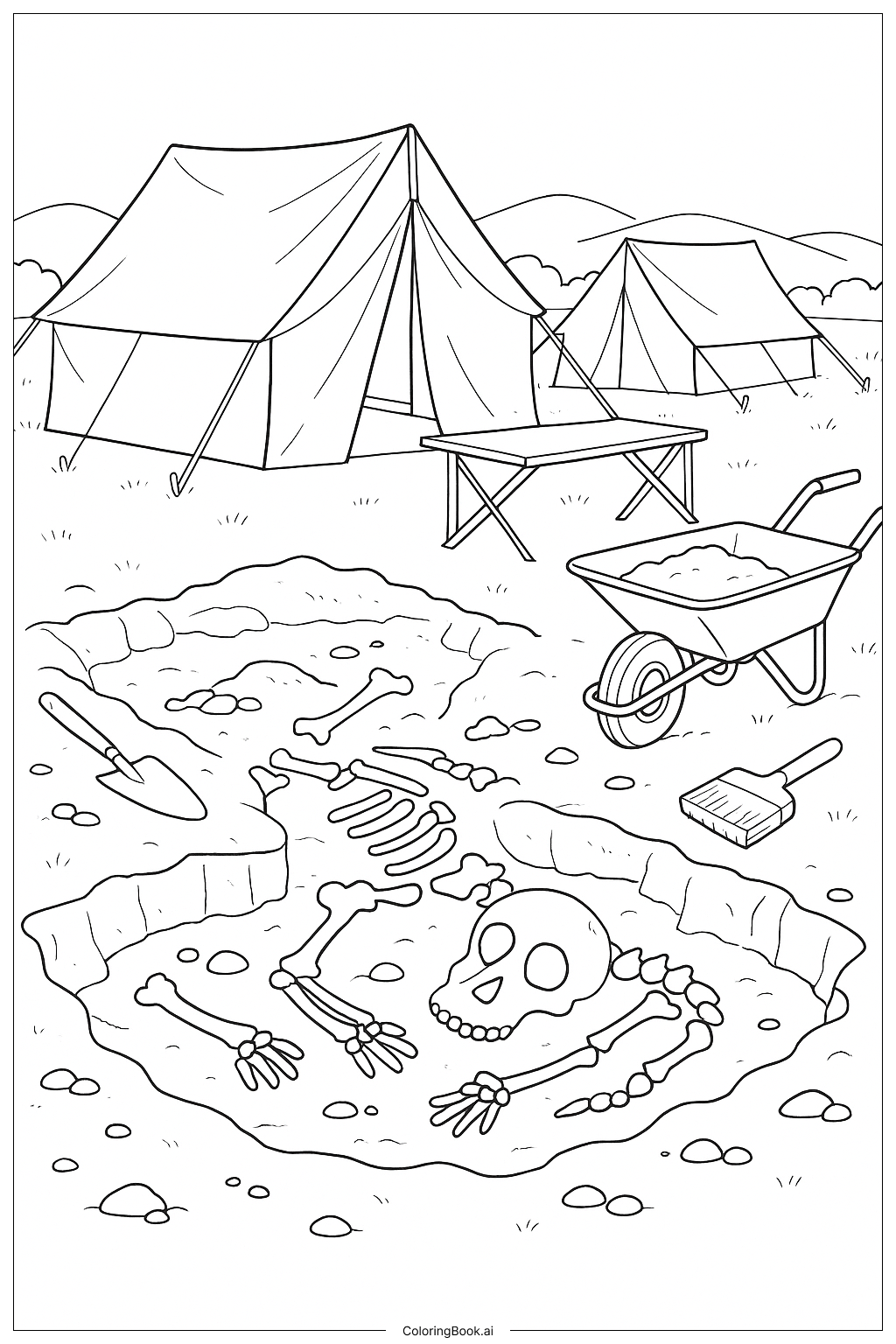
Use earth tones like browns and greens for the ground, tents, and hills to create a natural outdoor look. Color the skeleton bones with light beige or white to make them stand out. Use bright colors for the tents like red, blue, or yellow to add contrast. The tools can be gray or metallic colors. Try shading and blending to show depth in the dirt pit and hills. You can also add different shades of green for the grass and bushes. Adding shadows under objects can make the scene look more realistic.
Coloring challenges: Which parts are difficult to color and need attention for Science Paleontology Field Camp coloring page?
1. Coloring the skeleton bones can be tricky because you need to use light colors but still make them visible against the dirt background. 2. The tents have many slanting lines, which require careful coloring to stay within the shapes. 3. The dirt pit has uneven edges and small stones that need attention to detail for realistic shading. 4. The tools like the shovel and brush have small details that may be hard for younger children to color precisely. 5. Adding shadows and different textures to the ground and hills needs some shading skills to look natural.
Benefits of coloring books: Advantages of drawing Science Paleontology Field Camp coloring page
Coloring this picture helps children learn about paleontology and outdoor science work while improving their focus and patience. It encourages attention to detail because the picture has many small parts like bones and tools. Coloring the natural environment can help kids understand colors found in nature. It also develops fine motor skills through careful coloring and enhances creativity by choosing colors and shading. Overall, it is both a fun and educational activity.