Coloring tips: How to color Science Planetary System Diagram coloring page well?
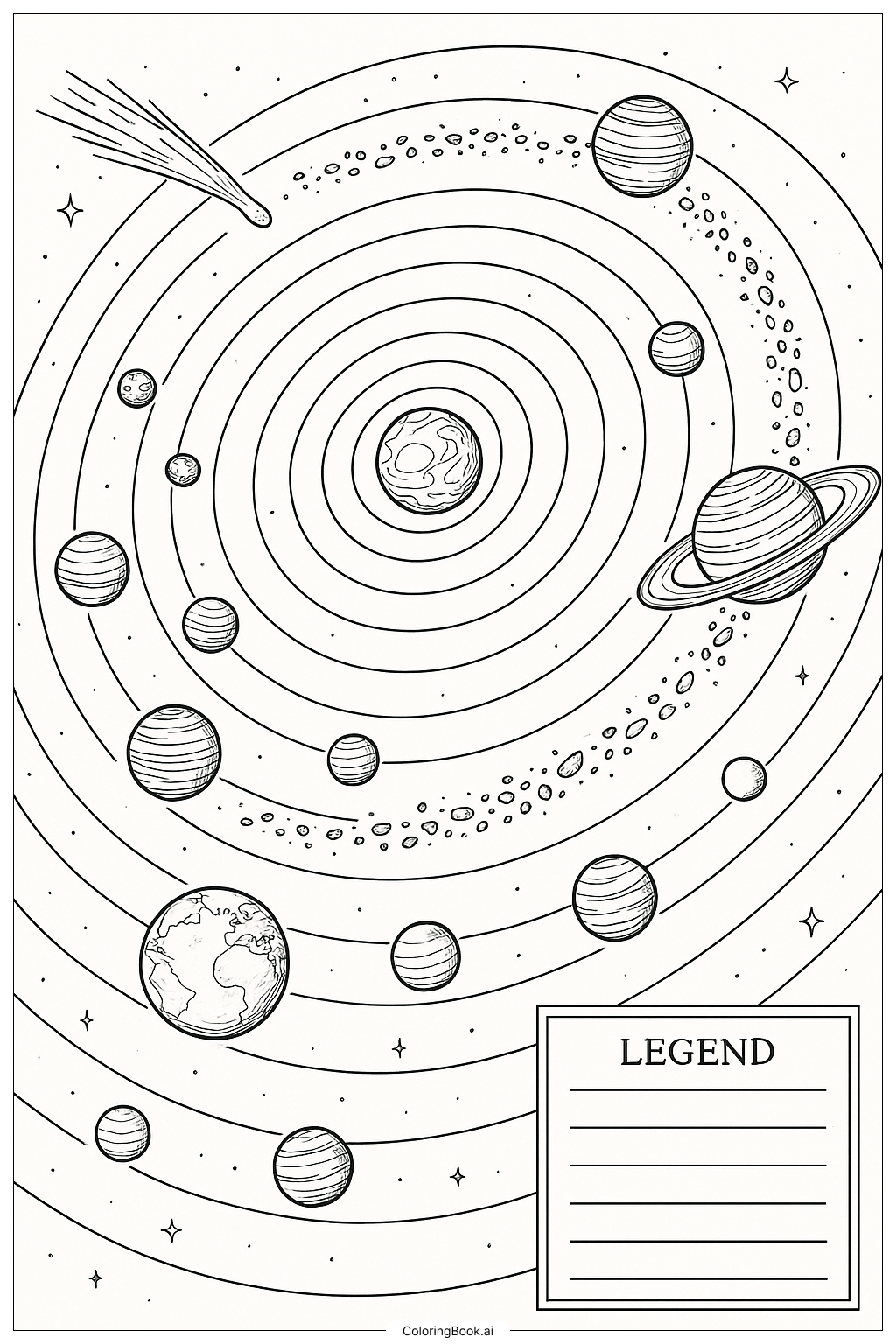
Start by coloring the Sun using bright yellows and warm oranges to show its glowing energy. For the inner planets, use browns and grays for Mercury, pale yellows and whites for Venus, blues and greens for Earth, and rusty reds for Mars. Move to the outer planets next — use swirling yellows and oranges for Jupiter with its famous storm bands, golden yellows and light browns for Saturn, and soft blue-greens for Uranus and Neptune. Color Saturn's rings in layered shades of tan, gold, and cream to give them depth. Use deep navy blue or dark purple for the space background, then add white or pale yellow dots for the stars. Keep orbital lines light gray or silver. Take your time on each planet — mixing colors with gentle blending makes each one feel unique and alive.
Coloring challenges: Which parts are difficult to color and need attention for Science Planetary System Diagram coloring page?
• Tiny Planet Sizes: The inner planets — Mercury, Venus, Earth, and Mars — are drawn quite small compared to the gas giants. Coloring within their borders requires a sharp pencil or fine-tipped marker. Young colorists may find it tricky to stay inside the lines without smudging nearby areas.
• Saturn's Ring System: Saturn's rings consist of multiple thin, overlapping bands that curve around the planet. Applying different shades of gold, tan, and cream to each ring band without blending them into a muddy mess can be challenging, especially for beginners.
• Jupiter's Cloud Bands: Jupiter is traditionally colored with horizontal stripes of orange, brown, yellow, and white that swirl together. Recreating these layered bands in a way that looks natural and dynamic takes patience and careful color placement.
• Orbital Path Lines: The curved orbital lines that arc around the Sun are thin and delicate. Coloring the background space around them without accidentally covering or darkening those lines requires a steady hand and good awareness of negative space.
• Background Depth and Stars: Filling the deep space background evenly with dark navy or purple while keeping tiny star dots bright and visible is a real challenge. Pressing too hard on the background can overwhelm the smaller detail elements, so controlling pencil pressure throughout the entire image is essential.
Benefits of coloring books: Advantages of drawing Science Planetary System Diagram coloring page
Coloring this planetary system diagram offers a wonderful mix of creative and educational rewards for kids and adults alike. As you color each planet, you naturally learn their names, relative sizes, and order from the Sun — making science feel fun and hands-on rather than like a lesson from a textbook.
The wide variety of shapes and textures in this image — from Saturn's rings to Jupiter's swirling bands — keeps the activity engaging and encourages creative decision-making. Choosing colors and experimenting with shading builds artistic confidence over time.
For younger children, working within the orbital lines and planet borders strengthens fine motor skills and hand-eye coordination. Focusing on one planet at a time also helps develop concentration and patience.
For older kids and adults, blending colors to achieve realistic planetary surfaces becomes a satisfying challenge that trains attention to detail and spatial thinking. The calming, repetitive nature of coloring also reduces stress and promotes a relaxed, mindful state.
Completing the full solar system gives a real sense of accomplishment. It also sparks curiosity about space — many colorists finish the page and want to learn more about the planets they just brought to life with color. This Coloring Page turns a science topic into an inspiring, joyful experience.