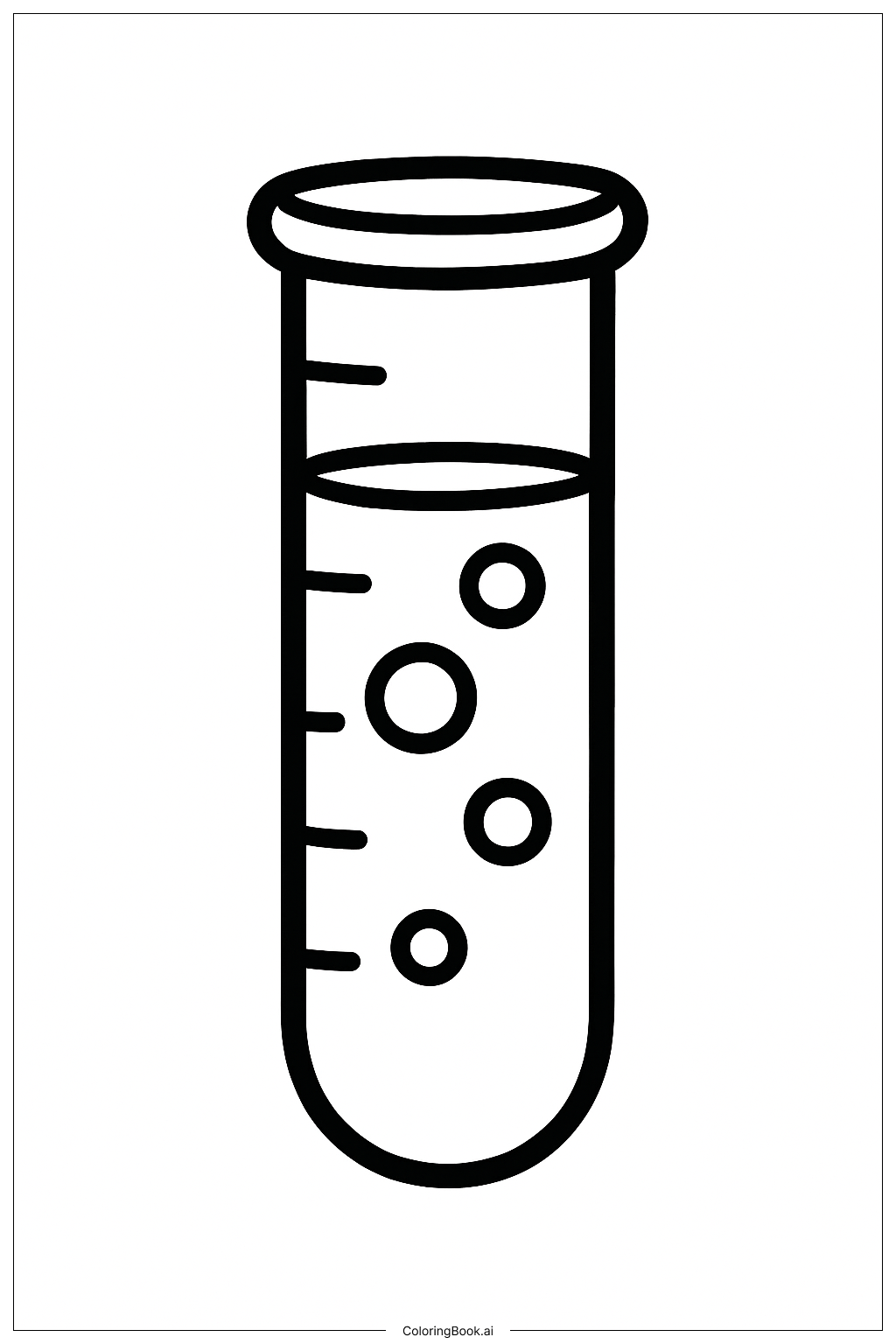
Coloring tips: How to color Science Test Tube coloring page well?
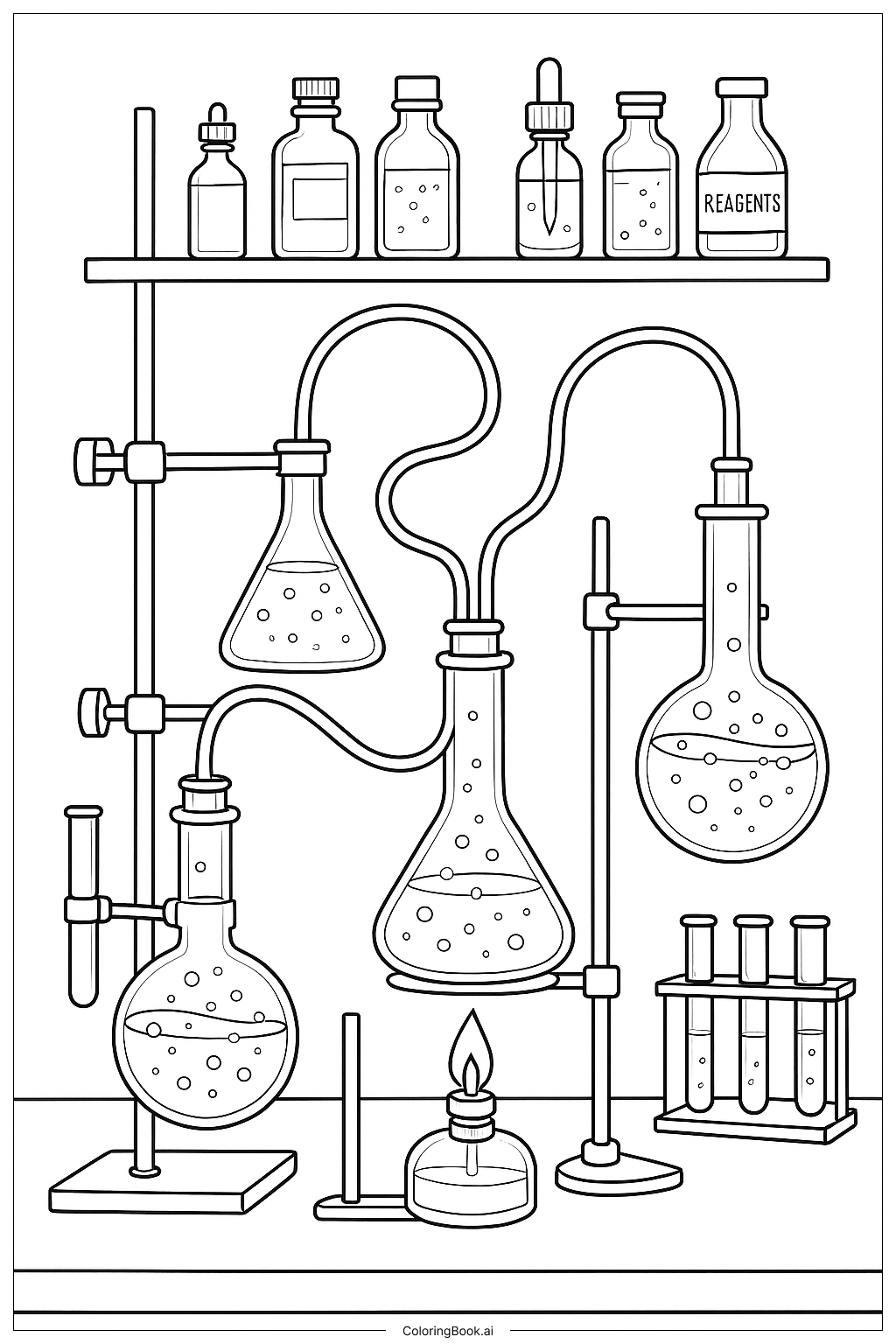
Use bright and vibrant colors to make the test tube look interesting. Color the liquid inside with shades of blue, green, or purple to represent chemicals. The bubbles can be colored with lighter or shiny colors like white, light blue, or silver to show they are air bubbles. The test tube itself can be colored in light grey or left white to look like glass. You can add shading with darker colors on one side to create a 3D look. Try to stay inside the lines for neat coloring and use different shades for the liquid and bubbles to make the picture lively.
Coloring challenges: Which parts are difficult to color and need attention for Science Test Tube coloring page?
1. Coloring inside the narrow tube can be tricky for young children as they need steady hand control.
2. Differentiating the bubbles from the liquid requires careful coloring, as they are small and close together.
3. Adding shading or depth to the test tube to make it look glass-like can be hard without proper techniques.
4. Using light colors for the liquid while ensuring it stands out clearly might be challenging.
5. Keeping the measurement lines visible while coloring around them needs extra attention.
Benefits of coloring books: Advantages of drawing Science Test Tube coloring page
Coloring this test tube picture helps children improve their hand-eye coordination and fine motor skills. It teaches them about scientific tools in a fun way, sparking curiosity about science and experiments. The activity encourages focus and patience, as kids try to color carefully within the lines. It also helps them learn color recognition and how to use different shades to create depth and realism. Overall, this coloring page combines creativity and education, making science approachable and enjoyable for children.