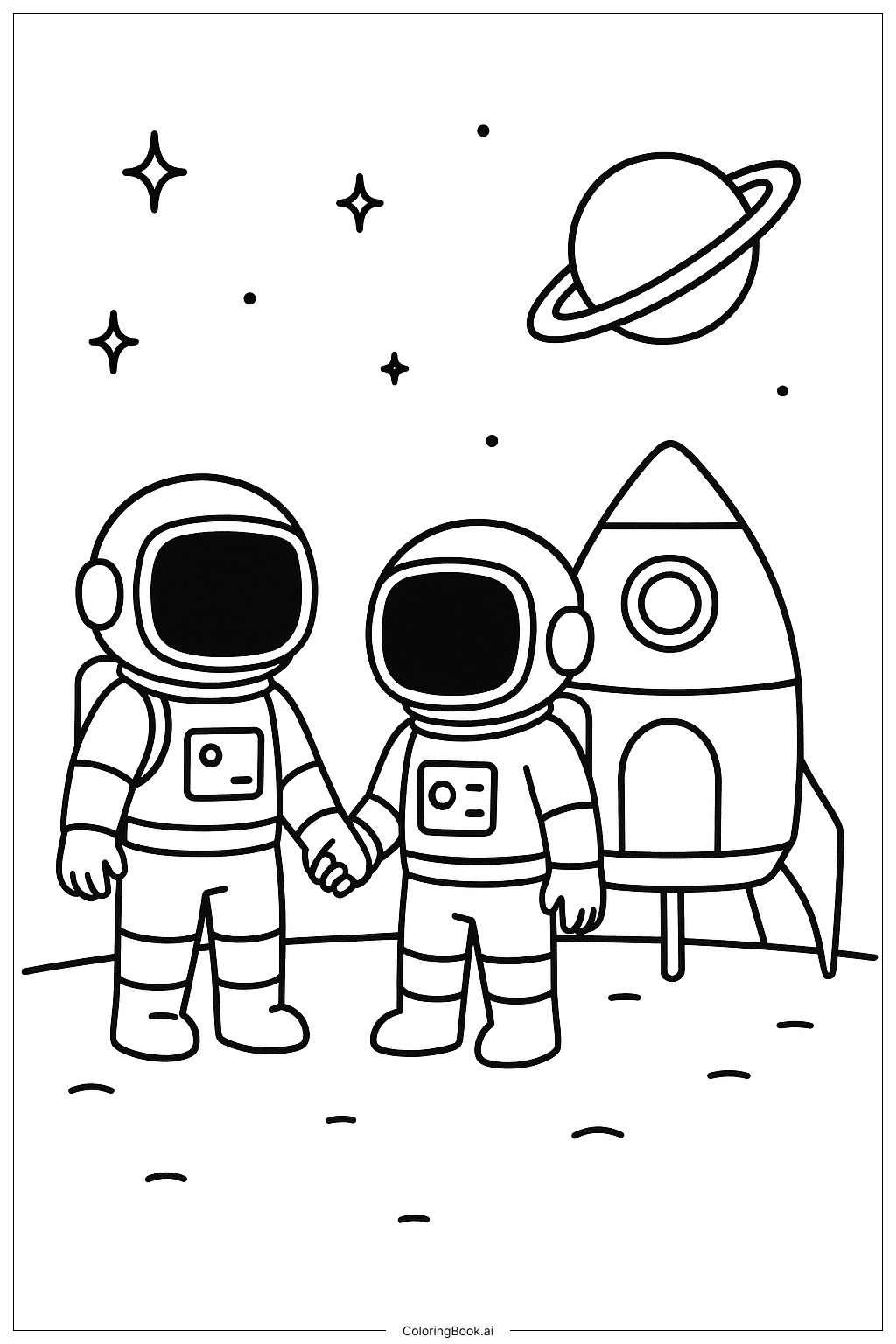
Coloring tips: How to color Science Spacewalk Scene coloring page well?
Start with the background. Use deep black or dark navy for outer space, then add small white or light yellow dots for the stars. For Earth, blend light blue and green with patches of white for clouds.
Next, color the spacecraft and solar panels. Use metallic silver or light gray for the spacecraft body, and golden yellow or dark yellow for the solar panels.
For the astronaut's spacesuit, white is the classic choice, but you can add light blue or gray shading to show depth and curves. The helmet visor can be colored gold, orange, or light blue to look reflective. Use small dabs of red, blue, or yellow on the suit's patches and equipment panels to add detail.
The tether or safety line can be yellow or orange to stand out against the dark space background. Take your time with each section and enjoy bringing this amazing Science scene to life!
Coloring challenges: Which parts are difficult to color and need attention for Science Spacewalk Scene coloring page?
• Spacesuit Details: The astronaut's spacesuit has many small parts — panels, pouches, tubes, and text patches. These tiny areas are close together and need a fine-tipped colored pencil or marker to fill in neatly without going over the lines. Rushing through this section can make the suit look messy, so patience is important.
• Helmet Visor Shading: The helmet visor is one of the trickiest parts. To make it look shiny and reflective, you need to blend two or three colors smoothly, such as gold, orange, and white. Getting a smooth gradient without streaks takes practice and a light hand with your coloring tool.
• Space Background Depth: The dark background of outer space looks simple, but creating a sense of depth requires layering. Using different shades of black, dark blue, and purple together helps the space feel vast. Adding stars of different sizes and brightness levels takes extra time and care.
• Earth's Surface Details: The curved view of Earth in the background has continents, oceans, and swirling clouds. Each zone needs a different color — blue for oceans, green and brown for land, and white for clouds. Blending these colors so they look natural and smooth is a real challenge, especially for younger colorists.
• Spacecraft and Solar Panels: The spacecraft body and its extended solar panels have angular shapes and straight edges. Keeping colors clean and even inside these geometric sections is harder than it looks, especially where the solar panels meet the spacecraft frame. Using a ruler as a guide can help keep lines straight.
Benefits of coloring books: Advantages of drawing Science Spacewalk Scene coloring page
Coloring this Science Spacewalk Scene offers many wonderful benefits for kids and learners of all ages.
First, it sparks curiosity about space and science. As children color the astronaut, spacecraft, and Earth, they naturally start asking questions about how spacewalks work, what astronauts wear, and what outer space looks like. This curiosity is the first step toward a love of learning.
Second, it builds focus and concentration. The small details in the spacesuit and spacecraft require careful attention, helping children practice patience and stay on task — skills that are valuable in school and everyday life.
Third, it develops fine motor skills. Coloring within the lines of the helmet, solar panels, and tether helps strengthen hand control and coordination, especially in younger children.
Fourth, it encourages creativity. There is no single correct way to color this scene. Children can experiment with color choices and create their own version of outer space, building confidence in their artistic decisions.
Finally, it provides a calm and enjoyable activity. Coloring is known to reduce stress and anxiety. It gives children a focused, screen-free way to relax while still being mentally engaged. This Science Spacewalk Scene makes learning about space both fun and creative.