Coloring tips: How to color Science Robotics Workshop coloring page well?
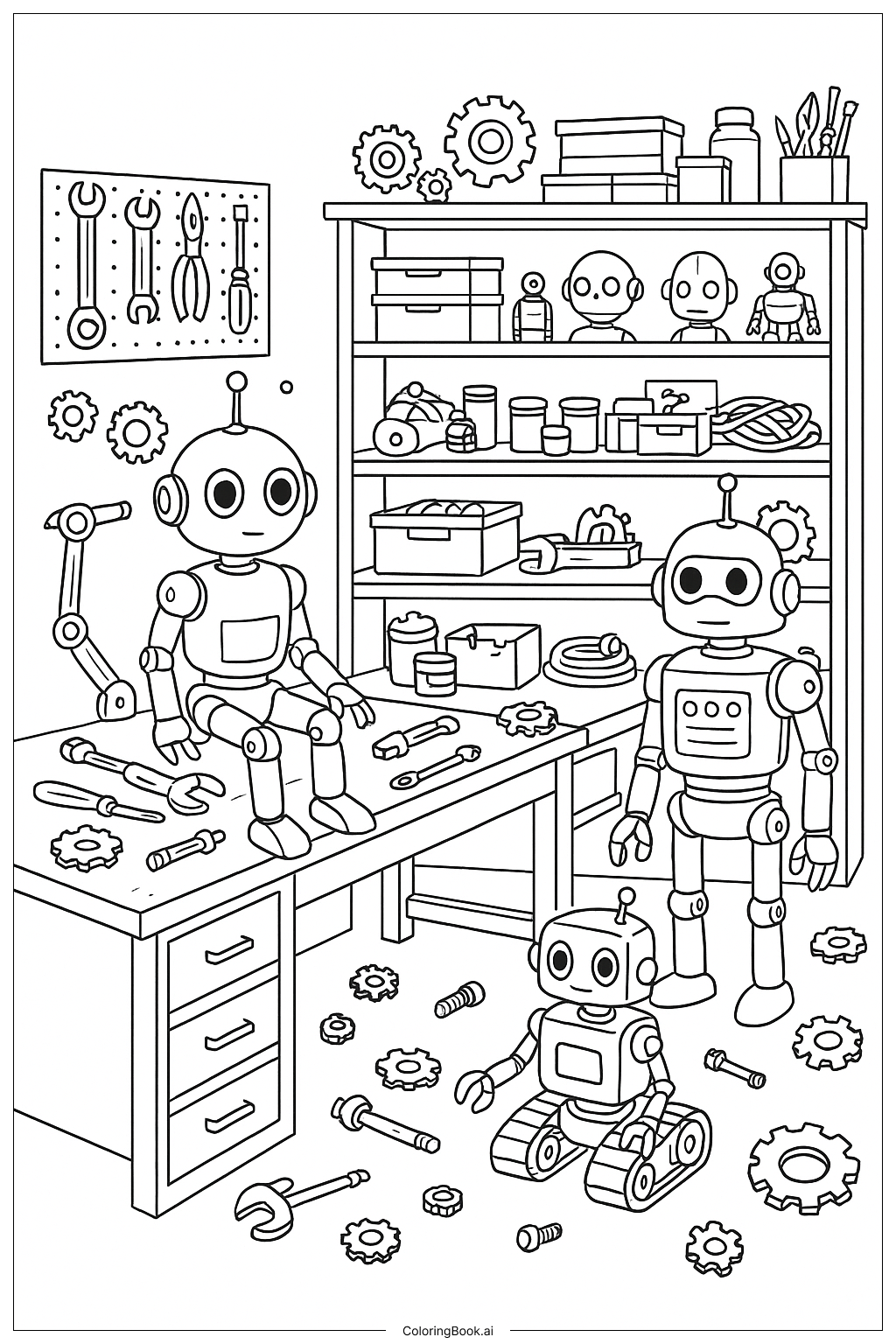
Start with the robots at the center of the scene. Use metallic shades like silver, gray, and steel blue for the robot bodies to give them a realistic mechanical look. Add pops of bright color — red, yellow, and orange — for the buttons, lights, and indicator panels on the robots. Color the children's aprons and safety goggles in fun, bold colors like green, purple, or orange to make them stand out. Use warm browns and tans for the wooden workbenches. Give the circuit boards a green color with tiny gold or yellow traces. For the background walls, try a light blue or cream tone to keep the focus on the foreground activity. Blueprints can be colored in classic blueprint blue with white line details. Feel free to mix bright and muted tones to balance the busy scene and make each element easy to identify.
Coloring challenges: Which parts are difficult to color and need attention for Science Robotics Workshop coloring page?
• Robot Body Details: The robots feature many small panels, bolts, buttons, and joints packed close together. Coloring each part neatly without bleeding into neighboring sections requires a fine-tipped tool and a steady hand. Take your time on these areas and work from the center outward.
• Circuit Board Patterns: The circuit boards on the workbenches have tiny lines, nodes, and grids that are very small and closely spaced. These intricate patterns are easy to smudge or overlap. Use a very sharp colored pencil or a fine marker to trace each line carefully before filling in larger areas.
• Overlapping Objects and Clutter: The workbenches are covered with gears, wires, tools, and parts that overlap each other. Identifying where one object ends and another begins can be tricky. Lightly sketch color zones with a pencil first to plan which color goes where before committing with ink or marker.
• Children's Figures and Clothing: The young inventors have detailed clothing, goggles, and expressions. Small facial features and layered clothing folds can be challenging to color cleanly. Use lighter shades for skin tones and darker shades for clothing shadows to add depth without muddying the details.
• Background and Foreground Balance: With so much happening in the scene, it can be hard to keep the background from competing with the foreground. Use lighter, less saturated colors for walls and shelving so the characters and robots remain the visual focus of the composition.
Benefits of coloring books: Advantages of drawing Science Robotics Workshop coloring page
Coloring this Science Robotics Workshop page offers a wonderful mix of fun and learning for kids of all ages. As children fill in the robots, tools, and workshop details, they naturally build focus and concentration. Deciding which colors to use for gears, circuit boards, and robot panels encourages creative thinking and problem-solving skills.
The detailed nature of the image helps develop fine motor control and hand-eye coordination, especially when working on small mechanical parts and tiny circuit patterns. These skills are directly useful for everyday tasks like writing, drawing, and even real hands-on building projects.
The workshop setting also sparks curiosity about science, technology, engineering, and math. Kids who color this page may feel inspired to learn more about how robots work or to try building something themselves.
Coloring is also a calming activity. Focusing on the page helps children slow down, reduce stress, and enter a relaxed, meditative state. It gives them a sense of accomplishment when the page is complete.
For group settings like classrooms or family time, this image can also be a great conversation starter about robots, inventions, and future careers in science. It turns a simple coloring activity into an engaging, educational experience that fuels imagination and a love of discovery.