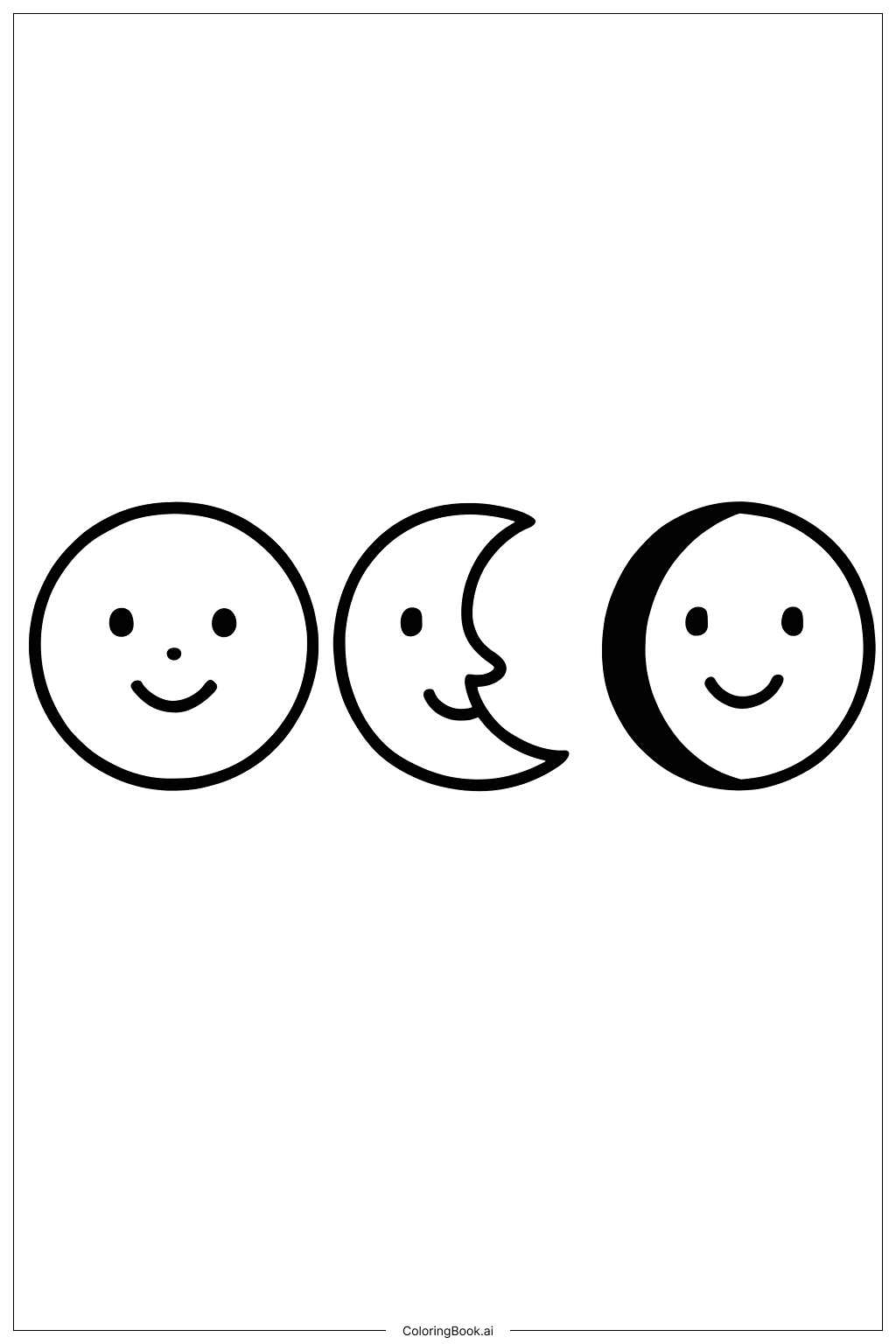
Coloring tips: How to color Science Moon Phase coloring page well?
Use bright yellows and whites for the full Moon to make it stand out as the center of the phases. For the other phases, try shading from dark gray or black during the New Moon phase to lighter grays for the crescent and gibbous phases. You can add some soft blues or purples for the night sky background and little gold or silver for stars to create a magical night scene. Feel free to make the Moon faces expressive, using rosy pink for cheeks or glowing eyes. This page lets you experiment with light and shadow colors to show the Moon’s changing shapes.
Coloring challenges: Which parts are difficult to color and need attention for Science Moon Phase coloring page?
• Small Details: The phases have subtle curved shapes where light meets dark. Coloring these carefully without messing up the edges is a challenge.
• Gradual Shading: Showing the slow change from dark to light in crescent and gibbous shapes requires patience and gentle color blending.
• Star Placement: Coloring small stars neatly without smudging onto the Moon phases or background can be tricky.
• Circular Format: The Moon phases form a circle, so you need to carefully color them in order while keeping the round shape balanced.
• Face Features: The central Moon’s facial expressions have tiny areas like eyes and smiles that need steady hand control to color well.
Benefits of coloring books: Advantages of drawing Science Moon Phase coloring page
Coloring this image helps children learn about the Moon’s phases and their order in a fun way. It encourages attention to detail and improves fine motor skills because of the small shapes and gradual shading needed. The circular layout also teaches spatial awareness and sequence recognition by following the Moon’s cycle. Using a mix of light and dark colors enhances understanding of how shadows and light play in nature. Overall, it combines creativity with science learning, making the coloring experience both educational and enjoyable.