Coloring tips: How to color Science Microscope Table coloring page well?
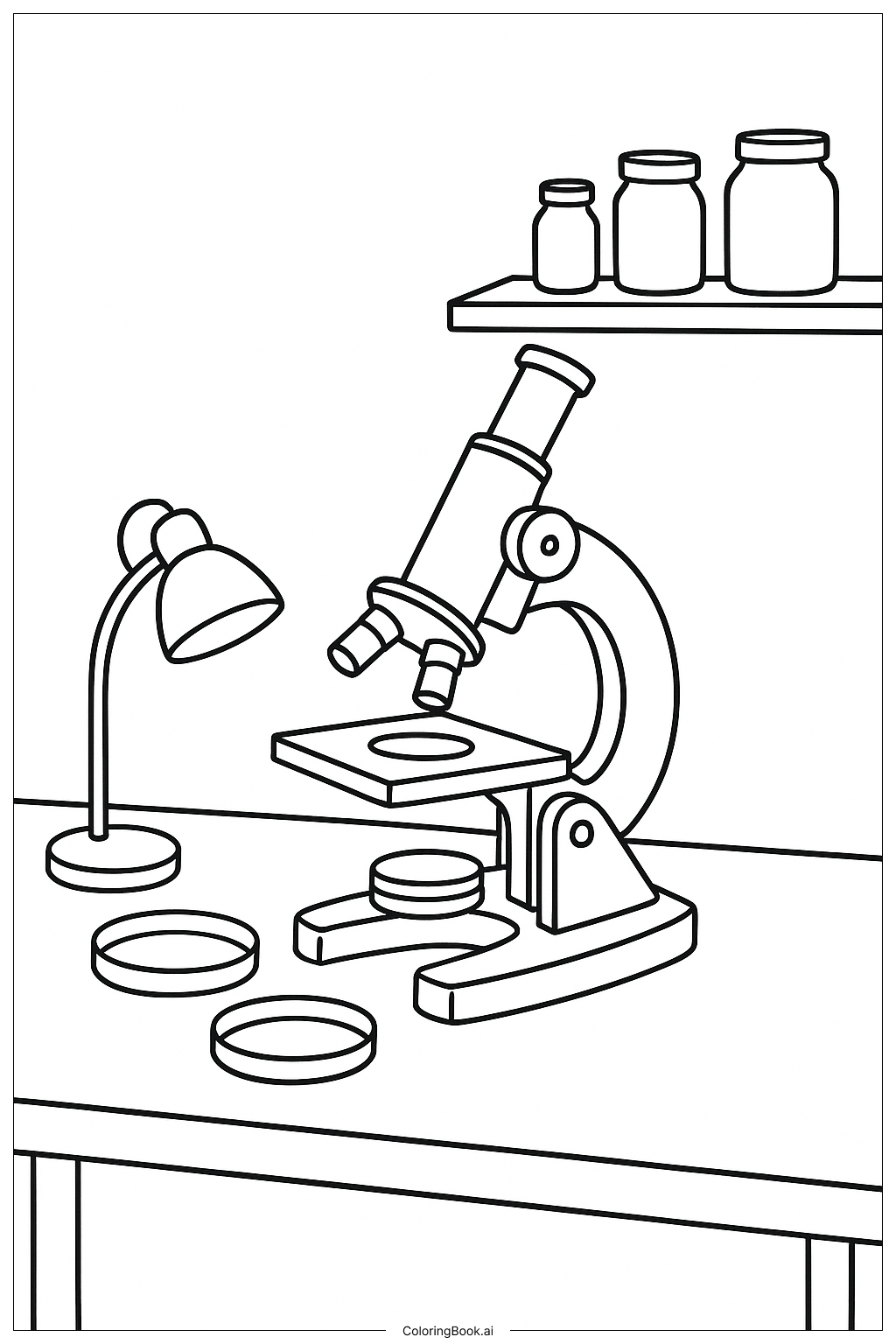
Use different colors to make each object clear and interesting. Color the microscope with gray or silver to look like metal. You can color the lamp base and shade with bright colors like blue or red. The petri dishes can be light green or yellow to show they are glass or plastic. For the jars on the shelf, choose different colors for lids and jars to make them stand out. Use a light brown or wood color for the table and a soft color like light blue or cream for the wall in the background. This will help the science tools pop out nicely.
Coloring challenges: Which parts are difficult to color and need attention for Science Microscope Table coloring page?
1. The microscope has small rounded shapes and many parts, so it might be tricky to color inside the lines without going over. 2. The petri dishes are round and overlapping in places, which could cause confusion on where to color. 3. The jars on the shelf have simple shapes but coloring them with different shades might be challenging to make each look distinct. 4. The lamp has a curved stand and shade, which needs careful coloring to keep smooth edges. 5. Coloring the table legs and top while staying inside the straight lines can be hard, especially near corners.
Benefits of coloring books: Advantages of drawing Science Microscope Table coloring page
Coloring this picture helps improve focus and patience because you need to be careful around small parts of the microscope. It encourages attention to detail, making you notice tiny shapes and spaces. This activity also helps with hand-eye coordination and fine motor skills as you color inside the lines. You learn to use a variety of colors and think about how to make objects look real and interesting. Plus, it’s a fun way to explore science and get curious about microscopes and lab equipment!