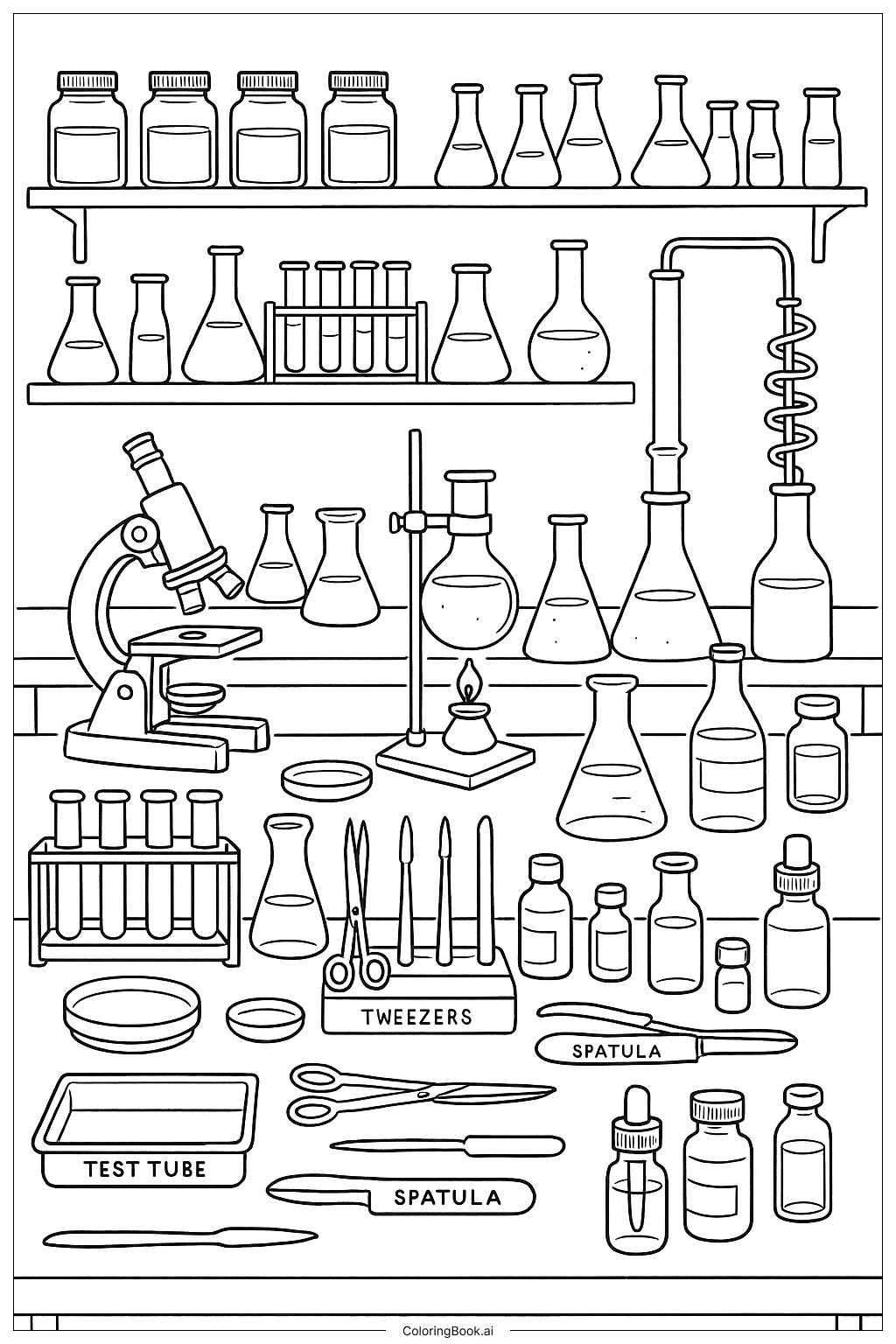
Coloring tips: How to color Science Laboratory Scene coloring page well?
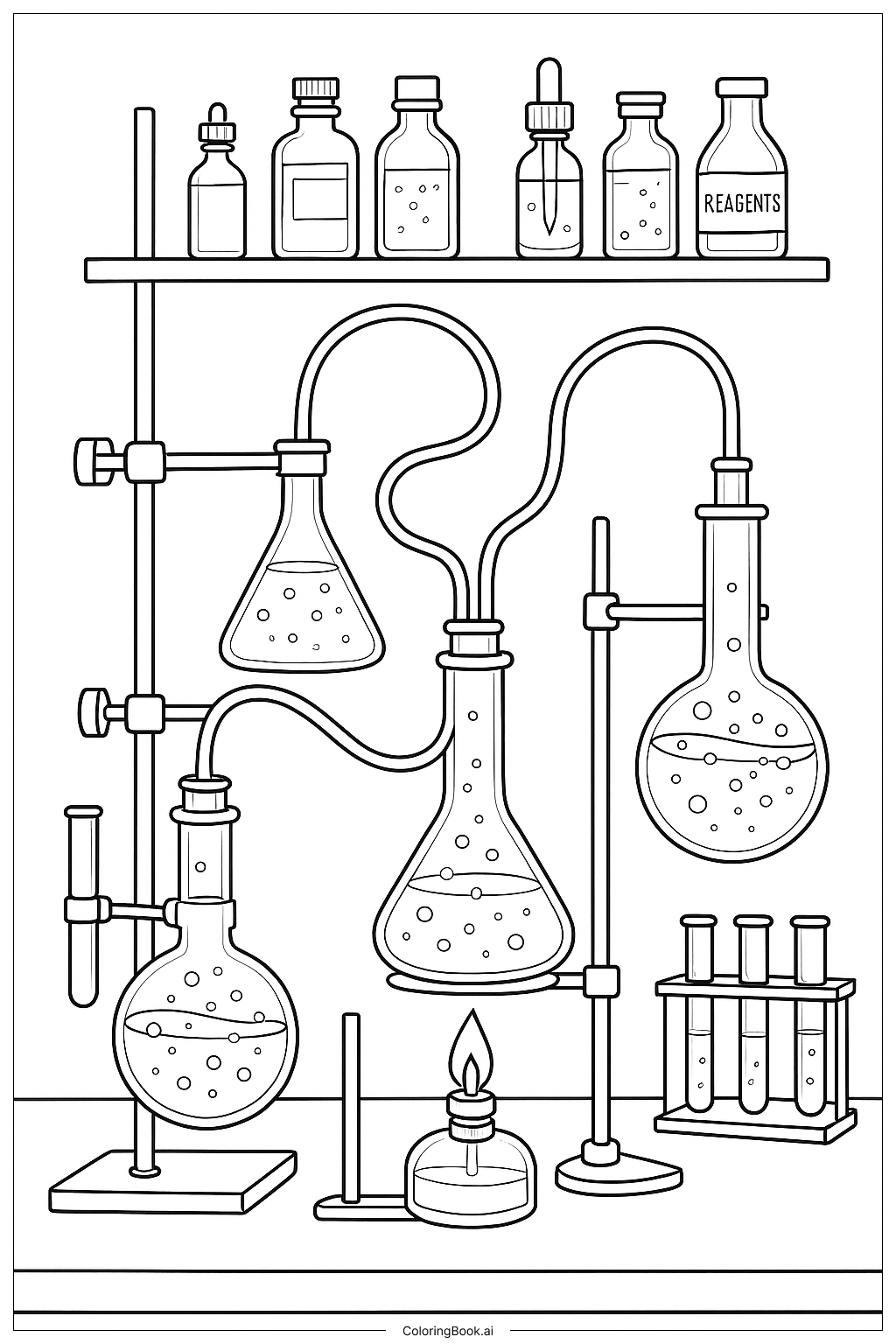
Start with the large background elements like the walls, shelves, and chalkboard. Use light gray or soft blue for the walls to keep things calm and clean. Color the chalkboard dark green or black. For the glassware — flasks, beakers, and test tubes — try bright, cheerful colors like red, orange, yellow, green, and purple to make the liquids look exciting. Use silver or light gray for metal equipment parts. The young scientist's lab coat looks great in white or pale yellow. Add skin tones and hair color that feel natural to you. The microscope can be black or dark gray with silver details. Use warm yellow or white for the overhead lights. Feel free to mix bold and soft colors to make the scene pop with energy and fun.
Coloring challenges: Which parts are difficult to color and need attention for Science Laboratory Scene coloring page?
• Tiny Glassware Details: The scene includes many small flasks, test tubes, and beakers with narrow necks and thin walls. Staying inside these small shapes without going over the lines requires a fine-tipped coloring tool and a steady hand. Younger colorists may find this especially tricky.
• Liquid Effects in Tubes: The connecting tubes carry flowing or bubbling liquids. Showing depth and movement with color — such as lighter tones at the top and darker shades at the bottom — adds realism but takes practice to get right.
• Cluttered Shelf Backgrounds: The shelves are packed with many bottles and jars of different sizes. Each one needs its own distinct color to stand out from its neighbors. Choosing a varied but harmonious color palette for so many small objects can be challenging and time-consuming.
• Chalkboard Formulas and Diagrams: The chalkboard features fine lines, numbers, and diagrams. Coloring around these details without smudging or covering them requires careful work with a thin pencil or marker. Getting contrast right between the board and the writing adds another layer of difficulty.
• The Scientist Figure: The young scientist has clothing, skin, hair, goggles, and gloves — all layered closely together. Keeping each part clearly separated with distinct but realistic colors, while also making the figure stand out against the busy background, demands thoughtful color planning and patience.
Benefits of coloring books: Advantages of drawing Science Laboratory Scene coloring page
Coloring this Science Laboratory Scene is a fantastic way to combine creativity with learning. As kids bring the lab to life with color, they naturally start noticing and thinking about the tools and equipment shown — sparking curiosity about real science and how experiments work.
The many detailed elements in the scene — glassware, equipment, shelves, and a scientist figure — help develop fine motor skills and hand-eye coordination. Working carefully within small shapes builds patience and focus, skills that are useful both in art and in everyday life.
Choosing colors for liquids, lab coats, and equipment encourages creative decision-making and builds color sense. Kids learn how to plan a color palette and think about contrast so everything is easy to see.
The scene also has an inspiring quality. Seeing a young scientist at work in a colorful, exciting lab can motivate children to explore science further — reading books, asking questions, or even trying simple experiments at home.
For older colorists, the level of detail in the image offers a satisfying, meditative challenge. Focusing on complex patterns helps reduce stress and promotes mindfulness. Overall, this Coloring Pages image is both a fun artistic activity and a gentle introduction to the world of Science.