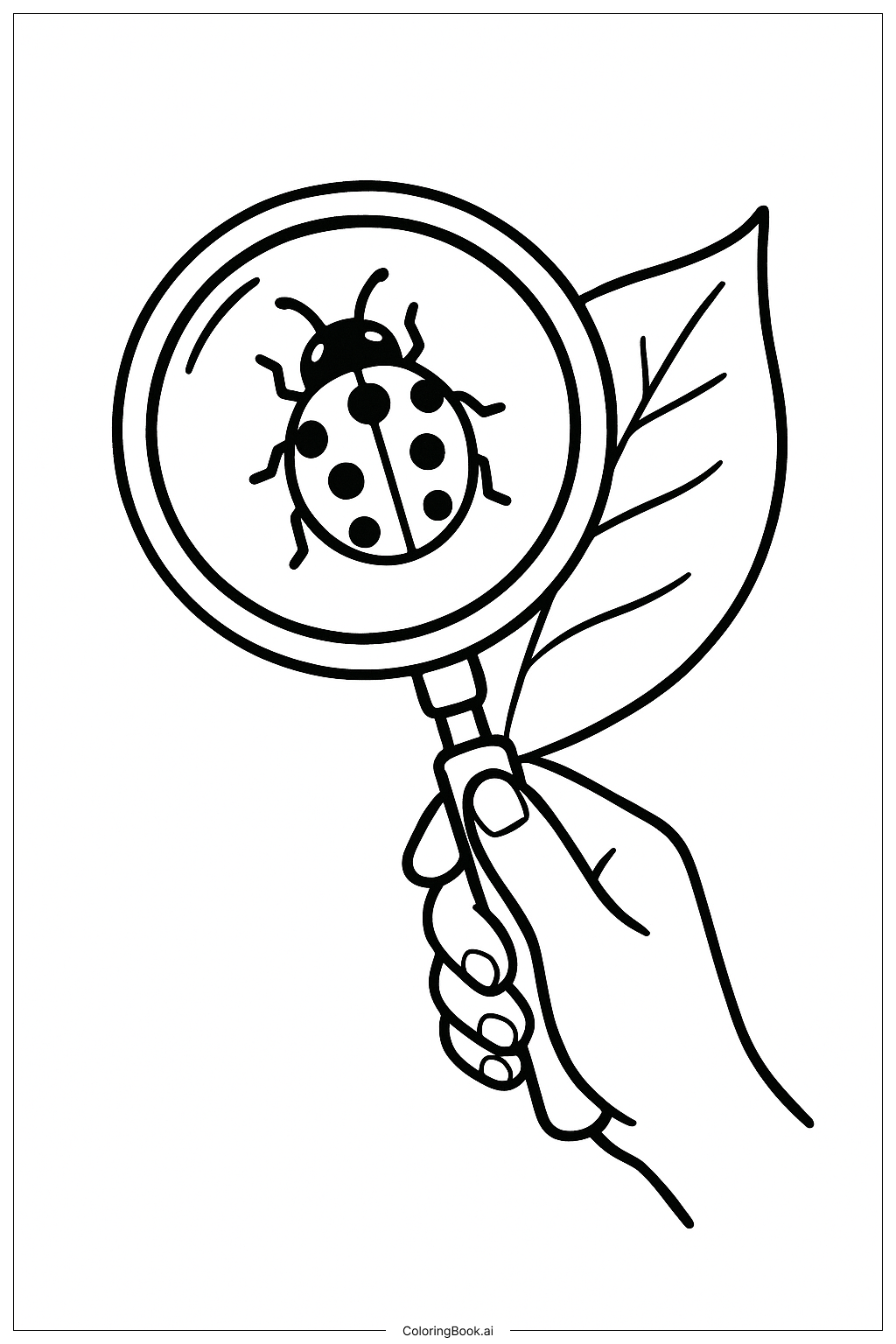
Coloring tips: How to color Science Insect Study coloring page well?
Try using bright and natural colors for the insect’s body, like shades of green, yellow, or brown to show a realistic look. For the wings, softer colors such as light blues or transparent grays can be fun to shade. You may add some sparkles or light touches of white to show their delicate texture. Use colors like blue, silver, or gray for the scientific tools to give them a metallic feel. The background space can be filled with light green or earth tones to suggest a garden or natural setting. Feel free to mix colors gently in the insect’s legs and antennae to make them stand out. Using different tones can help the parts look more three-dimensional and lively.
Coloring challenges: Which parts are difficult to color and need attention for Science Insect Study coloring page?
• Fine Details: The insect’s legs and antennae have many thin sections that require careful coloring to stay inside the lines. It can be tricky to keep the colors neat here.
• Small Text and Labels: The scientific notes and labels around the insect are small and need gentle attention so that coloring does not blur the writing or shapes.
• Wing Texture: Showing the wings’ delicate structure means using subtle shading and layering to avoid making them look too dark or heavy.
• Body Segmentation: The insect’s body is split into several segments, and coloring each part evenly while keeping a natural look can be a challenge.
• Tool Reflection: Coloring the jar and magnifying glass to reflect light realistically requires blending and choosing the right shades of gray or blue, which can be hard for beginners.
Benefits of coloring books: Advantages of drawing Science Insect Study coloring page
Coloring this Science Insect Study image helps develop fine motor skills by encouraging careful, detailed work. It sharpens observation skills as children notice the different parts of the insect and scientific tools. The activity encourages curiosity about nature and science, making learning fun and interactive. This page also helps improve focus and patience due to its detailed sections. Finally, it fosters creativity by allowing children to choose colors and experiment with textures while connecting art with science in an educational way.