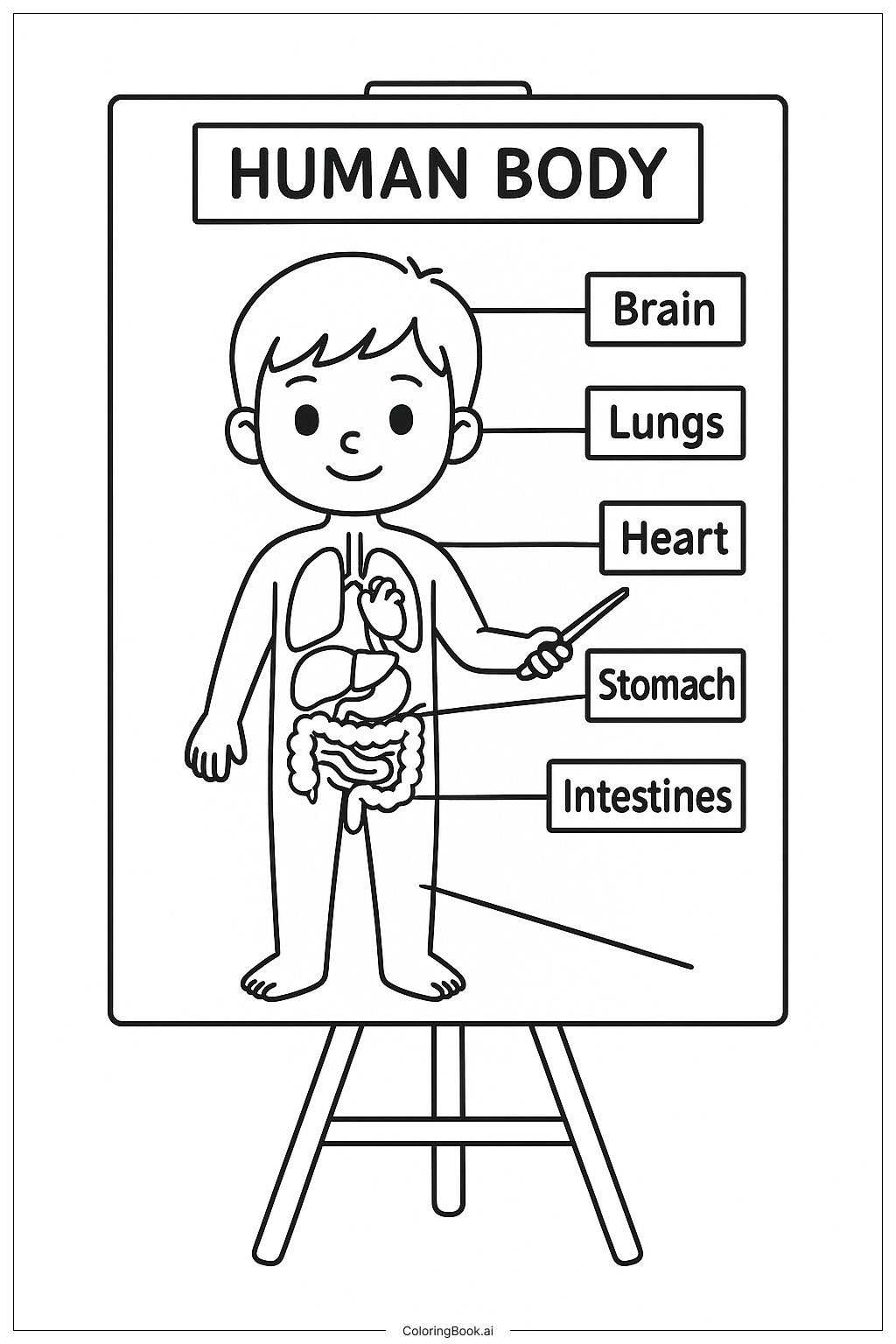
Coloring tips: How to color Science Human Body Chart coloring page well?
Use bright colors to make each organ stand out. You can color the brain pink or purple, the lungs light pink, the heart red, the stomach light orange, and the intestines light brown or beige. For the body, use skin tones or any light color you like. The background can be left white or colored lightly to focus on the body. Coloring inside the lines carefully will help improve fine motor skills. You can also add patterns or designs around the chart for extra creativity.
Coloring challenges: Which parts are difficult to color and need attention for Science Human Body Chart coloring page?
1. Small areas inside the organs may be tricky to color neatly, especially for younger kids. 2. Keeping colors inside the thin borders between organs requires patience and control. 3. The lines connecting the organs to the labels are narrow and need careful coloring or can be left uncolored to avoid mess. 4. Balancing colors so the chart looks clear but colorful can be a challenge. 5. Making sure the labels stay legible without coloring over them needs attention.
Benefits of coloring books: Advantages of drawing Science Human Body Chart coloring page
Coloring this human body chart helps kids learn about different organs and where they are located. It encourages focus and attention to detail while working on small spaces. The activity also improves hand-eye coordination and fine motor skills. Coloring allows children to express creativity by choosing their favorite colors. It turns learning science into a fun, hands-on experience, making it easier to remember the parts of the body.