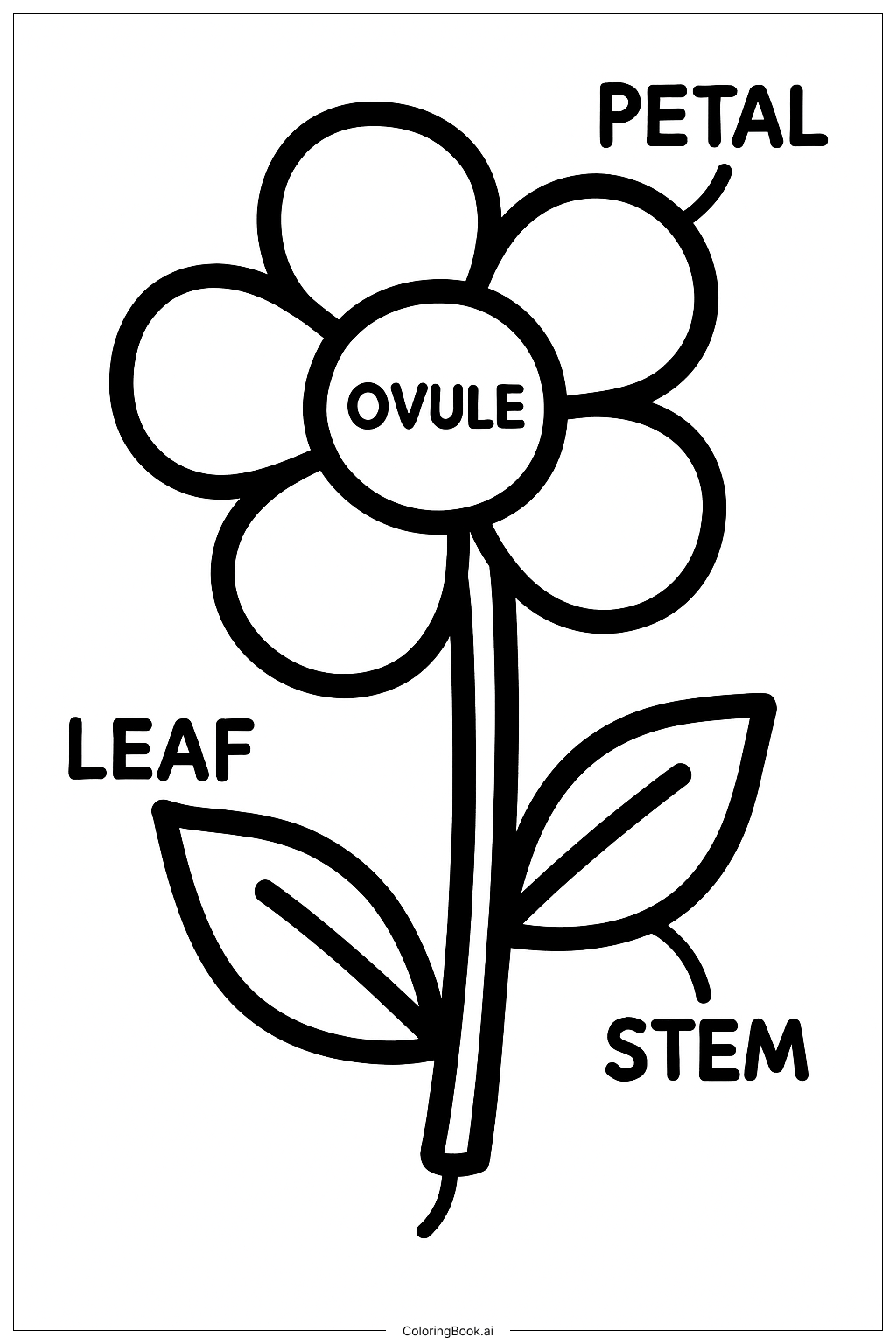
Coloring tips: How to color Science Flower Diagram coloring page well?
Try using bright and cheerful colors to make each petal stand out from the others. For example, use green for Biology to represent plants and life, blue for Earth Science to show the sky and oceans, yellow for Chemistry to reflect energy and light, red or orange for Physics to suggest heat and motion, and purple for Technology to give a futuristic feel. Color the flower center in a bold color like gold or bright orange to make the word Science pop. Consider using different shades of green for the stem and leaves to show depth and natural beauty. Use lighter colors for small details like atoms and test tubes so they don’t overpower the petals. Choose colors you enjoy and feel free to mix and match as you like!
Coloring challenges: Which parts are difficult to color and need attention for Science Flower Diagram coloring page?
• Petal Borders: The petals have thin outlines separating them, so coloring carefully inside the lines can be a challenge, especially for younger children. Staying within the lines helps keep the image neat and clear. • Small Detail Icons: The small science symbols and icons around the flower require precision to color without mixing colors unintentionally. This develops fine motor skills but can be tricky. • Text Labels: Each petal contains text labels naming science fields. Coloring around the letters without covering them requires attention and focus. • Color Balance: Choosing colors that contrast well but still look harmonious can be challenging for beginners. Some colors might blend together if they are too similar, reducing the clarity of each petal. • Layering Colors: Adding shading or multiple colors on petals or leaves means understanding how to layer colors gently. Too much pressure can tear the paper or cause unwanted mixing.
Benefits of coloring books: Advantages of drawing Science Flower Diagram coloring page
Coloring this Science Flower Diagram helps children learn about different branches of Science in a fun way. It encourages creativity as they decide which colors to use for each section. The detailed petals and small icons improve fine motor skills and hand-eye coordination through careful coloring. This page stimulates curiosity about scientific topics and can act as a tool for parents and teachers to discuss science fields while coloring together. Completing the page provides a sense of accomplishment and confidence. Additionally, it promotes focus and patience, valuable skills for young learners as they explore both art and science.