Coloring tips: How to color Science Energy Circuit coloring page well?
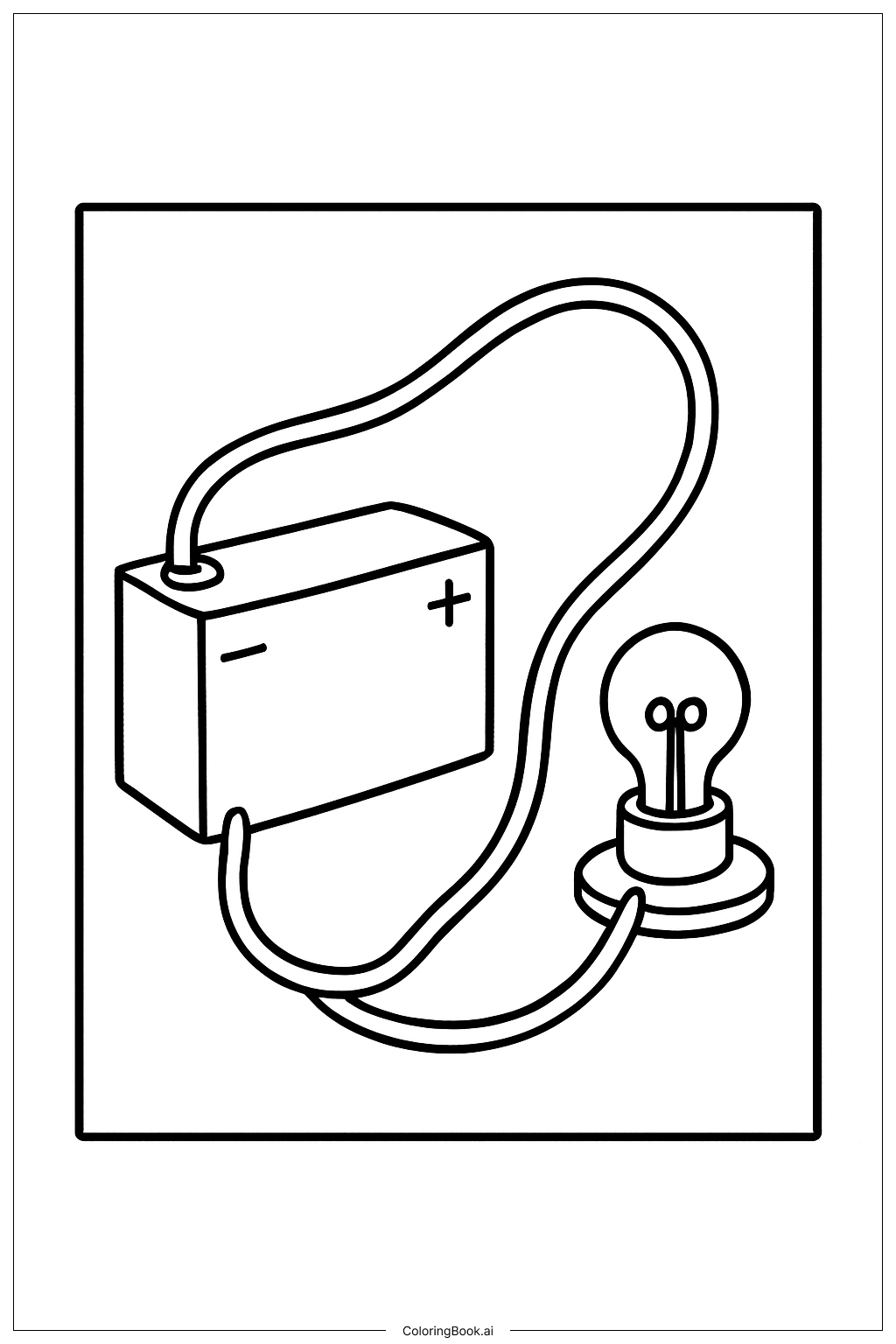
Try using bright yellows and oranges for the light bulb to show it glowing when powered. Color the lightning bolts with electric blues and whites to highlight the energy. Use red and black for the battery terminals to distinguish positive and negative ends. The wires can be colored gray or silver to resemble metal. For the switch, try green for ON and red for OFF areas to indicate control clearly. Background areas can be light shades of blue or green to keep the focus on the circuit. Feel free to use different colors for wires if you want to illustrate different paths of energy flow. This will make the Science Energy Circuit colorful and exciting!
Coloring challenges: Which parts are difficult to color and need attention for Science Energy Circuit coloring page?
• Small Details: The circuit has thin wires and tiny symbols like sparks and arrows that require careful coloring to stay inside the lines. Young children may find it challenging to color these small parts neatly. • Color Coding: Understanding which colors to use for different parts such as battery terminals or energy symbols may require basic knowledge of circuits. Choosing the right colors helps make the circuit clear but can be tricky for beginners. • Overlapping Elements: Some wires cross or connect at nodes, which need attention to avoid mixing colors unintentionally. Staying within boundaries where lines intersect is important but can be difficult. • Gradients and Glow Effects: To show the light bulb glowing or energy bolts sparking, shading or blending colors might be needed. This can be a complex technique for younger colorists who are still mastering solid coloring. • Maintaining Focus: The image contains multiple components that together form the circuit. Staying focused on each part without rushing will help create a clean and understandable final picture, but it may require patience.
Benefits of coloring books: Advantages of drawing Science Energy Circuit coloring page
Coloring this Science Energy Circuit helps improve focus and fine motor skills as children carefully fill in detailed sections. It encourages learning about electricity and how energy flows through circuits, making science fun and interactive. Practicing color coding for battery terminals and switches enhances logical thinking and understanding of scientific concepts. This activity also supports creativity by letting kids choose colors for energy and light effects. Completing the coloring can boost confidence and offer a sense of achievement, while fostering curiosity about how everyday electrical devices work.