Coloring tips: How to color Science Deep Sea Exploration coloring page well?
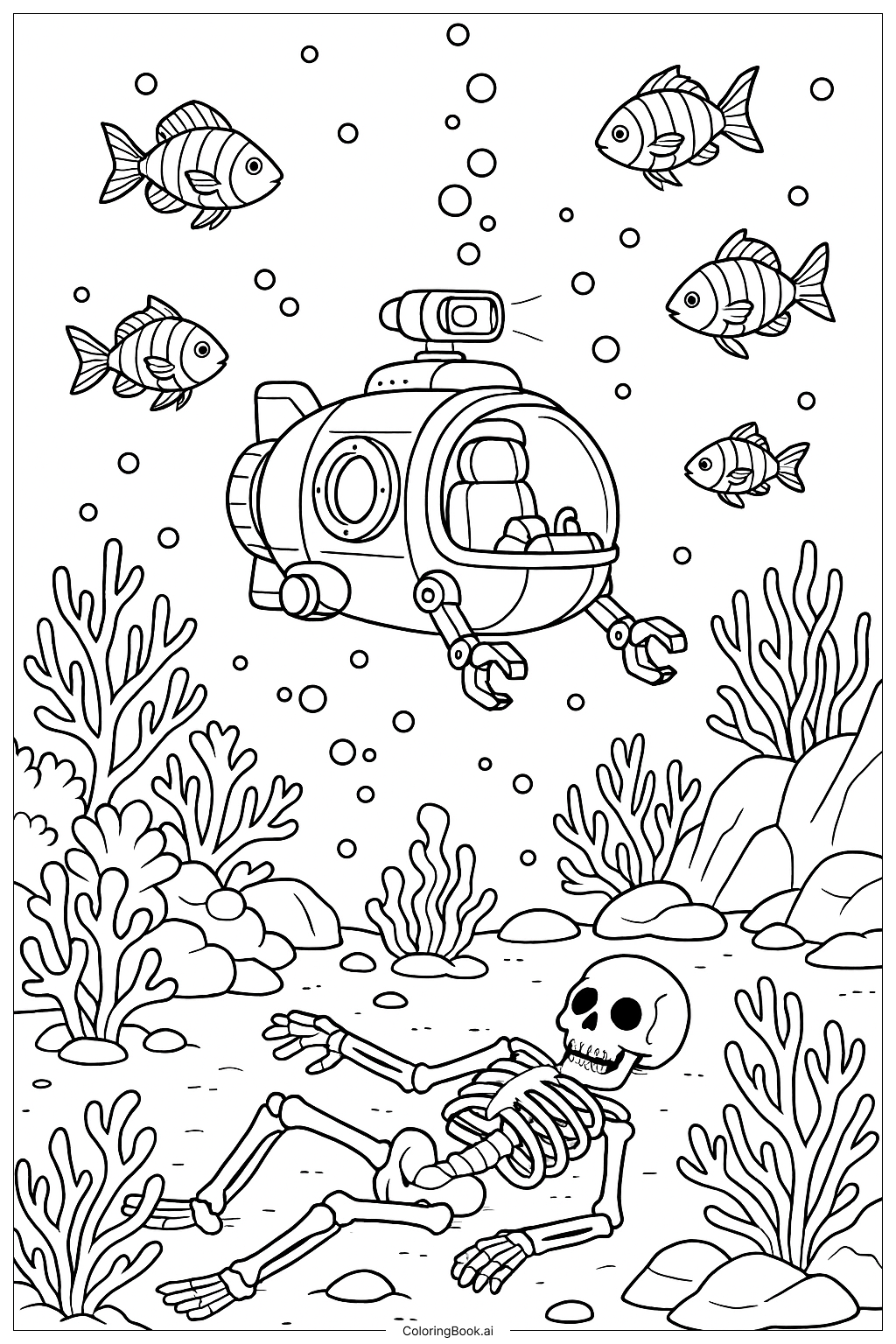
Use dark blues and greens to color the deep ocean background. For the submersible, try bright metallic shades like silver or yellow to make it stand out. You can make the glowing lights on the submersible shine with white or pale yellow. Color the sea creatures using vibrant and unusual colors such as pink, purple, or orange, to reflect how diverse deep sea animals can be. Try blending different colors to show light reflecting underwater. Remember to add shading on the rocks and coral to give a 3D effect and bring the scene to life.
Coloring challenges: Which parts are difficult to color and need attention for Science Deep Sea Exploration coloring page?
• Small Details: The image includes many tiny creatures like jellyfish and small fish that require careful coloring to stay within the lines and show their unique shapes. • Light Effects: Coloring the submersible’s glowing lights realistically is challenging because you need to create a sense of brightness and reflection underwater. • Textured Surfaces: The rocky seabed and coral have various rough and uneven textures that need layering of colors and shading for a natural look. • Dark Background: The deep sea background involves deep and blended shades of blue and green, which can be tricky to shade smoothly without harsh lines. • Overlapping Elements: Some sea creatures overlap with the submersible and coral, so maintaining clear boundaries without mixing colors takes patience.
Benefits of coloring books: Advantages of drawing Science Deep Sea Exploration coloring page
Coloring this image helps improve hand-eye coordination due to the fine details and small shapes. It encourages children to explore creativity by choosing different colors for strange deep sea creatures and imaginative underwater scenes. The challenge of shading and blending deep ocean hues develops patience and concentration. Additionally, it can inspire curiosity about science and the ocean, making learning fun and interactive. Coloring textures like rocks and coral also strengthens fine motor skills and attention to detail for all ages.