Coloring tips: How to color Science Classroom Scene coloring page well?
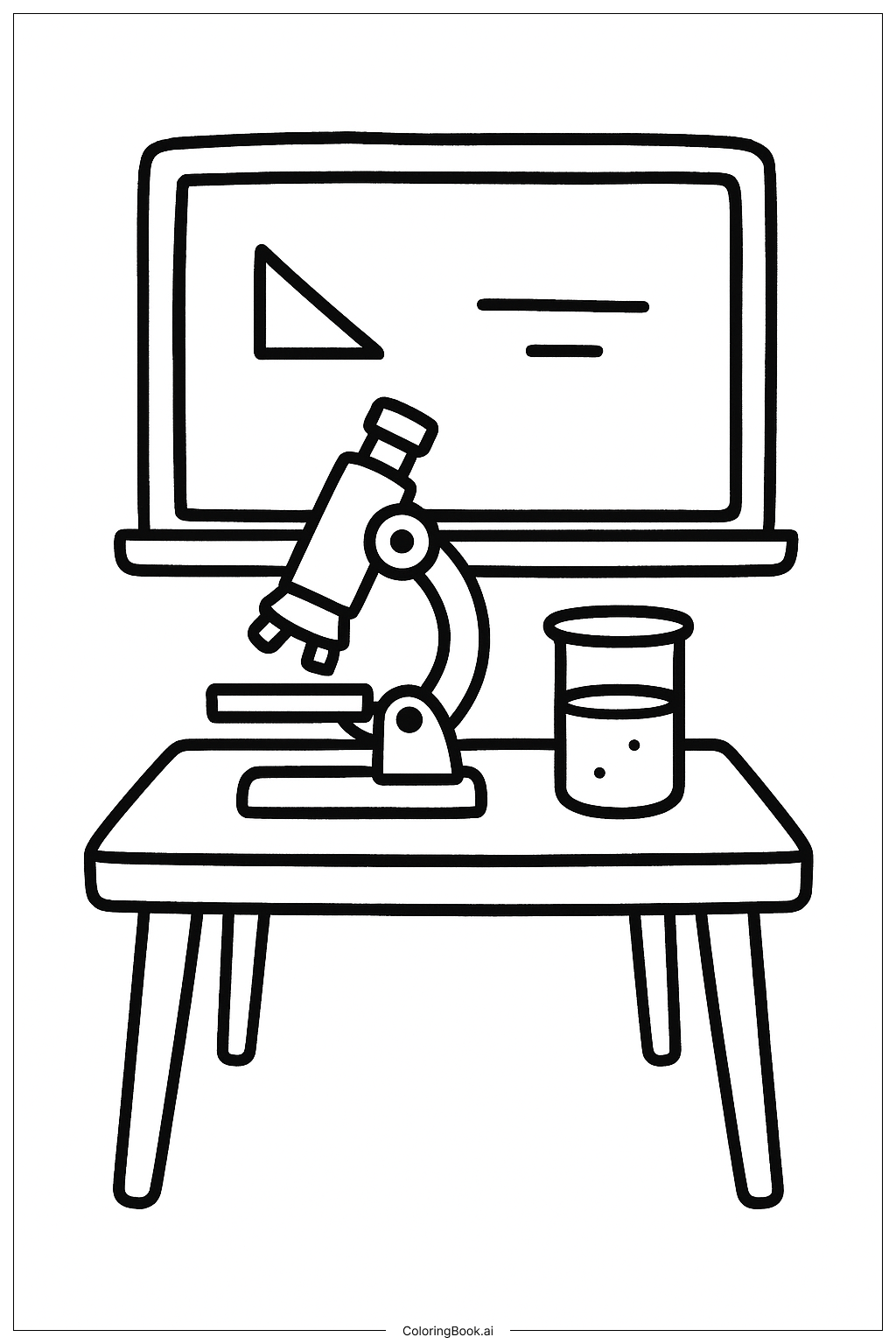
Use bright and cheerful colors to bring this science classroom scene to life. Color the walls light blue or pale yellow to create a warm, inviting space. For the students’ clothes, choose a variety of colors to show their different personalities, such as reds, greens, and purples. The chalkboard can be dark green or black, with colorful chalk drawings in white, red, and yellow. Use bright colors for scientific tools—glass test tubes can have hints of blue and green reflecting light. The sunlight from the window can be colored soft yellow to add warmth. You can also add some shading to give depth, like darker tones under the desks and chairs. Have fun mixing colors to make the scene lively and engaging!
Coloring challenges: Which parts are difficult to color and need attention for Science Classroom Scene coloring page?
• Small Details: This image is filled with tiny objects such as test tubes, magnifying glasses, and scientific models. Coloring these small details precisely can be challenging and requires careful attention to stay within the lines.
• Varied Textures: The scene includes different materials like glass, paper, wood, and fabric. Coloring these diverse textures convincingly means adjusting color shading and highlights thoughtfully.
• Multiple Characters: With several boys and girls wearing distinct outfits, it can be tricky to choose different color combinations that keep each character unique without the image becoming too busy.
• Chalkboard Artwork: The chalkboard has complex drawings and formulas that need neat, contrasting colors so the pictures and writing stand out clearly.
• Lighting and Shadows: Capturing the effect of sunlight coming through the window means considering where shadows fall on desks and people. This adds realism but can be challenging to get right with coloring tools.
Benefits of coloring books: Advantages of drawing Science Classroom Scene coloring page
Coloring this science classroom scene helps develop fine motor skills by encouraging careful hand control on small details. It also inspires curiosity about science by showing tools and experiments while making learning fun and creative. Choosing colors thoughtfully improves decision-making and fosters imagination as children decide how to bring the image to life. Additionally, engaging with a group scene promotes awareness of diversity and social interaction. Overall, this coloring activity combines artistic expression with educational themes, making it a rewarding experience for children aged 4–16.