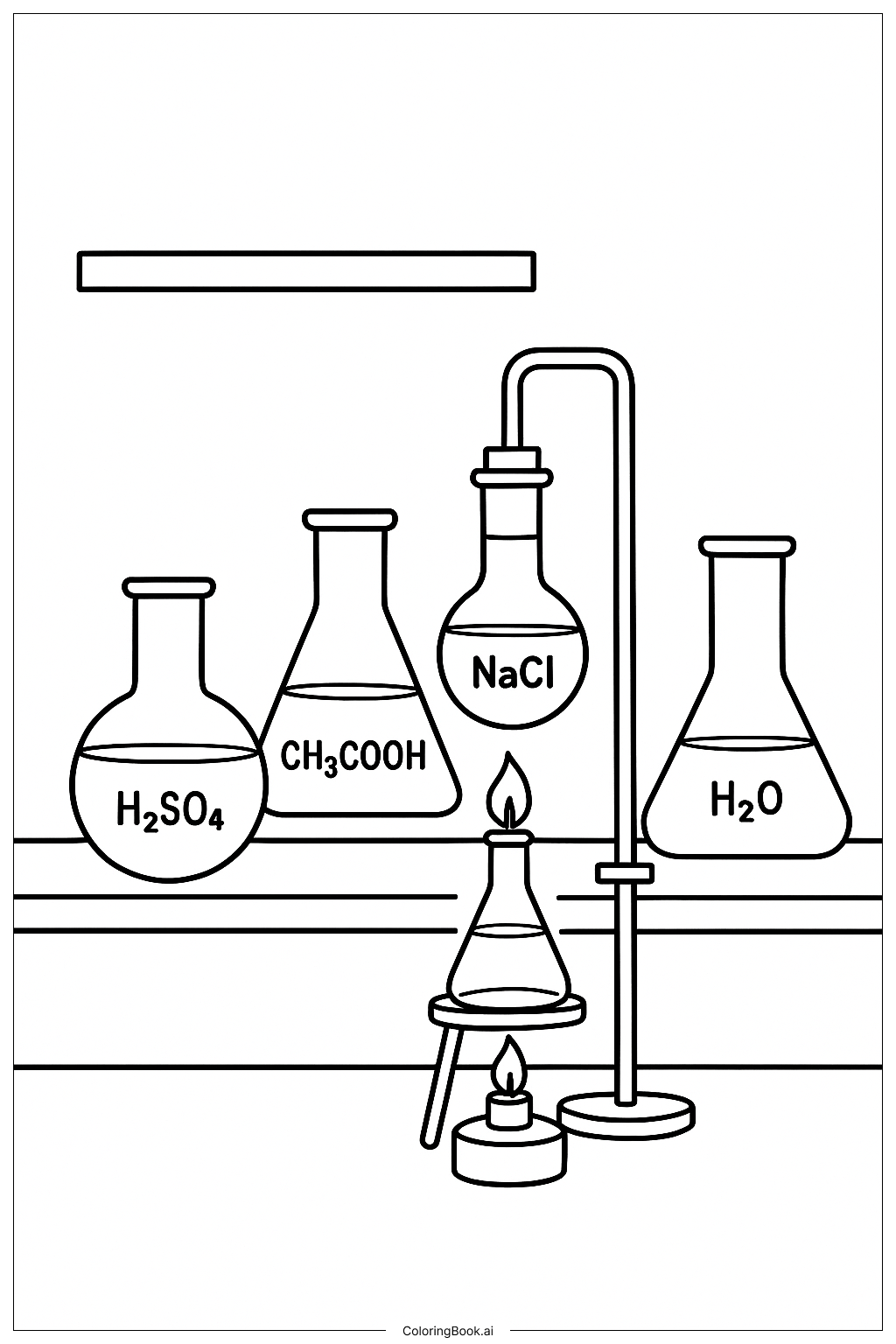
Coloring tips: How to color Science Chemistry Table coloring page well?
Start by choosing a color-coding system for the different element groups — for example, use yellow for metals, blue for nonmetals, green for noble gases, and orange for metalloids. This makes the table easier to read and more visually interesting. Use a thin marker or colored pencil to fill in the small element boxes carefully, since the cells are compact. For the decorative borders and science-themed illustrations around the table, feel free to use brighter and bolder colors to make them pop. Try to keep your coloring consistent within each group so the chart stays organized and clear. Take your time with the smaller text areas and enjoy the process of bringing chemistry to life with color.
Coloring challenges: Which parts are difficult to color and need attention for Science Chemistry Table coloring page?
• Small Cell Size: Each element box on the periodic table is quite small and contains text such as the element symbol, atomic number, and name. Staying inside the lines without accidentally coloring over the text requires a fine-tipped tool and a steady hand. This can be especially tricky for younger colorists.\n\n• Consistent Color Coding: One of the main goals is to use different colors for different element groups, such as alkali metals, halogens, and noble gases. Keeping track of which color belongs to which group across more than 100 elements demands focus and planning. It helps to map out your color scheme before you begin.\n\n• Repetitive Coloring: Because the table has many cells that are similar in size and shape, the repetitive nature of filling them in can become tiring. Colorists need to stay patient and careful throughout the entire table to maintain quality and neatness from start to finish.\n\n• Avoiding Color Bleed Between Cells: Since the element boxes are placed closely together, there is a real risk of one color bleeding or overlapping into a neighboring cell. Using colored pencils rather than markers can give you better control in tight spaces.\n\n• Decorative Border Details: If the image includes surrounding decorations like molecular diagrams, beakers, or atom illustrations, these may have their own fine details that require careful attention and color selection separate from the main table grid.
Benefits of coloring books: Advantages of drawing Science Chemistry Table coloring page
Coloring the Periodic Table of Elements offers a wonderful mix of creativity and learning. As you work through each element box, you naturally begin to notice the layout of the table — how elements are grouped, how periods and groups are arranged, and where familiar elements like oxygen, gold, and carbon are placed. This visual engagement helps cement chemistry knowledge in a fun, low-pressure way. For kids aged 4 to 16, it turns a complex scientific chart into an approachable and enjoyable activity. The process of choosing and applying color schemes for different element groups also builds organizational thinking and planning skills. Fine motor skills are sharpened as colorists carefully fill in small cells and detailed decorations. The focused, repetitive nature of coloring each cell promotes patience and concentration, which are valuable habits for both school and everyday life. Overall, this page bridges art and science in a way that feels rewarding for colorists of all ages and skill levels.