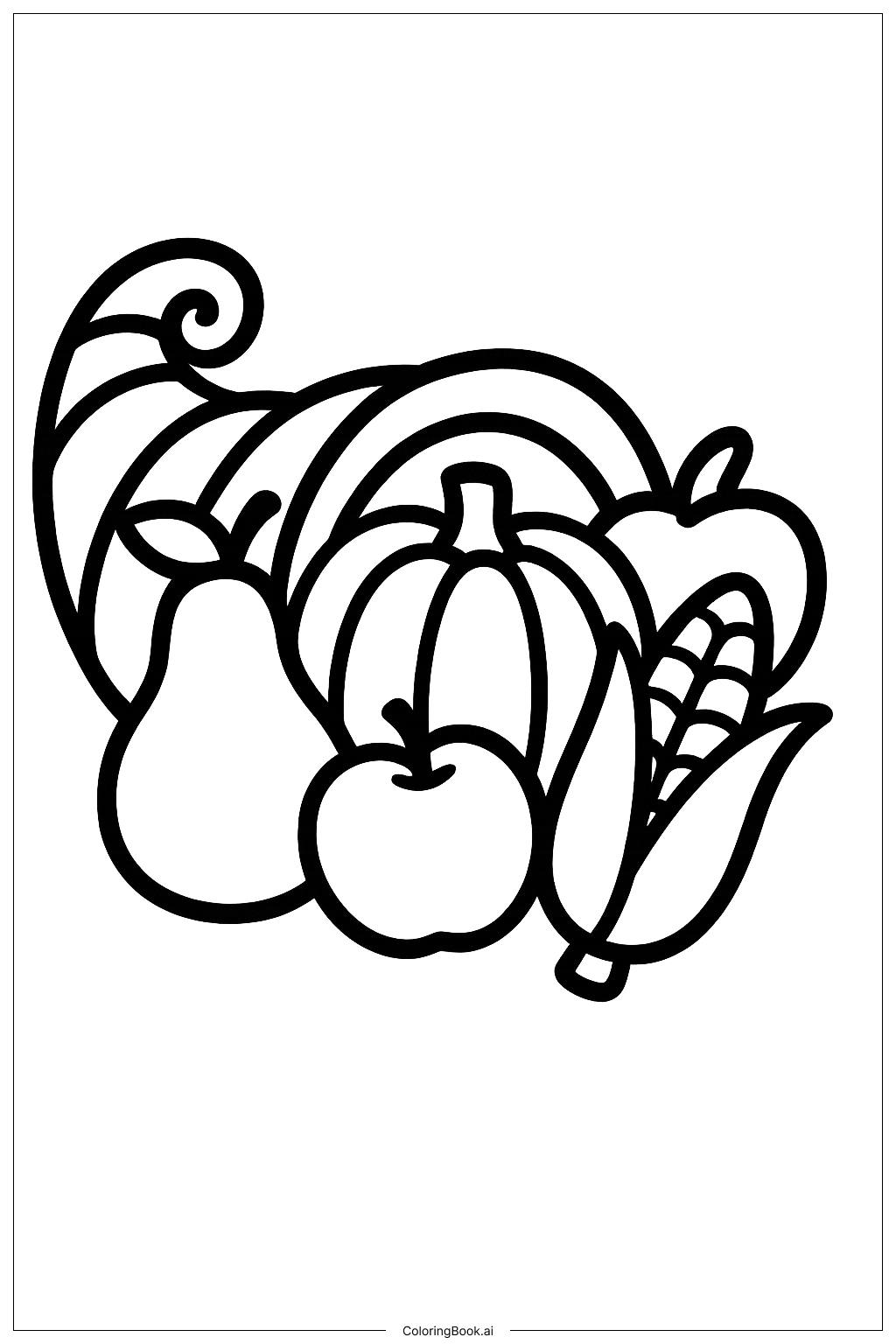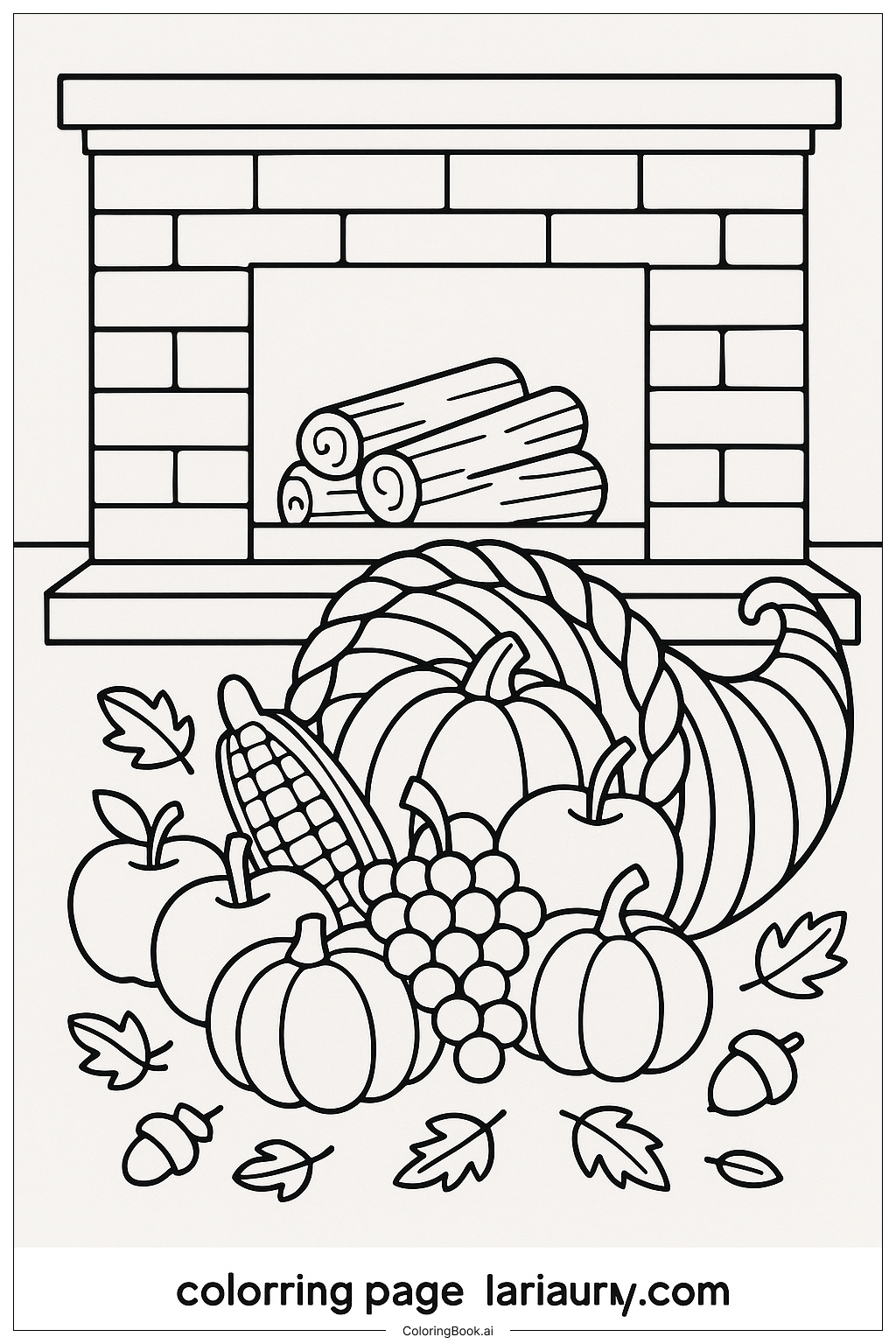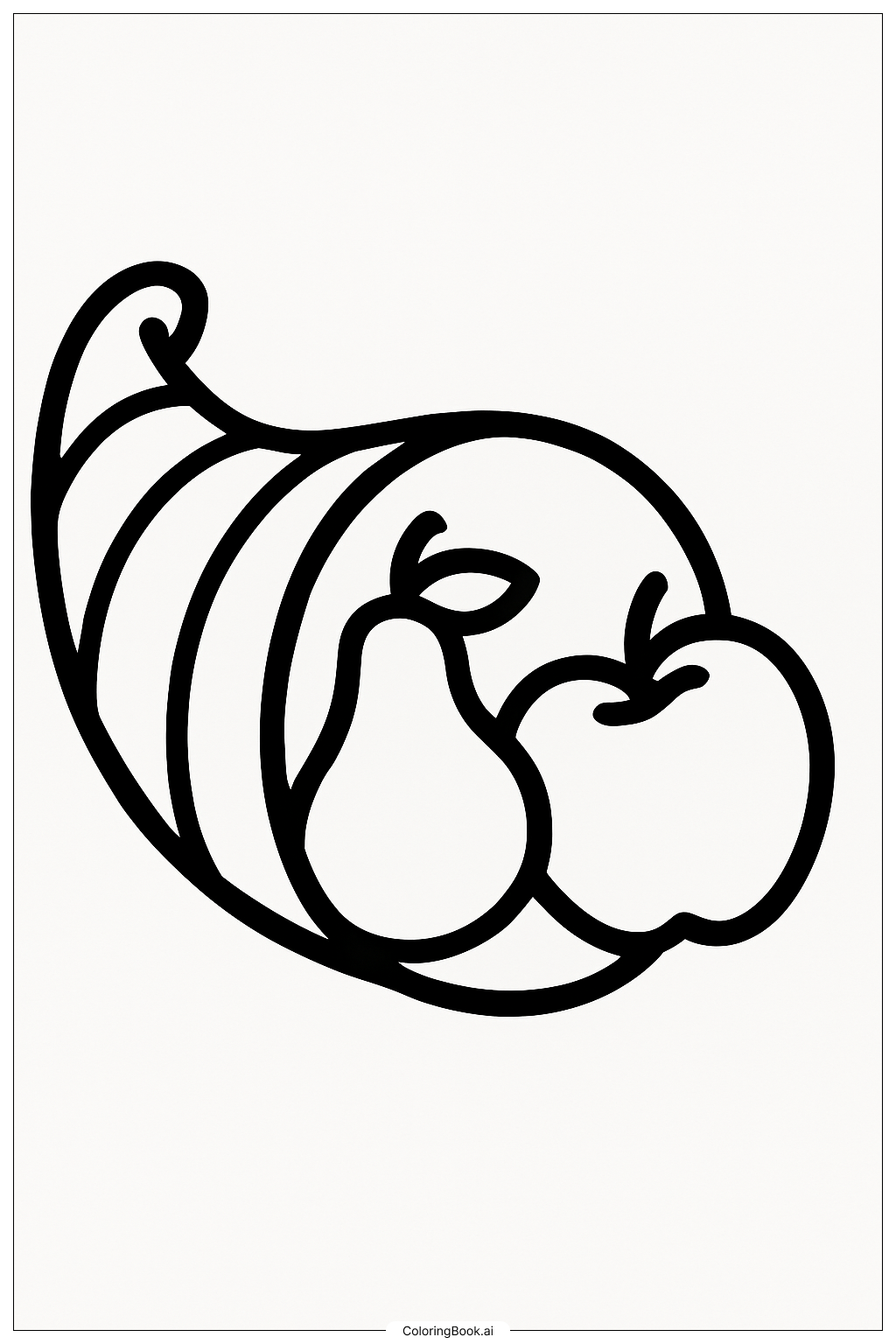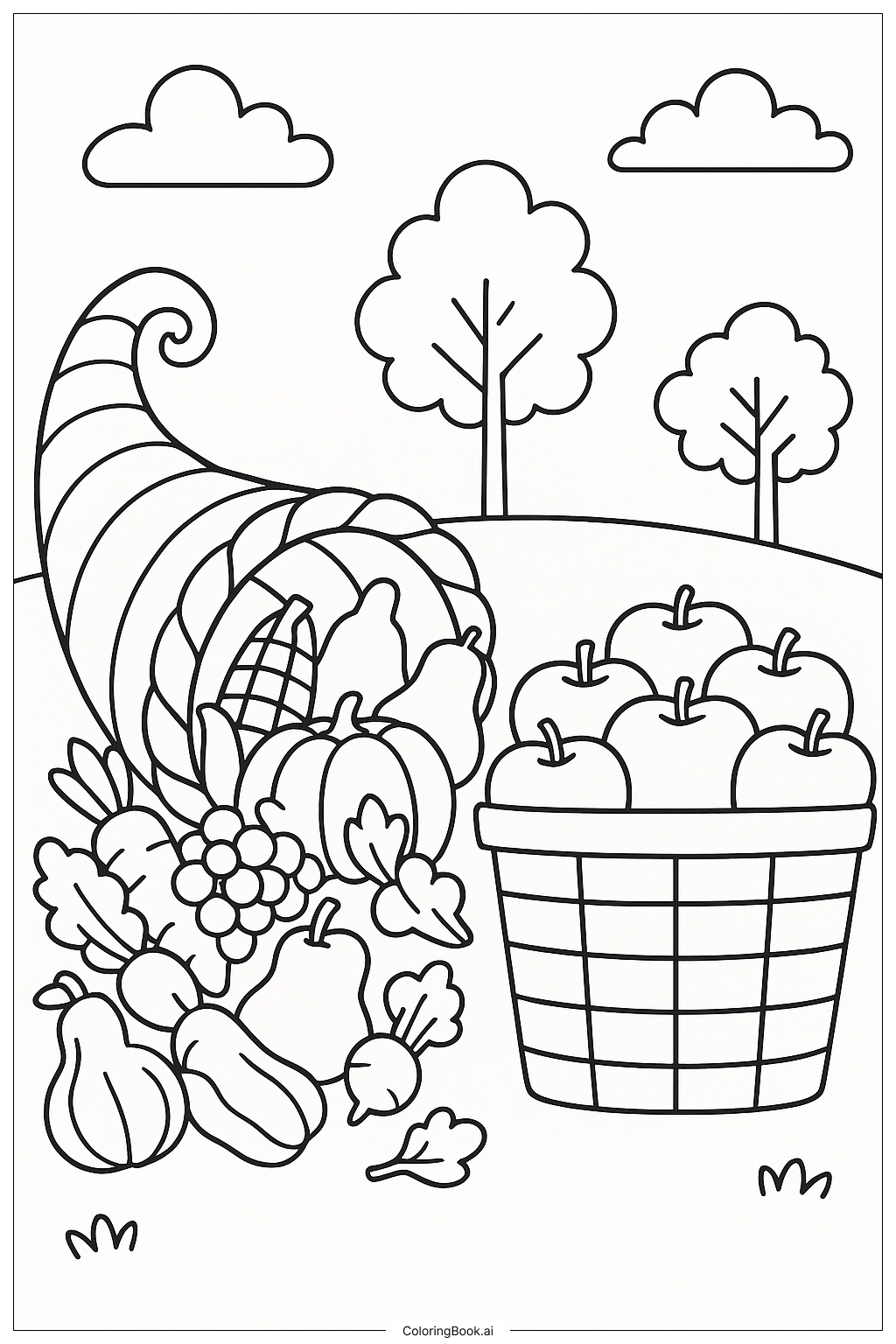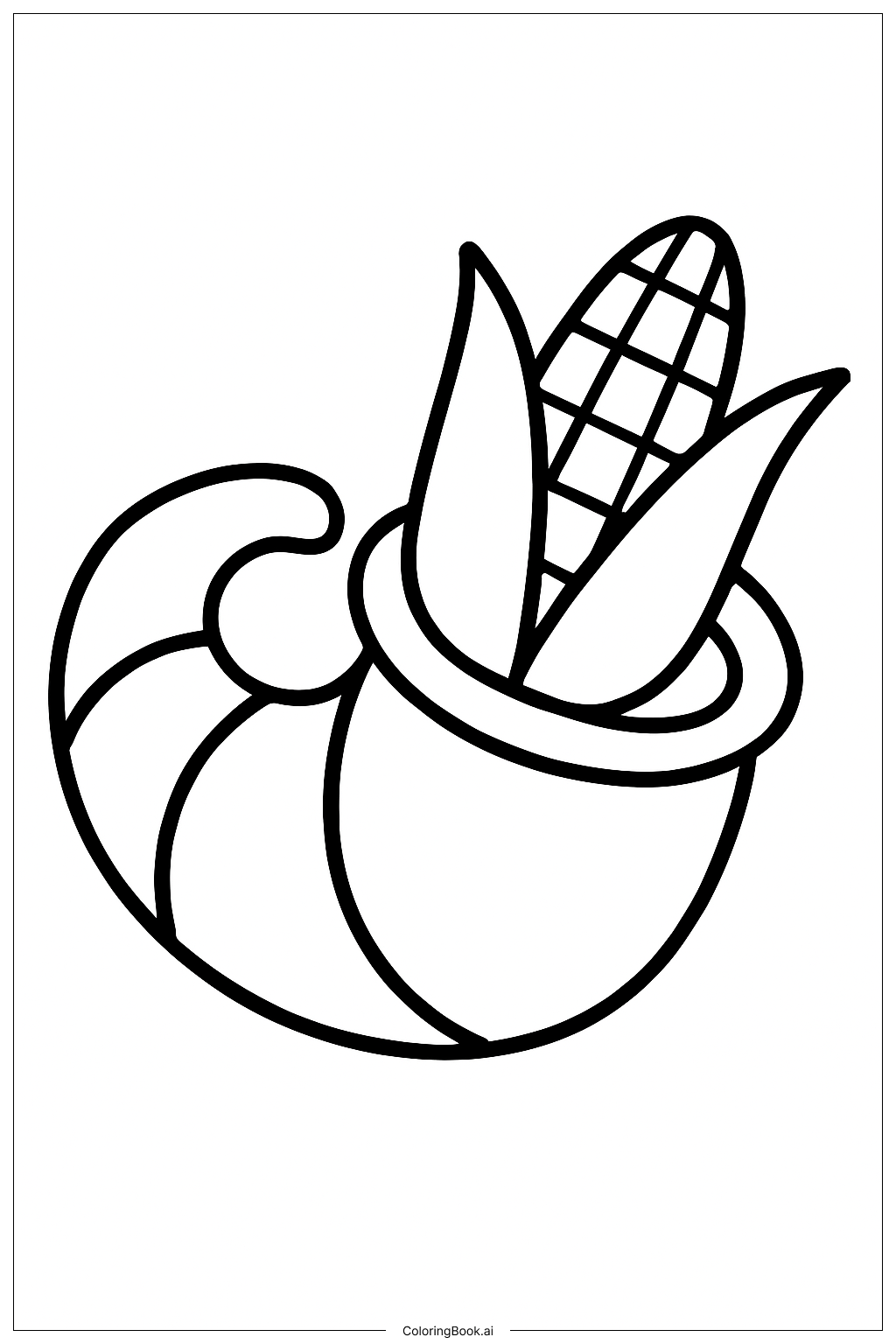
Dicas de colorir: Como colorir bem as páginas de Cornucopia With An Ear Of Corn?
Start with the cornucopia basket itself using warm brown tones like tan, caramel, and chocolate to create a woven basket effect. The ear of corn can be colored in golden yellows and buttery shades with green husks. Use rich oranges for pumpkins, adding darker lines between ridges for depth. Color grapes in deep purples or greens, apples in reds or greens, and pears in soft yellow-greens. The scattered leaves work beautifully in autumn colors: burnt orange, crimson red, golden yellow, and russet brown. Consider adding subtle shading by pressing harder in shadowed areas where fruits overlap or inside the cornucopia's opening. You might blend colors gently where light would naturally fade, like on the curved surfaces of fruits or the rounded horn shape.
Desafios de colorir: Quais partes são difíceis de colorir e precisam de atenção para Cornucopia With An Ear Of Corn?
• Cornucopia Weave Texture: The basket's woven pattern requires careful attention to create a realistic three-dimensional effect. Alternating light and dark browns in a consistent pattern across the curved surface challenges your ability to maintain visual rhythm while following the horn's twisting shape. The texture must appear consistent yet adapt to the form's curves and shadows.
• Corn Kernel Details: Each ear of corn contains dozens of individual kernels arranged in neat rows. Coloring each tiny kernel while maintaining uniformity and preventing color bleeding between them demands patience and fine motor control. Deciding whether to color each kernel individually or create a gradient effect across the entire ear requires planning and steady hand control.
• Overlapping Elements: Multiple fruits, vegetables, and leaves overlap throughout the composition, creating complex layering. Determining which items are in front and which are behind, then choosing appropriate colors and shading to convey depth, requires spatial reasoning. Shadow areas where objects touch must be darker to create separation and dimension.
• Leaf Vein Networks: The decorative leaves feature intricate vein systems branching from central stems. Coloring around these delicate lines while filling the leaf sections with autumn hues requires precision. Deciding whether to color veins differently or leave them as outlines adds another decision-making layer to the coloring process.
Benefícios dos livros de colorir: Vantagens de desenhar páginas para colorir de Cornucopia With An Ear Of Corn
Coloring this cornucopia scene offers wonderful developmental benefits for children and relaxation for adults. The varied elements provide excellent fine motor skill practice, especially when working on small details like corn kernels and leaf veins. Children learn about harvest traditions, autumn produce, and seasonal celebrations while engaging creatively. The composition teaches color theory through natural color relationships, warm autumn palettes, and shading techniques. Planning which fruits to color first develops problem-solving skills and spatial awareness. The repetitive motions involved in coloring the many small elements provide calming, meditative effects that reduce stress and anxiety. This image encourages patience and focus as colorists work through the abundant details, building concentration skills and a sense of accomplishment when completed. It's also a wonderful Thanksgiving activity that connects art with cultural traditions and gratitude themes.