Coloring tips: How to color Pot Of Gold With Small Path coloring page well?
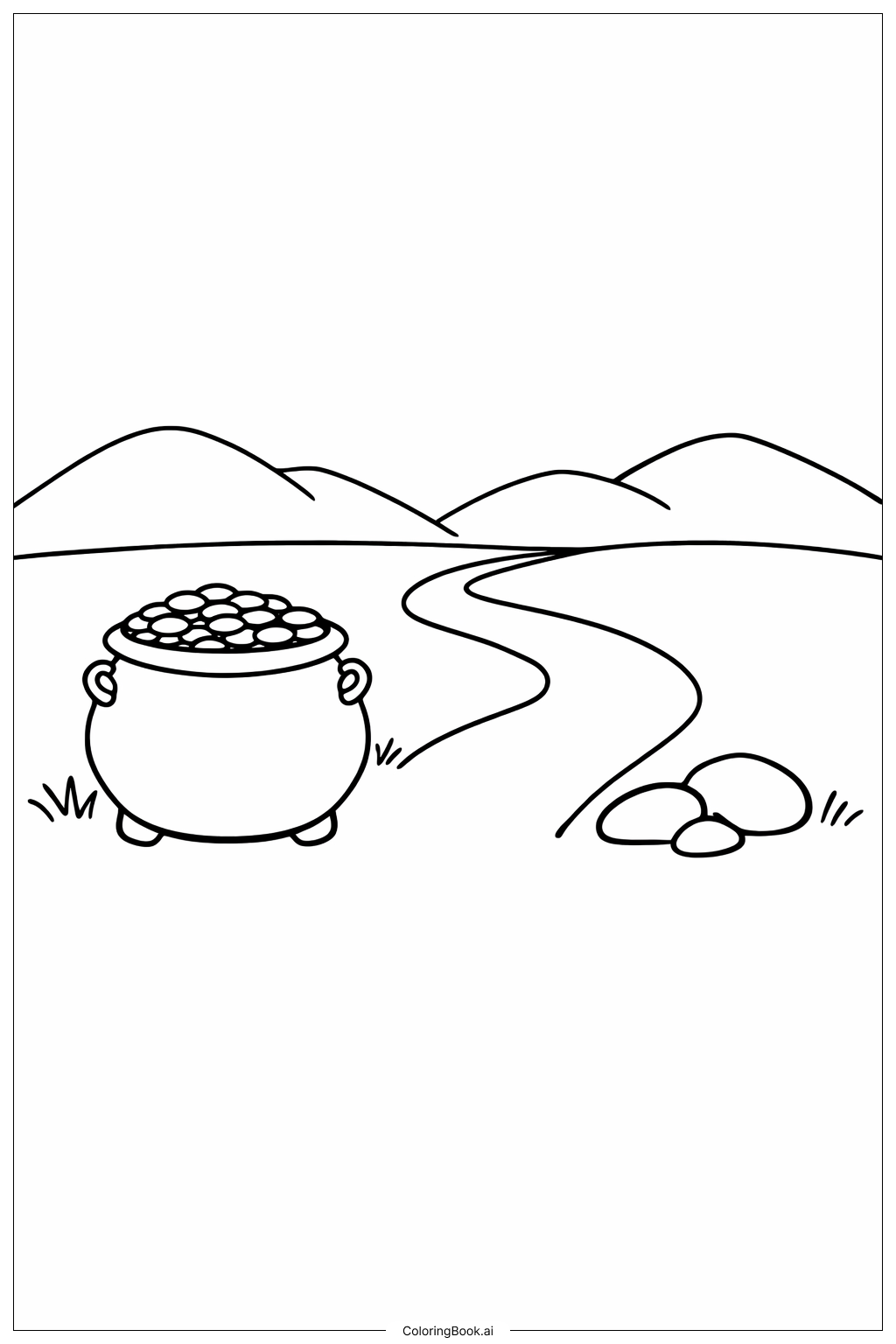
Start with the pot itself. Use a deep black or dark charcoal for the pot's body to give it a classic iron cauldron look. Add subtle dark blue or purple highlights along the curved edges to show a shiny surface.
For the gold coins, use bright yellow and golden orange. Add a few coins with a lighter cream tone to suggest reflected light and depth.
Color the winding path in warm sandy brown or tan. Add a slightly darker shade along the edges to make it look like a real dirt trail.
Use several shades of green for the shamrocks and clovers — mix lime green, forest green, and mint to make the leaves feel lush and layered.
For the grassy tufts and background, choose soft greens and yellows to keep the scene bright and cheerful. A light blue or lavender sky in the background can add a magical, fairy-tale atmosphere.
Younger colorists can keep colors simple and bold, while older kids can try blending and shading to make the scene really pop.
Coloring challenges: Which parts are difficult to color and need attention for Pot Of Gold With Small Path coloring page?
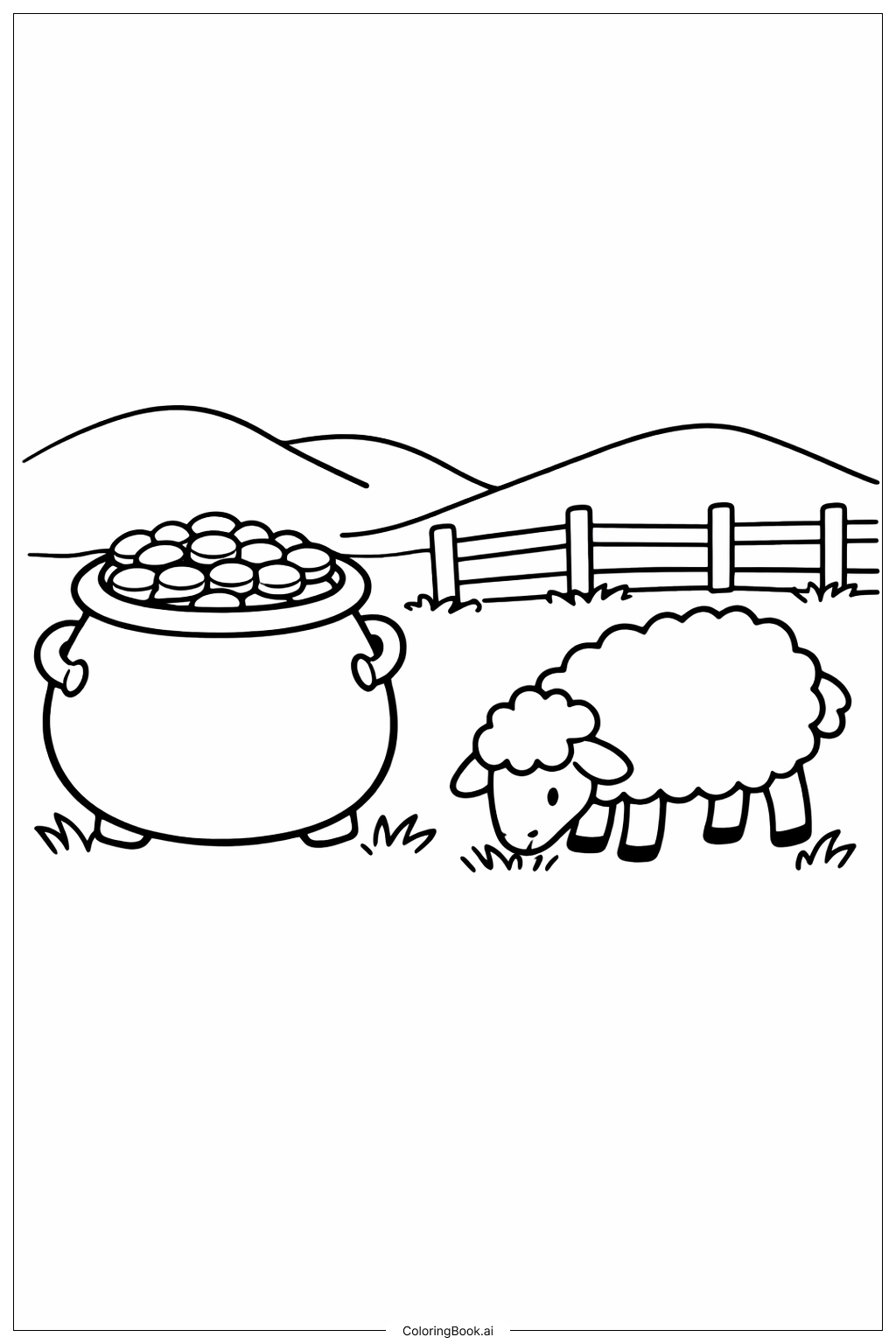
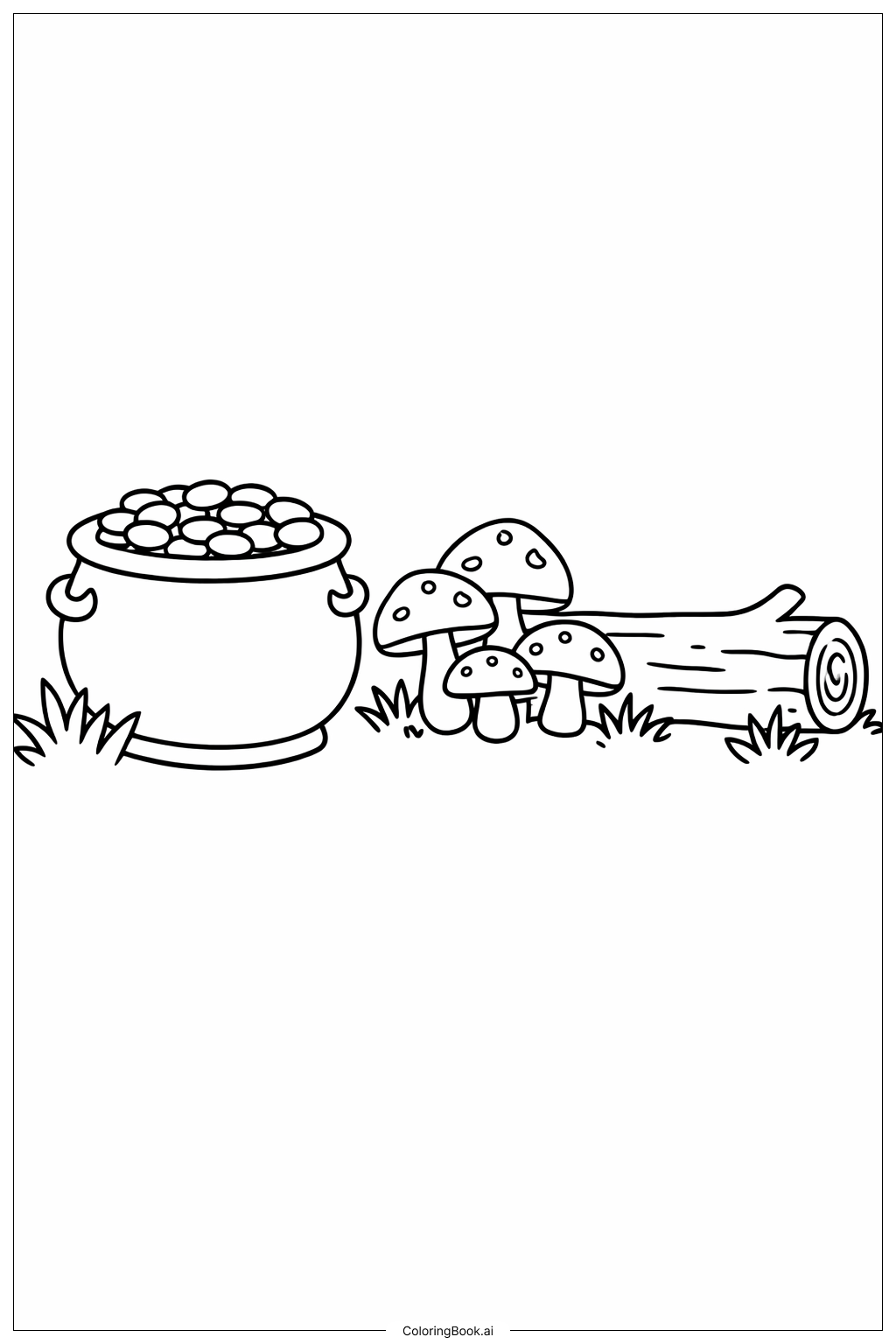
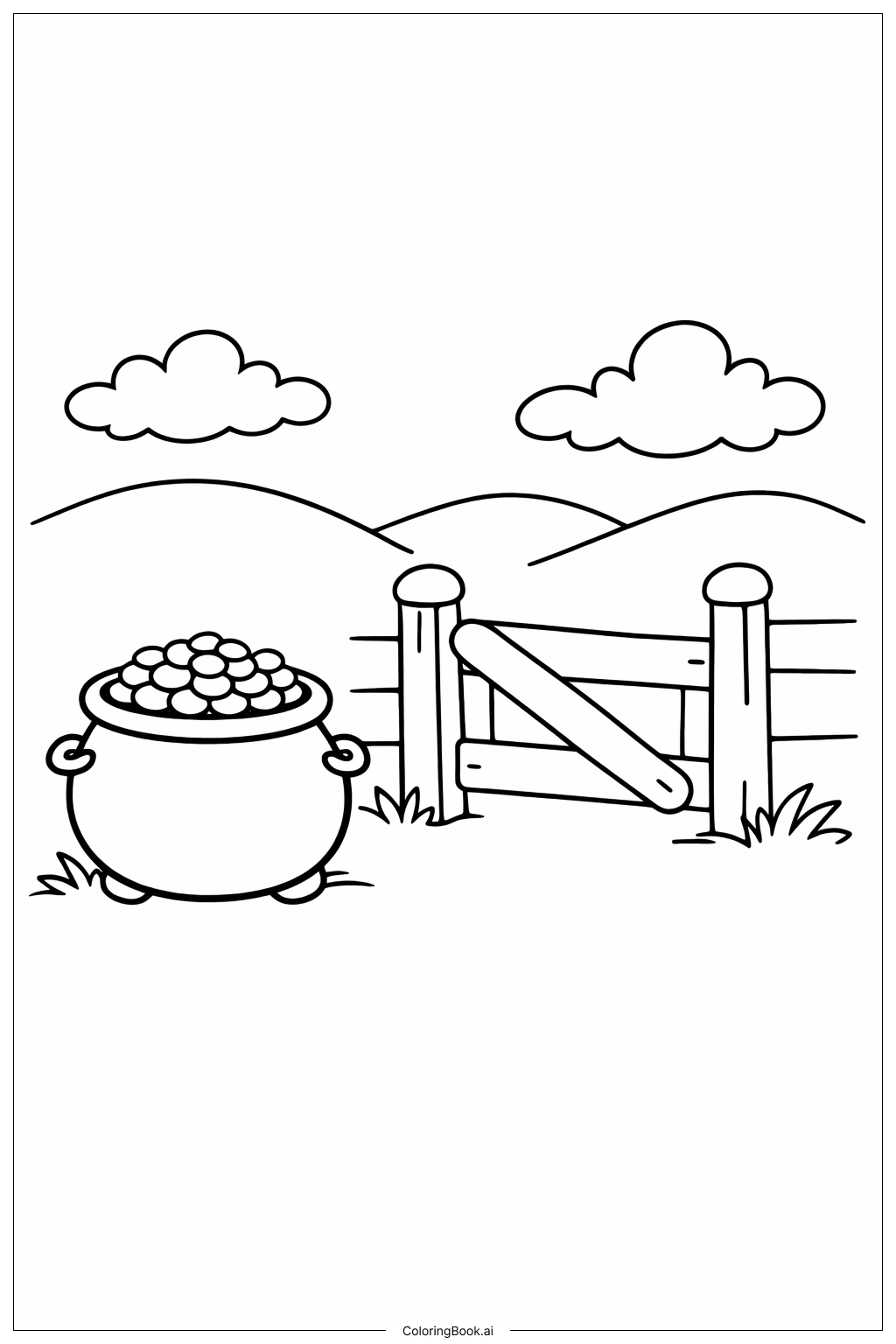
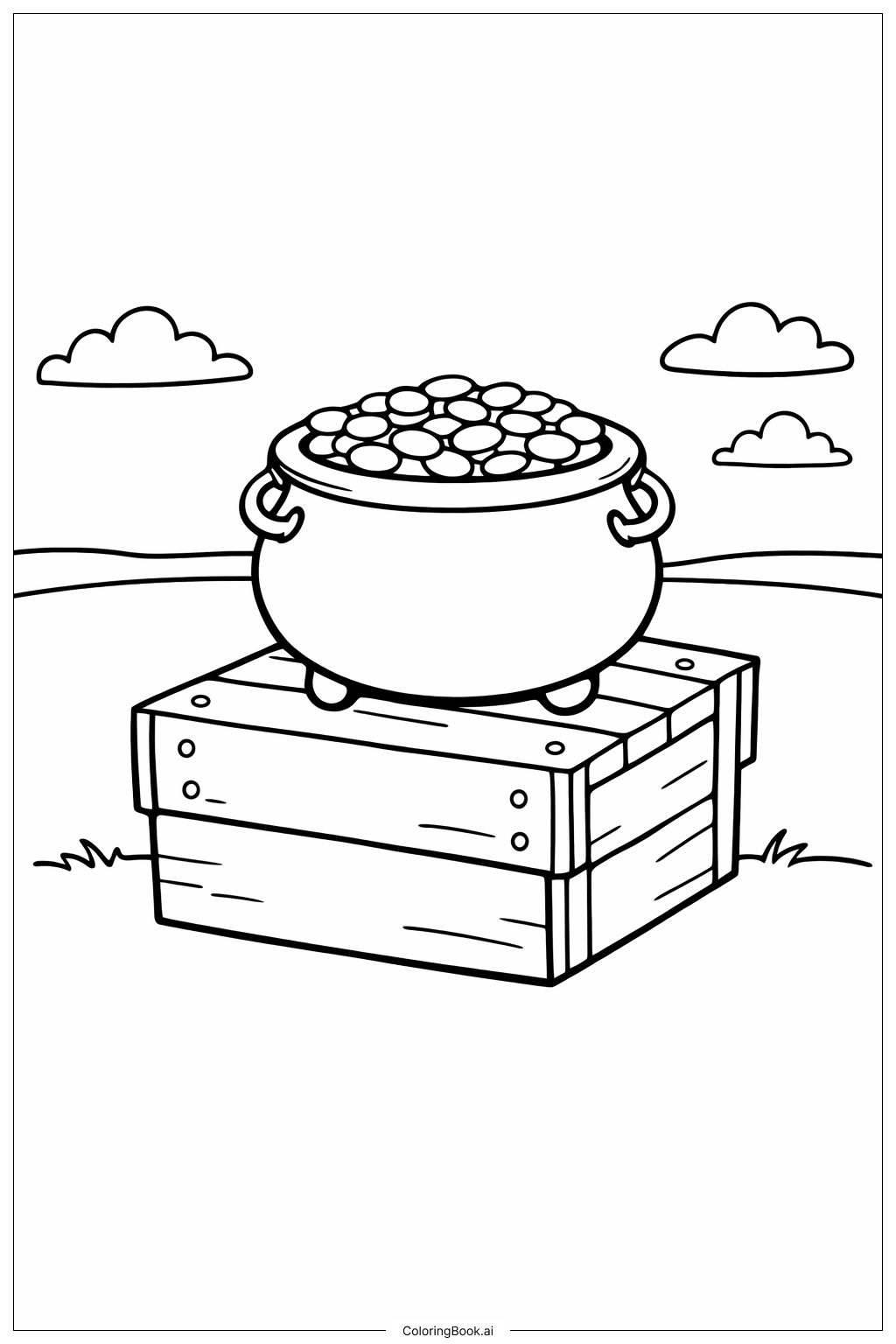
• Coloring the Gold Coins: The pile of coins stacked at the top of the pot contains many small, overlapping circular shapes. Staying within the lines of each individual coin requires patience and a fine-tipped coloring tool. To show depth and dimension, colorists need to use at least two shades of yellow or gold, placing lighter tones at the center of each coin and darker tones at the edges. This level of detail can be tricky, especially for younger children.
• Shading the Iron Pot: The round shape of the pot naturally curves, and capturing that three-dimensional form through color alone is a challenge. Without proper shading — using darker tones on one side and lighter tones on the other — the pot can look flat and uninteresting. Blending two or three values of the same color smoothly across the pot's surface takes careful, controlled strokes.
• Navigating the Winding Path: The narrow path curves through the scene with soft, organic edges. Keeping colors neat along both sides of the path without bleeding into the surrounding grass or background requires steady hands and precise coloring. Using a thin marker or a sharpened colored pencil for the path edges before filling in the center with broader strokes can help.
• Detailing the Shamrocks and Clovers: The small shamrock and clover shapes scattered throughout the scene have delicate, rounded lobes. Filling each lobe individually with different green tones to create a natural-looking plant takes time and careful attention, particularly where multiple leaves overlap.
• Balancing the Overall Color Palette: Because this scene includes many elements — pot, coins, path, plants, and background — choosing colors that work harmoniously together without clashing is an artistic challenge that encourages thoughtful color planning.
Benefits of coloring books: Advantages of drawing Pot Of Gold With Small Path coloring page
Coloring this Pot Of Gold With Small Path page offers a wide range of benefits for children and creative minds of all ages.
For younger children, filling in the large pot, round coins, and simple shamrock shapes helps build fine motor skills and hand-eye coordination. Tracing along the curves of the winding path encourages steady, controlled pencil or crayon strokes, which directly supports handwriting development.
The scene's variety of shapes — round coins, a curved pot, a flowing path, and small clover leaves — gives colorists practice working with different outlines and spatial boundaries. This strengthens focus and attention to detail.
Choosing colors for a magical treasure scene also sparks creativity and imagination. Kids can invent their own color worlds: a rainbow pot, silver coins, or a glowing path. There are no rules, and that freedom builds confidence.
The St. Patrick's Day theme connects this page to cultural storytelling and traditions, making it a gentle, fun way to introduce folklore and seasonal celebrations.
For older kids and teens, the opportunity to practice shading the pot, layering the coins, and blending the greenery provides a satisfying artistic challenge that builds real drawing and painting skills.
Most importantly, the calm, focused nature of coloring helps reduce stress and encourages a sense of accomplishment when the page is complete. It is a simple, joyful activity that rewards patience and creativity.