Coloring tips: How to color Plant with Garden Tools coloring page well?
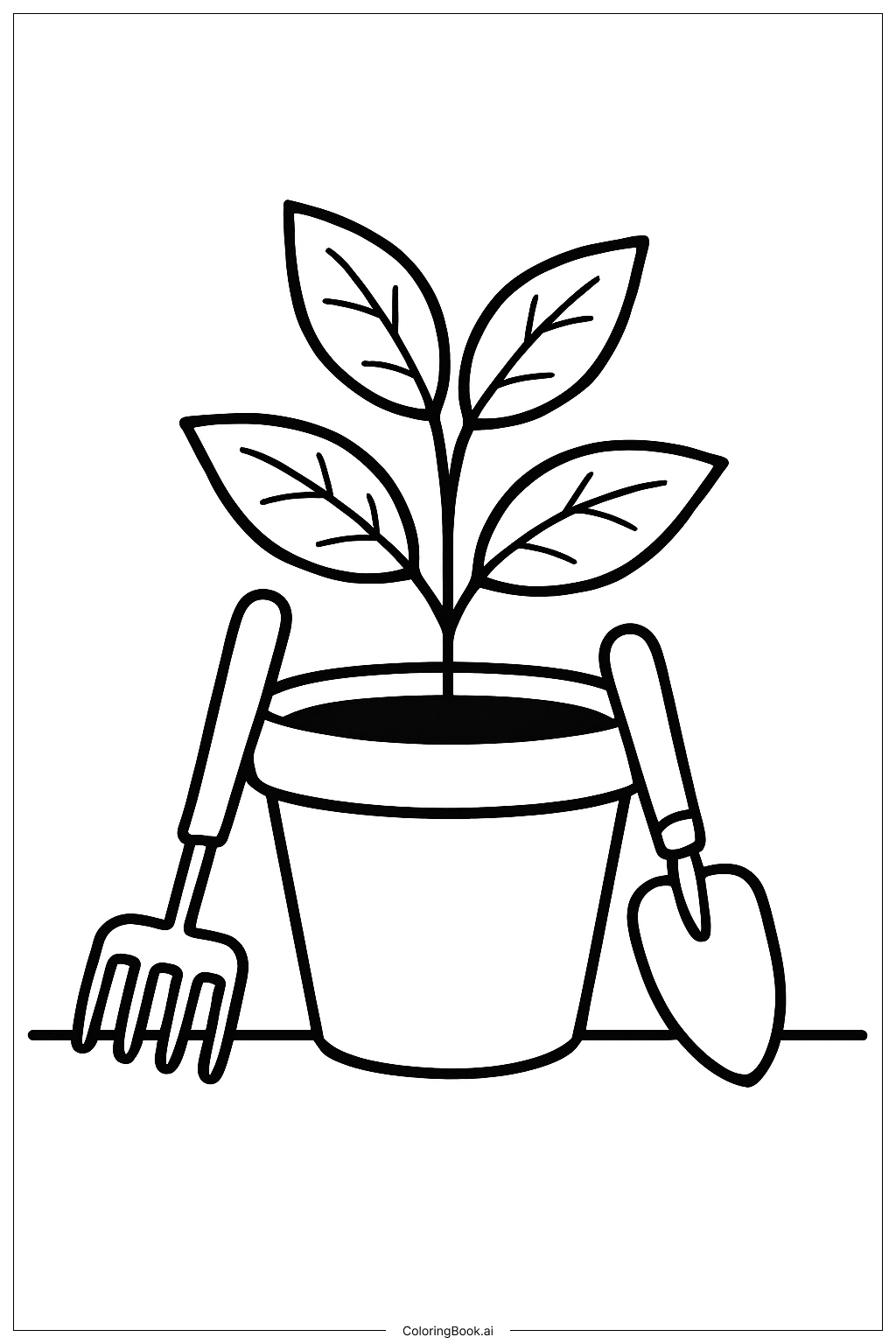
Use fresh green shades for the leaves of the plant to show life and growth. You can mix light and dark greens to add depth. For the pot, try warm earthy tones like terracotta, brown, or even bright colors to make it stand out. The gardening tools can be colored metallic gray or silver with wooden handles in brown shades. Consider coloring the background softly, perhaps with light blue to hint at sky or soft beige for soil. Don't be afraid to use bright or imaginative colors to make your artwork lively and cheerful.
Coloring challenges: Which parts are difficult to color and need attention for Plant with Garden Tools coloring page?
• Leaf Details: The plant’s leaves have different shapes and sizes. It can be tricky to color them uniformly while keeping a natural look. Try to use gradual color shading to show light and shadow. • Tool Textures: The garden tools include metal and wood parts. Capturing the metallic shine alongside the wooden texture requires attention to color contrast and highlights. • Small Areas: Some parts of the tools and the pot are small and tight spaces. Coloring inside these lines carefully needs patience and steady hand control. • Layering Colors: To make the plant appear healthy and three-dimensional, layering different shades of green is important, which can be challenging for beginners. • Composition Balance: Ensuring balanced colors so the tools and plant complement each other without clashing or blending too much can take thoughtful color choices.
Benefits of coloring books: Advantages of drawing Plant with Garden Tools coloring page
Coloring this image helps children develop their fine motor skills by working within detailed lines and small spaces. It encourages focus and patience as they manage the shading and textures of different objects like leaves and metallic tools. This picture also sparks creativity, inviting children to imagine a colorful garden and experiment with natural and bright colors. Furthermore, it introduces young artists to the concept of natural growth and care, promoting an appreciation for gardening and nature. Overall, it is a relaxing and rewarding activity that combines art with an educational theme.