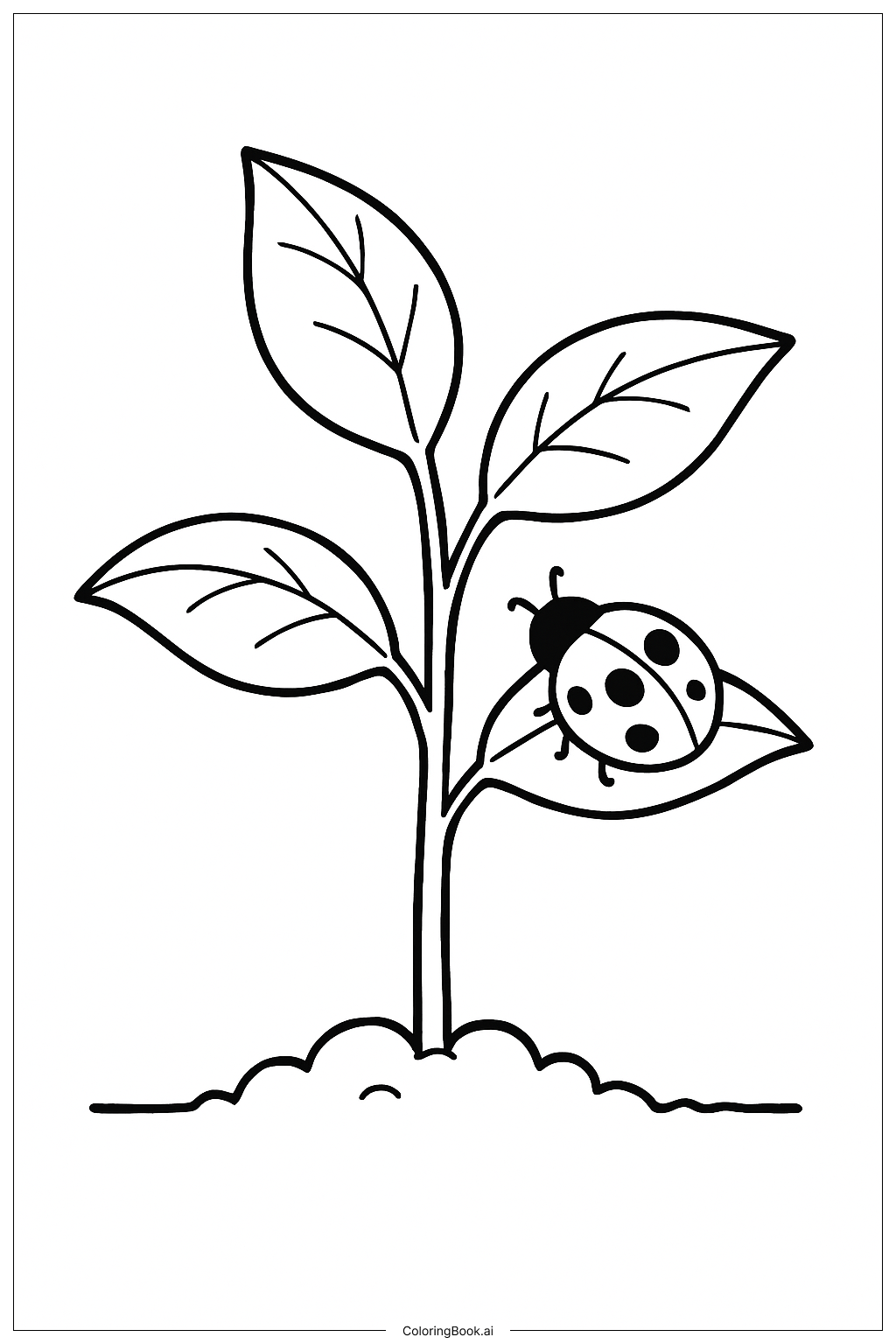
Coloring tips: How to color Plant with Ladybug coloring page well?
For this image, consider using different shades of green for the plant leaves to give them a realistic and fresh look. You can choose light green for the new leaves and darker green for mature ones. The veins on the leaves can be colored slightly darker or lighter to create depth. The ladybug is perfect for bright red or orange tones with black spots to make it stand out clearly. You might want to color the stem with brown or green shades. Use yellows or light greens for any smaller details to add variety. Feel free to experiment with blending and shading to make the plant look more three-dimensional and lively.
Coloring challenges: Which parts are difficult to color and need attention for Plant with Ladybug coloring page?
• Small Details: The ladybug has tiny spots, legs, and antennae that require careful coloring to stay inside the lines without smudging. • Leaf Veins: The intricate lines on the leaves can be challenging because they are thin and close together, needing a steady hand to highlight rather than overpower. • Color Layering: Achieving a natural look with different shades of green on leaves involves subtle layering and blending, which may be difficult for younger children. • Shape Curves: The leaves curve and overlap in places, making it important to follow the outline precisely to reflect their natural forms. • Contrast Balance: Coloring the ladybug bright enough to stand out against the green plant while maintaining harmony requires careful color choices and pressure control with pencils or markers.
Benefits of coloring books: Advantages of drawing Plant with Ladybug coloring page
Coloring this Plant with Ladybug image helps develop fine motor skills by focusing on small details like the ladybug’s spots and leaf veins. It encourages attention to detail and patience, as the shapes require careful coloring inside lines. This coloring activity also stimulates creativity by inviting children to experiment with different shades and textures in nature. Through this process, kids learn about plant structure and the appearance of insects, increasing their awareness of the natural world. Finally, it provides a relaxing and enjoyable experience that can promote mindfulness and concentration for children of all ages.