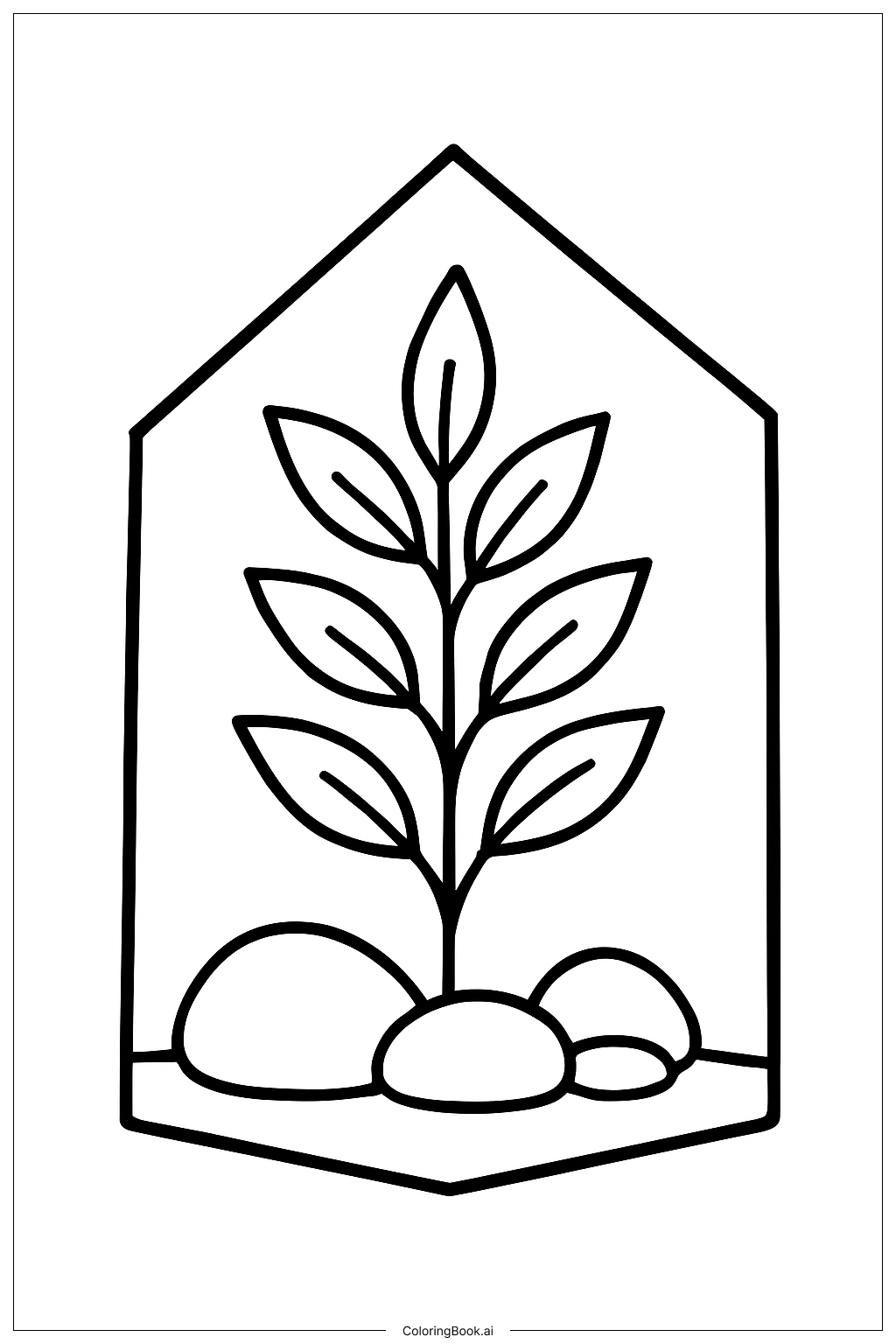
Coloring tips: How to color Plant in Terrarium Scene coloring page well?
Use various shades of green to bring the plants to life. Start with darker green for the bigger leaves and lighter green for smaller details. You can add hints of yellow or blue to make the leaves look shiny or fresh. Color the soil in brown tones, mixing dark and light browns to show depth. For the stones and moss, try grey, tan, and soft green shades to create natural contrast. Shade the glass terrarium with light blue or grey to suggest its transparency. Leave some white spots to show reflections on the glass surface.
Coloring challenges: Which parts are difficult to color and need attention for Plant in Terrarium Scene coloring page?
• Translucent glass surface: Coloring the glass can be tricky because it needs to look clear yet reflective. Avoid heavy coloring to keep it transparent.
• Small plant details: The tiny leaves and thin roots require careful coloring within narrow spaces, which can be challenging.
• Shading soil texture: Showing soil depth with different browns takes blending skills to avoid flat coloring.
• Natural stone variation: Each stone has unique shape and should have subtle color changes, which can be hard to achieve smoothly.
• Layering plants: Because plants overlap, deciding which leaves go on top and how to color shadows correctly is important for depth.
Benefits of coloring books: Advantages of drawing Plant in Terrarium Scene coloring page
Coloring this image helps improve focus because the small details require attention. It encourages creativity by mixing different greens and earth tones to make the plants and soil look realistic. Working on shading and transparency builds fine motor skills and control over coloring tools. This scene also teaches patience, as the terrarium elements need careful coloring to capture their delicate beauty. Lastly, it inspires an appreciation for nature and how plants grow in a tiny environment.