Coloring tips: How to color Plant in Outdoor Garden coloring page well?
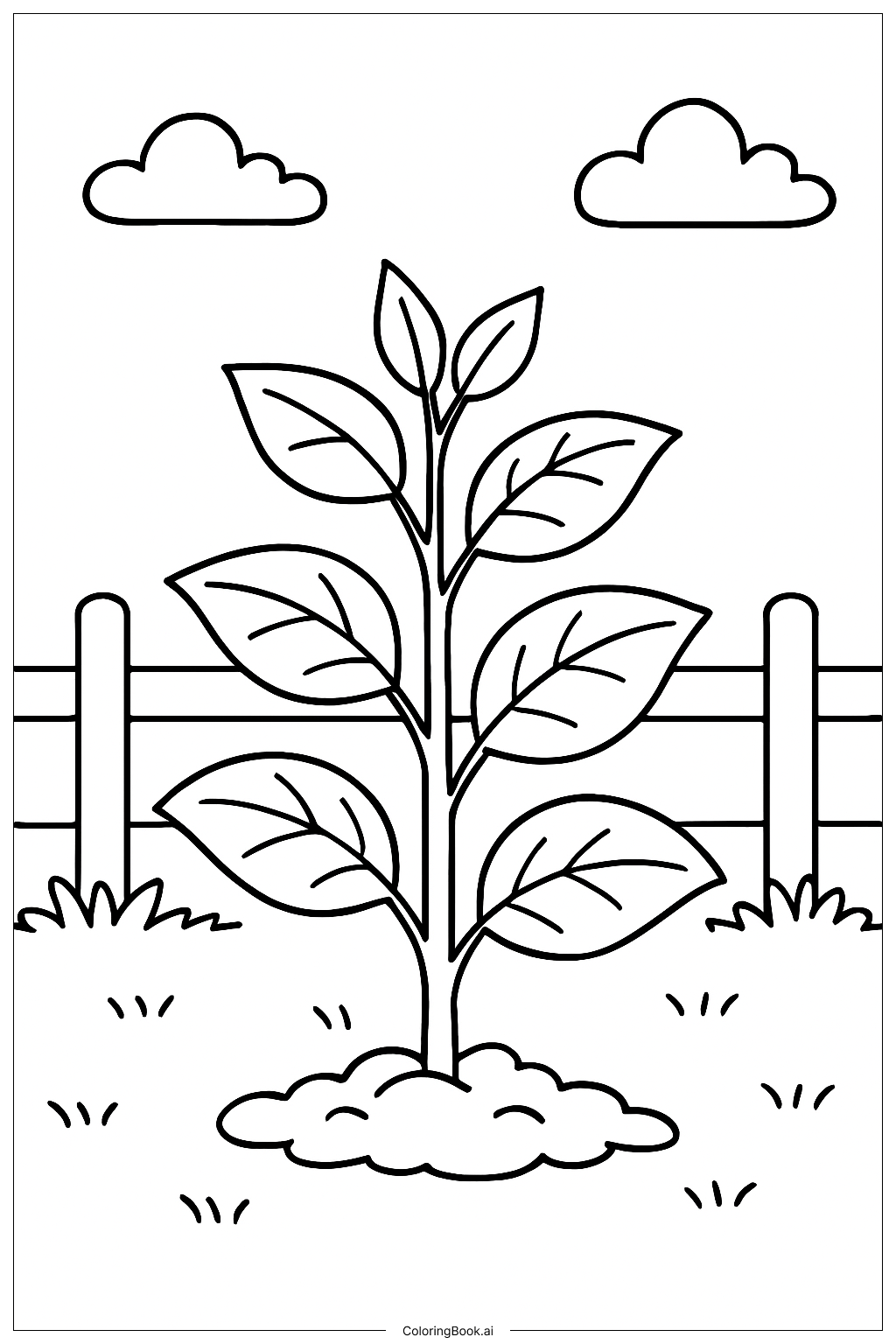
For the plant, use various shades of green for the leaves to show depth and texture. The stem can be colored in a light brown or dark green to resemble different types of plants. The dirt mound can be a rich brown, while the grass around it can be a bright sunny green. The fence can be colored in shades of wood, like light tan or reddish-brown. The sky can be a calming blue, and the clouds can be kept white or light gray for a soft look.
Coloring challenges: Which parts are difficult to color and need attention for Plant in Outdoor Garden coloring page?
1. **Leaf Details**: The leaves have small veins and curves. Finding the right shades to highlight these details can be tricky. Different colors can create shadows and make the leaves look more realistic. 2. **Textures**: The dirt mound and grass require skillful coloring to differentiate their textures. Mixing brown tones for the dirt and different greens for grass is essential. 3. **Fence Coloring**: The wooden fence may need varying brown shades to give it a three-dimensional look. This requires careful application to avoid a flat appearance. 4. **Sky and Clouds**: Blending blue for the sky with white for the clouds can be challenging. Smooth transitions are needed for a natural look. 5. **Overall Balance**: Coloring the entire scene harmoniously while ensuring that no single area overwhelms the others can be a challenge for young artists.
Benefits of coloring books: Advantages of drawing Plant in Outdoor Garden coloring page
Coloring this image is a fun and creative way to learn about plants and nature. It helps improve fine motor skills as kids learn to control their coloring tools. Choosing different colors encourages creativity and self-expression. Moreover, coloring can also be calming and reduce stress, providing a sense of relaxation. Children can enhance their focus and concentration while working on this activity, making it educational and enjoyable.