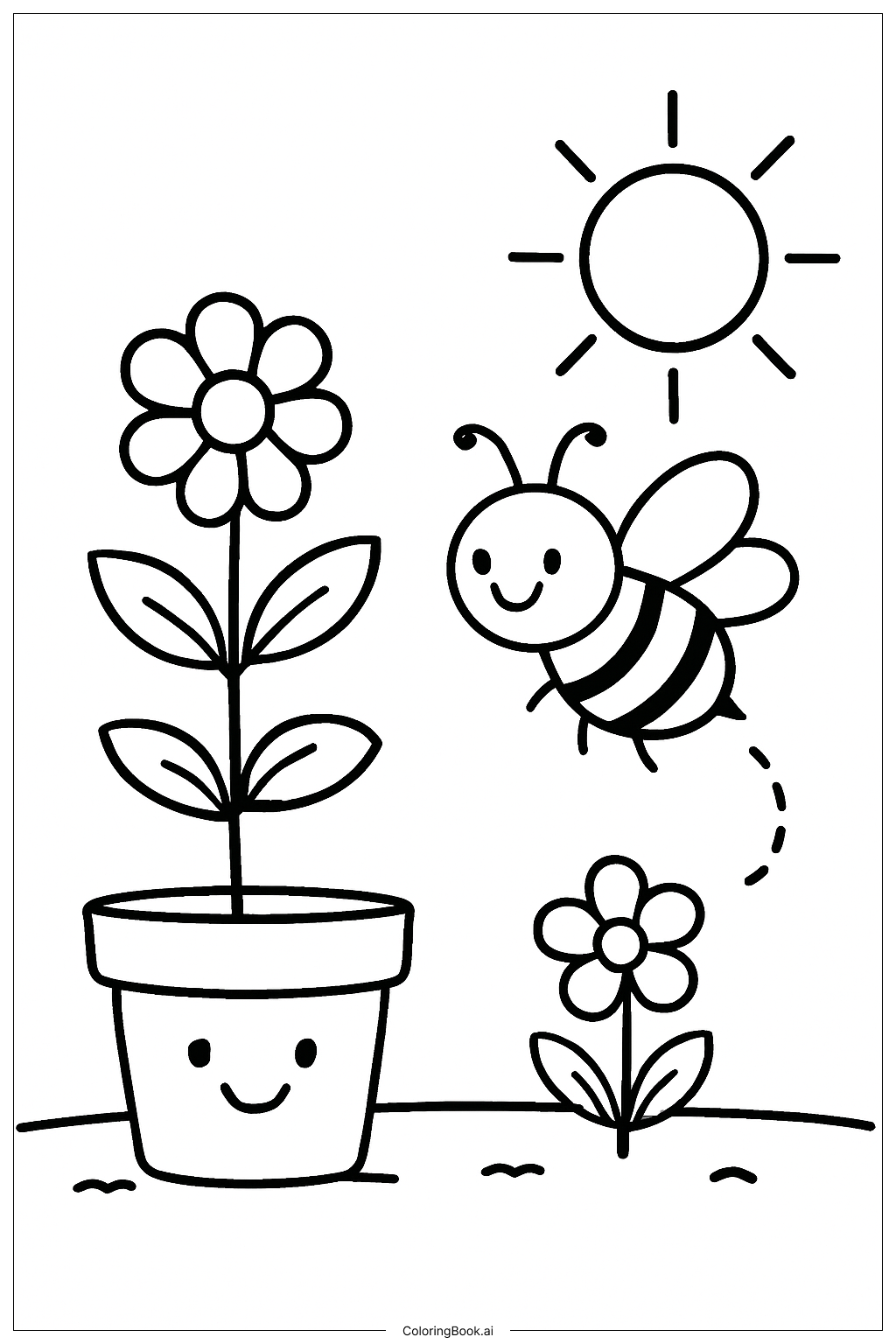
Coloring tips: How to color Plant and Friendly Bee coloring page well?
Use bright green shades for the Plant’s leaves and stem to give a fresh, vibrant look. For the friendly bee, yellow and black stripes will make it stand out nicely. You can color the wings in a light blue or gray with some areas left white to show transparency. Try using warm colors like orange, red, or pink for the flower the bee is visiting. Don’t be afraid to use different kinds of greens for the smaller leaves to add depth. Feel free to color the background with soft blue or light pastel colors to make the main elements pop.
Coloring challenges: Which parts are difficult to color and need attention for Plant and Friendly Bee coloring page?
• Small Details on the Bee: The bee’s wings and tiny legs have fine lines that need careful coloring to avoid bleeding outside.
• Leaf Textures: The Plant’s leaves have veins and layered shapes that require precision to make them look natural.
• Flower Petals: Each petal is distinct, so coloring each with a uniform shade while keeping them separate can be challenging.
• Balancing Bright Colors: Choosing colors that stand out but don’t overwhelm the whole picture requires thoughtful combinations.
• Staying Within Thin Lines: The outlines are delicate, especially around the bee and flower parts, so steady hands and concentration are important.
Benefits of coloring books: Advantages of drawing Plant and Friendly Bee coloring page
Coloring this Plant and Friendly Bee picture helps improve fine motor skills by requiring control over small details like the bee’s legs and flower petals. It encourages children to observe nature closely and learn about the relationship between plants and pollinators. Using different shades of green and mixing colors promotes creativity and color recognition. Additionally, completing this engaging scene can build patience and focus, while also providing a fun, calming activity that connects kids to the natural world.