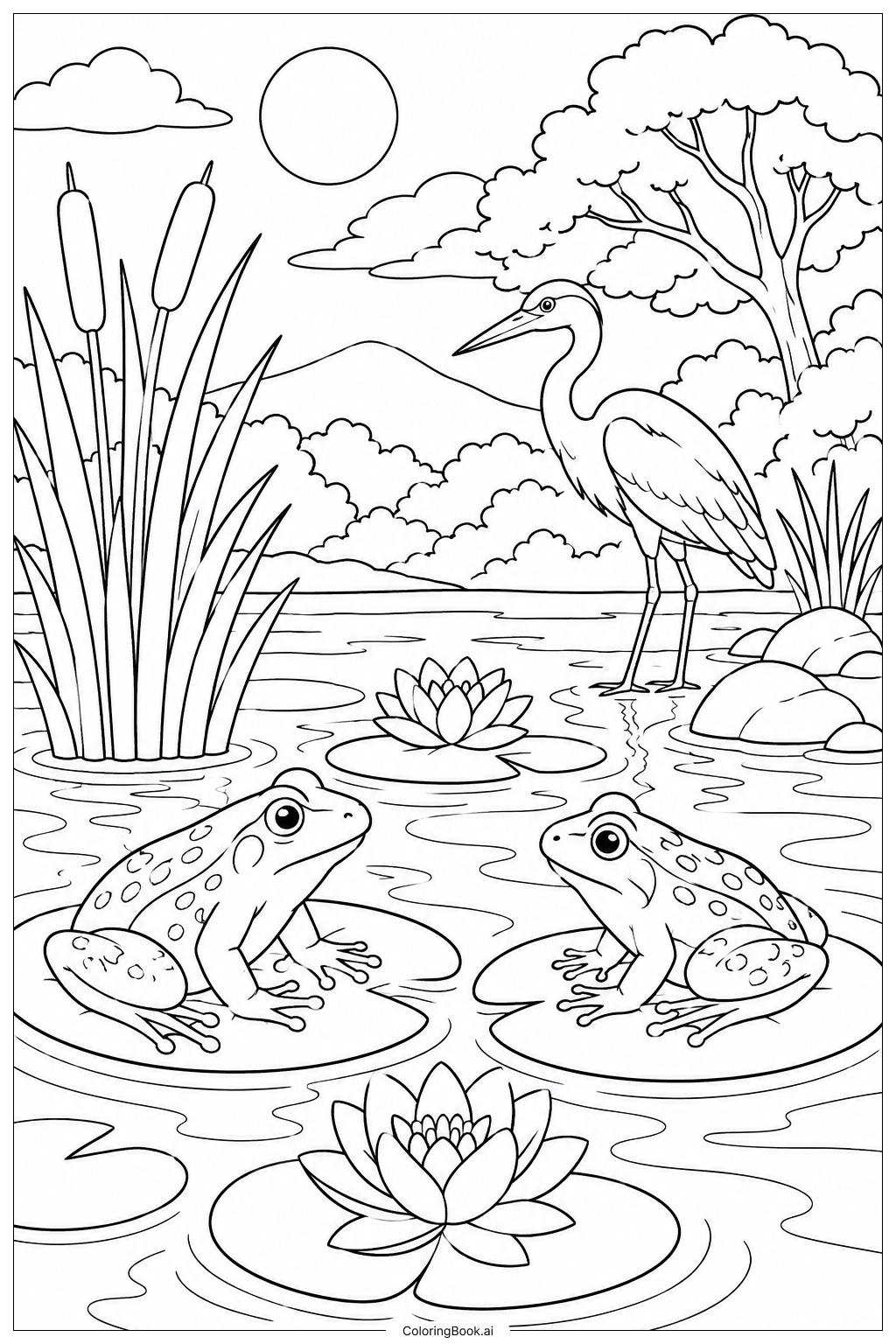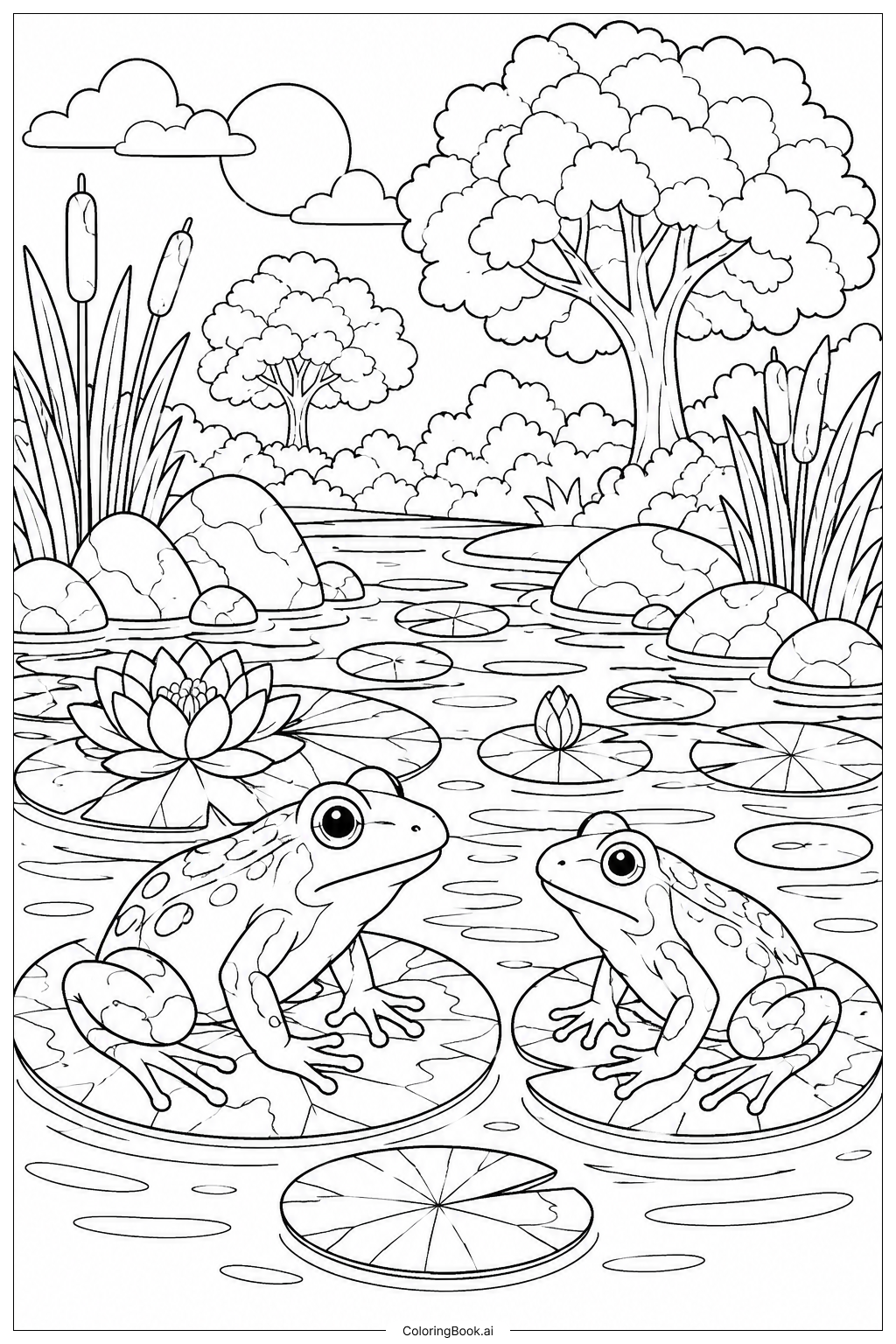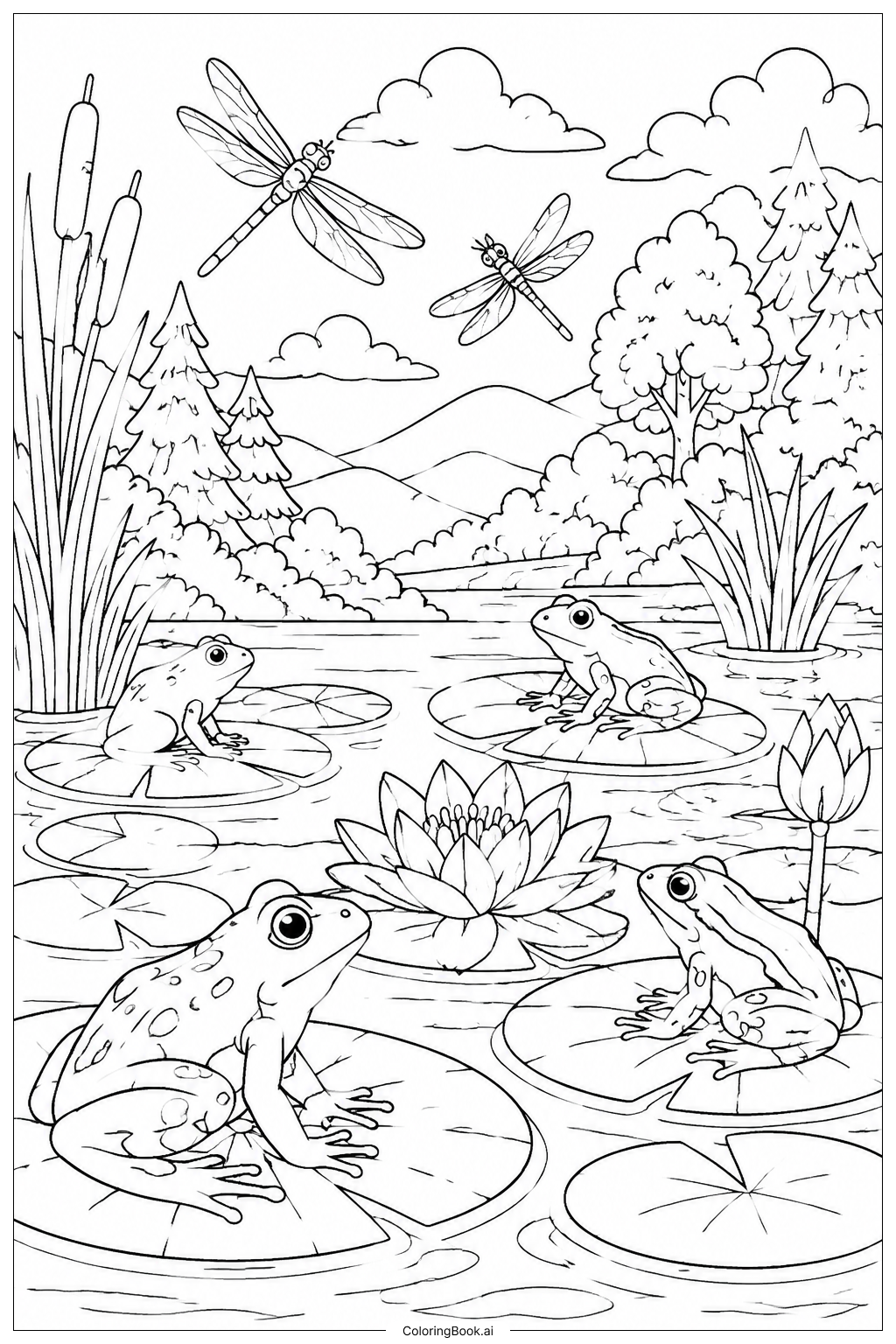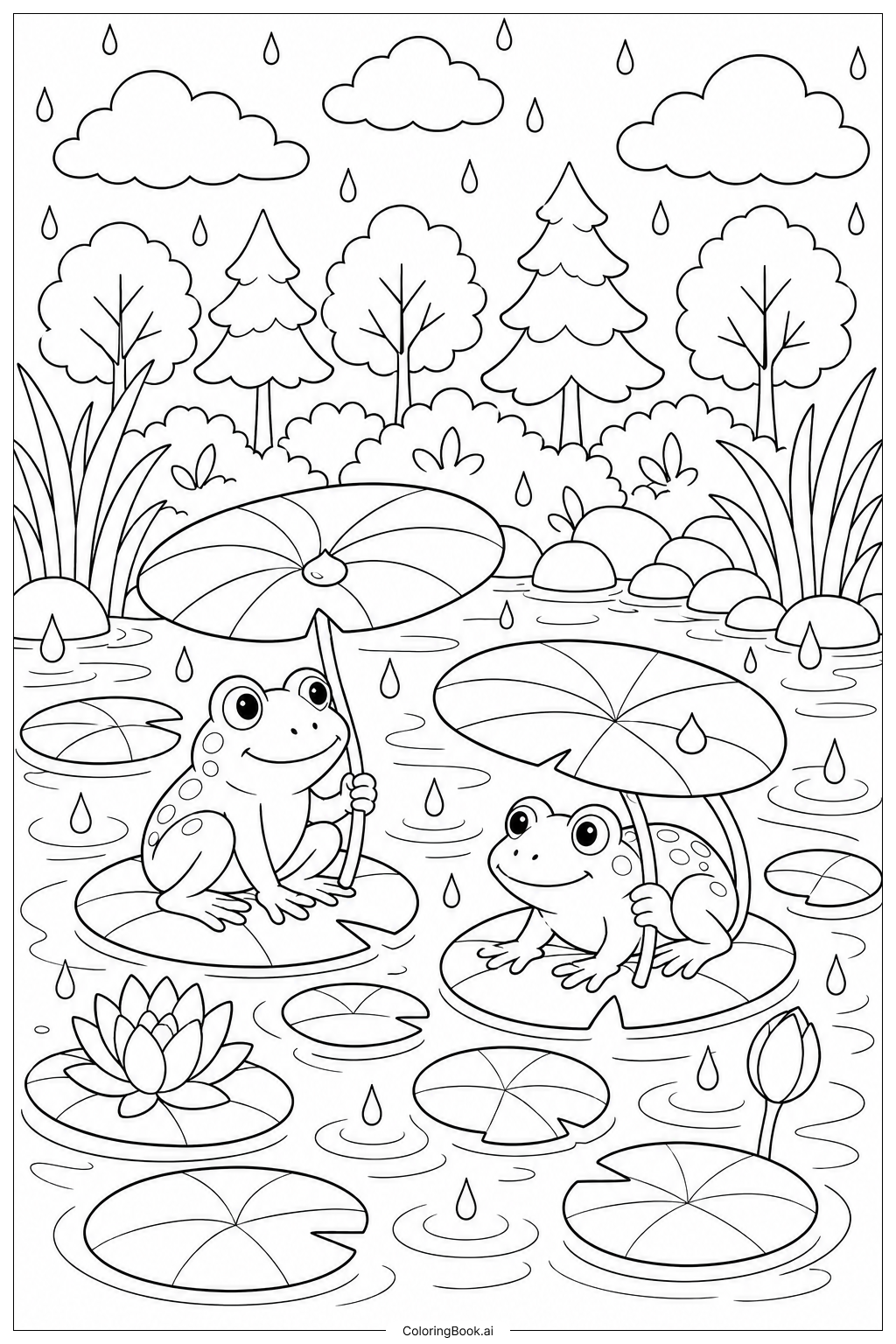
Coloring tips: How to color Lily Pad Busy Pond With Wildlife coloring page well?
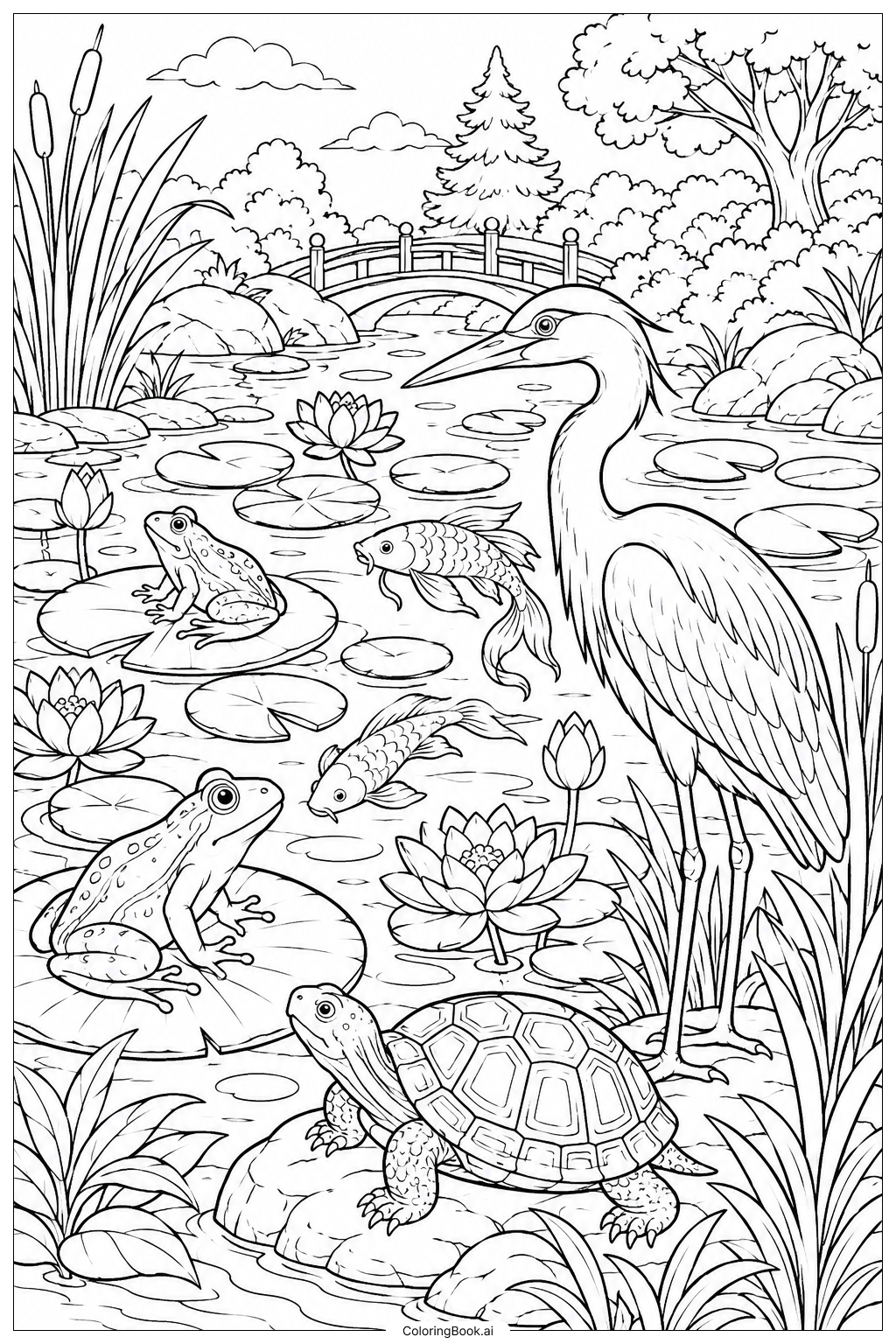
Try using soft greens and light yellows for the Lily Pad leaves to capture their natural look. Frogs can be shades of bright green or olive, and don’t forget to color their eyes with a hint of yellow or orange. Dragonflies shine with blues, purples, or bright reds to make them stand out. Use browns and tans for the reeds and cattails. The water can be painted in shades of blue or teal, with lighter tones near the Lily Pads to show sunlight reflecting. Fish can be colored with playful patterns, such as orange, silver, or gold. This variety of colors will make the busy pond come alive beautifully.
Coloring challenges: Which parts are difficult to color and need attention for Lily Pad Busy Pond With Wildlife coloring page?
• Detailed Wildlife: Small animals like dragonflies, frogs, and fish have fine lines and tiny parts, which require careful coloring to stay inside the lines and keep detail clear. • Layered Nature: The overlapping Lily Pad leaves and reeds mean you need to pay attention to shading and depth so the different parts don’t blend together. • Color Variety: The scene has many different elements needing different colors, which can be challenging to balance without making the picture look too busy or dull. • Water Effects: Coloring water realistically can be difficult since it involves blending shades of blue and green and adding reflections to show movement. • Texture Contrast: The smooth Lily Pad surfaces contrast with textured cattails and rough reeds; capturing this difference demands different coloring techniques and pressure control.
Benefits of coloring books: Advantages of drawing Lily Pad Busy Pond With Wildlife coloring page
Coloring this busy pond scene helps improve hand-eye coordination as children carefully fill in small shapes and animals. It encourages focus and patience by requiring attention to detail in a complex image. This activity also boosts creativity through choosing colors for natural elements and imagining how wildlife might look. Learning to color water, reflections, and textures develops fine motor skills and introduces concepts of shading and depth. Overall, it offers a fun way to connect with nature and wildlife while building artistic skills.