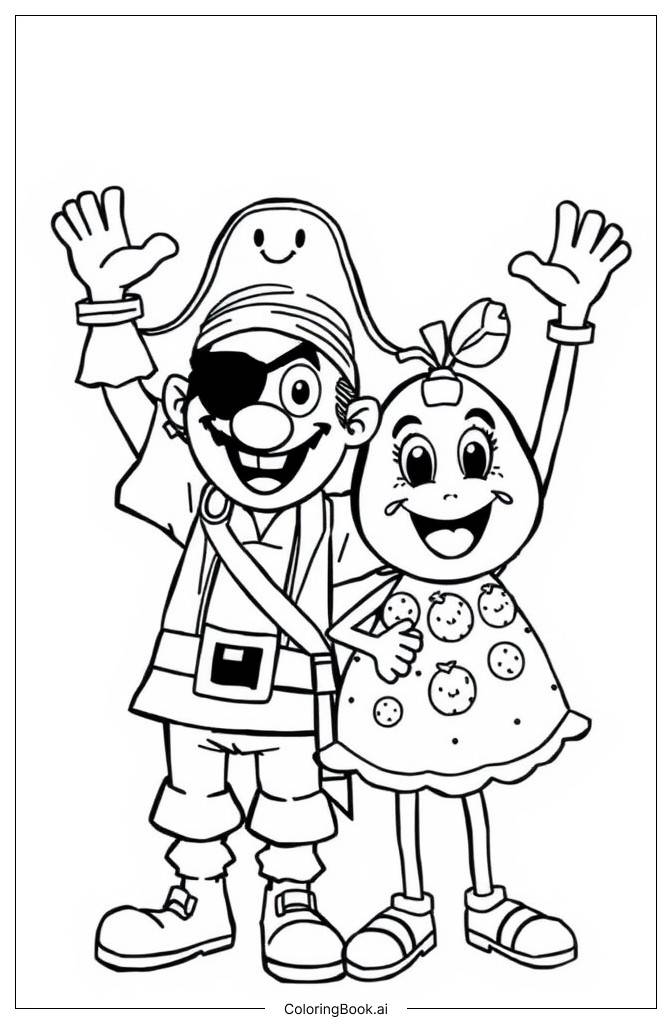
Coloring tips: How to color Pirate with Fruit coloring page well?
Start with the pirate's skin and face, using warm peach or tan tones. Color the tricorn hat and long coat in deep navy blue or classic black for a bold pirate look. Use brown shades for the boots, belt, and wooden barrels in the background. Bring the tropical fruits to life with bright, cheerful colors — yellow for bananas, golden-brown for pineapples, and tan for coconuts. Add green for any leaves on the fruit. The parrot looks great in vivid reds, greens, and blues. For the ship and ropes, use warm browns and tans. The sky and sea in the background can be painted in soft blues and aqua tones to give the scene an adventurous, tropical feel. Use lighter shades first, then layer darker colors to add depth.
Coloring challenges: Which parts are difficult to color and need attention for Pirate with Fruit coloring page?
• Pirate Costume Details: The pirate's outfit has many small features like buttons, belt buckles, coat seams, and boot folds. Staying inside these tiny lines takes a steady hand and a fine-tipped coloring tool. Rushing through this area can make the costume look messy, so take your time with each element.
• Tropical Fruit Textures: Different fruits have very different surface textures. Pineapples have a bumpy, cross-hatched skin that needs careful shading to look realistic. Bananas have smooth curved skins that benefit from gentle color blending. Coconuts need layered browns to show their rough, fibrous shell. Getting each fruit to look distinct is a real challenge.
• The Parrot's Feathers: Birds have many overlapping feathers with subtle color shifts. The parrot may have red, green, blue, and yellow sections that meet at small, curved edges. Blending these colors smoothly without muddying them together requires patience and careful color placement.
• Background Depth: The ship deck scene includes ropes, barrels, wooden planks, and a distant sea and sky. Creating a sense of depth means using lighter, cooler tones for objects in the background and warmer, bolder tones up front. Balancing this without flattening the scene is tricky for younger colorists.
• Small Overlapping Elements: Where the fruit basket, the pirate's hands, and the parrot all meet, there are many overlapping edges and tight spaces. Coloring inside these overlapping areas without accidentally coloring over a neighboring section demands precision and a sharp pencil or fine marker tip.
Benefits of coloring books: Advantages of drawing Pirate with Fruit coloring page
Coloring this pirate with fruit scene offers a wide range of wonderful benefits for kids and beginners alike. The mix of a fun character and bright tropical fruits makes the page exciting and engaging, which helps children stay focused for longer stretches of time — quietly building their attention span without feeling like hard work.
Working through the many details of the pirate's costume and the varied fruit shapes gives great practice in fine motor control. Guiding a pencil or marker along curved, narrow lines helps strengthen the small muscles in fingers and hands, which supports handwriting skills too.
Choosing colors for the fruits encourages creativity and color recognition. Kids learn that different objects have unique natural colors and can experiment with shading and blending to make their artwork look more realistic and three-dimensional.
The tropical, adventurous theme also sparks imagination. Children can invent their own stories about where the pirate is sailing and why they are carrying so much fruit, which nurtures storytelling skills and creative thinking.
Finally, completing a detailed coloring page like this one gives a real sense of accomplishment. Finishing the image and seeing the vibrant, colorful result boosts self-confidence and encourages kids to take on new creative challenges with enthusiasm.