Coloring tips: How to color Doubting Thomas with Simple Scroll coloring page well?
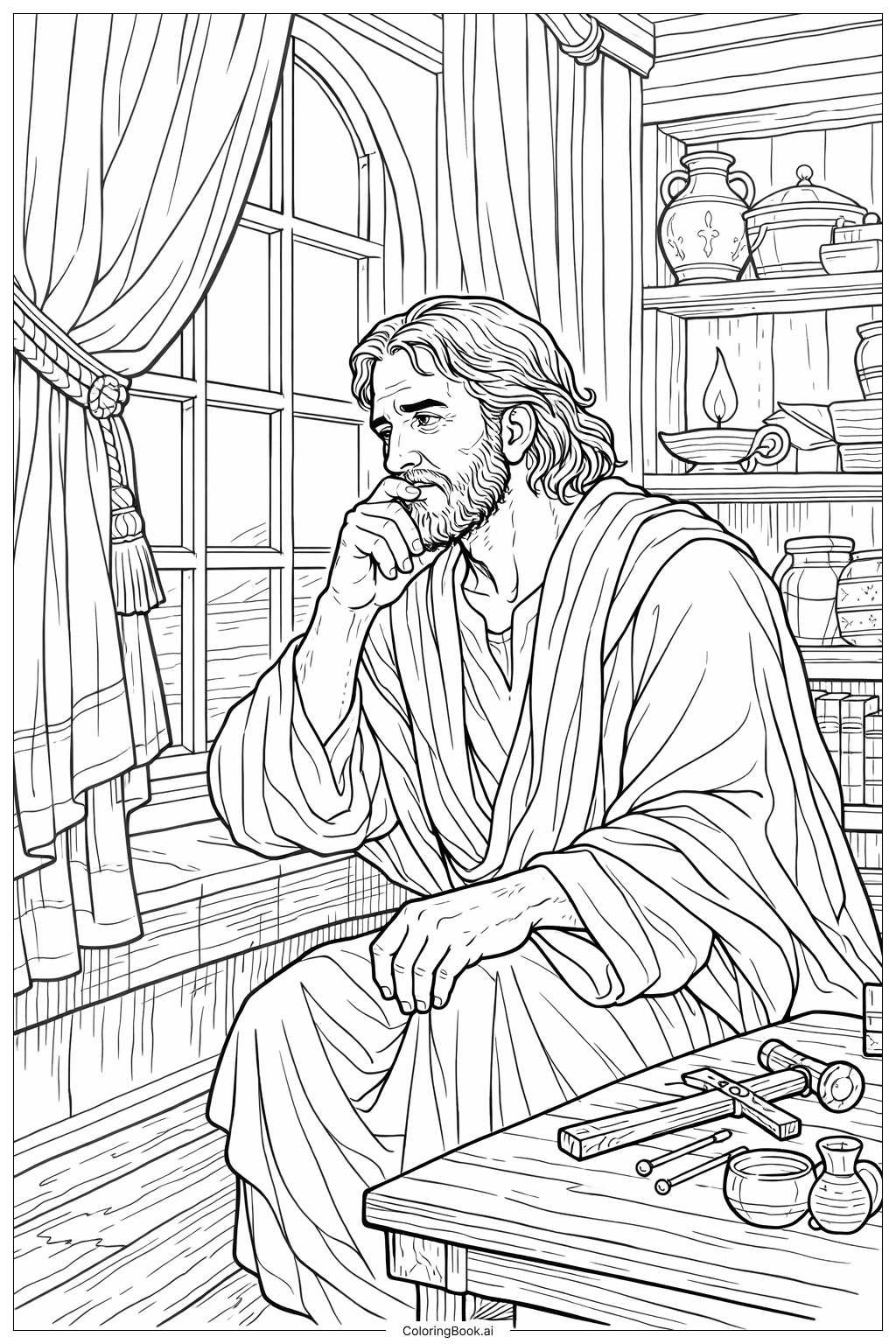
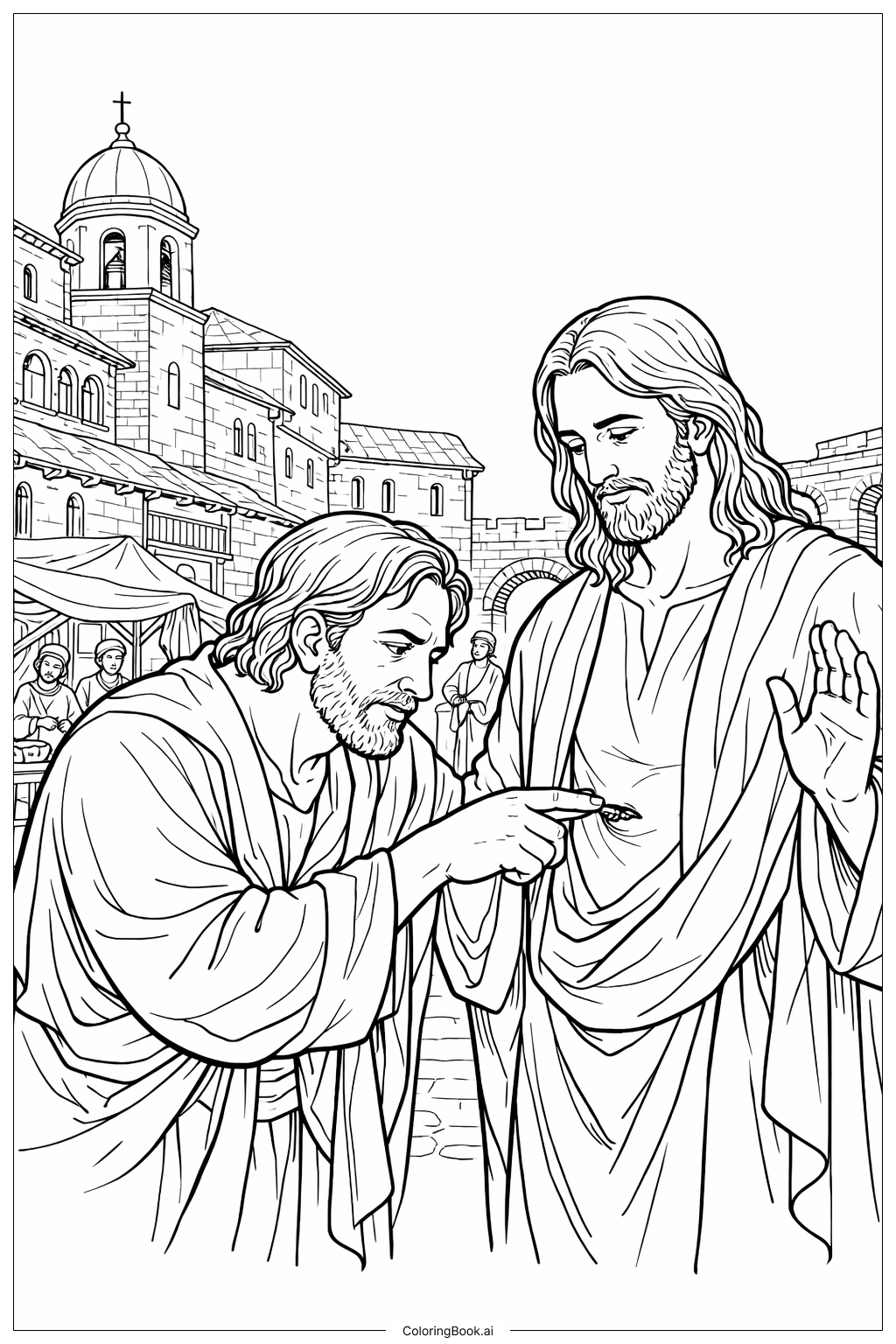
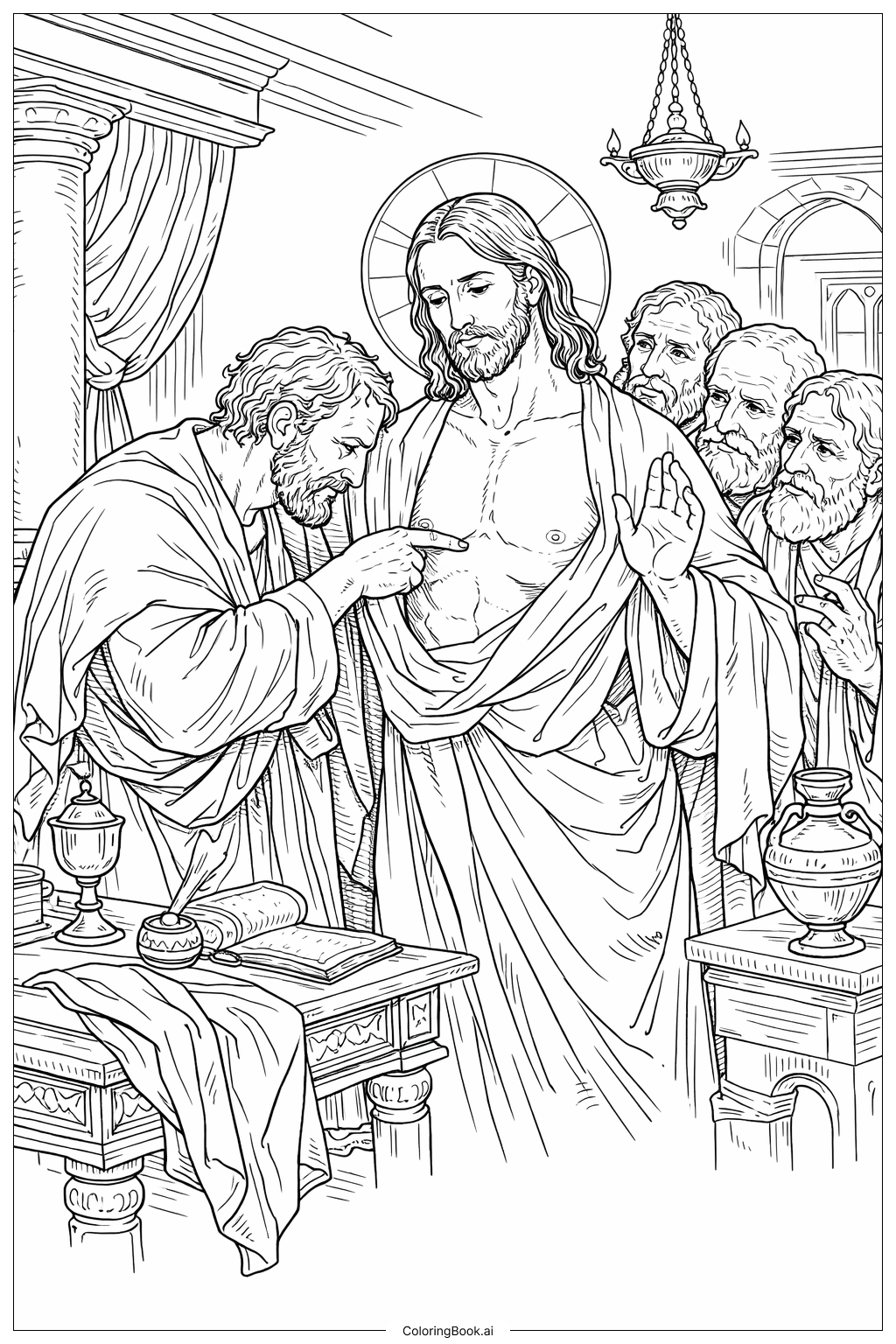
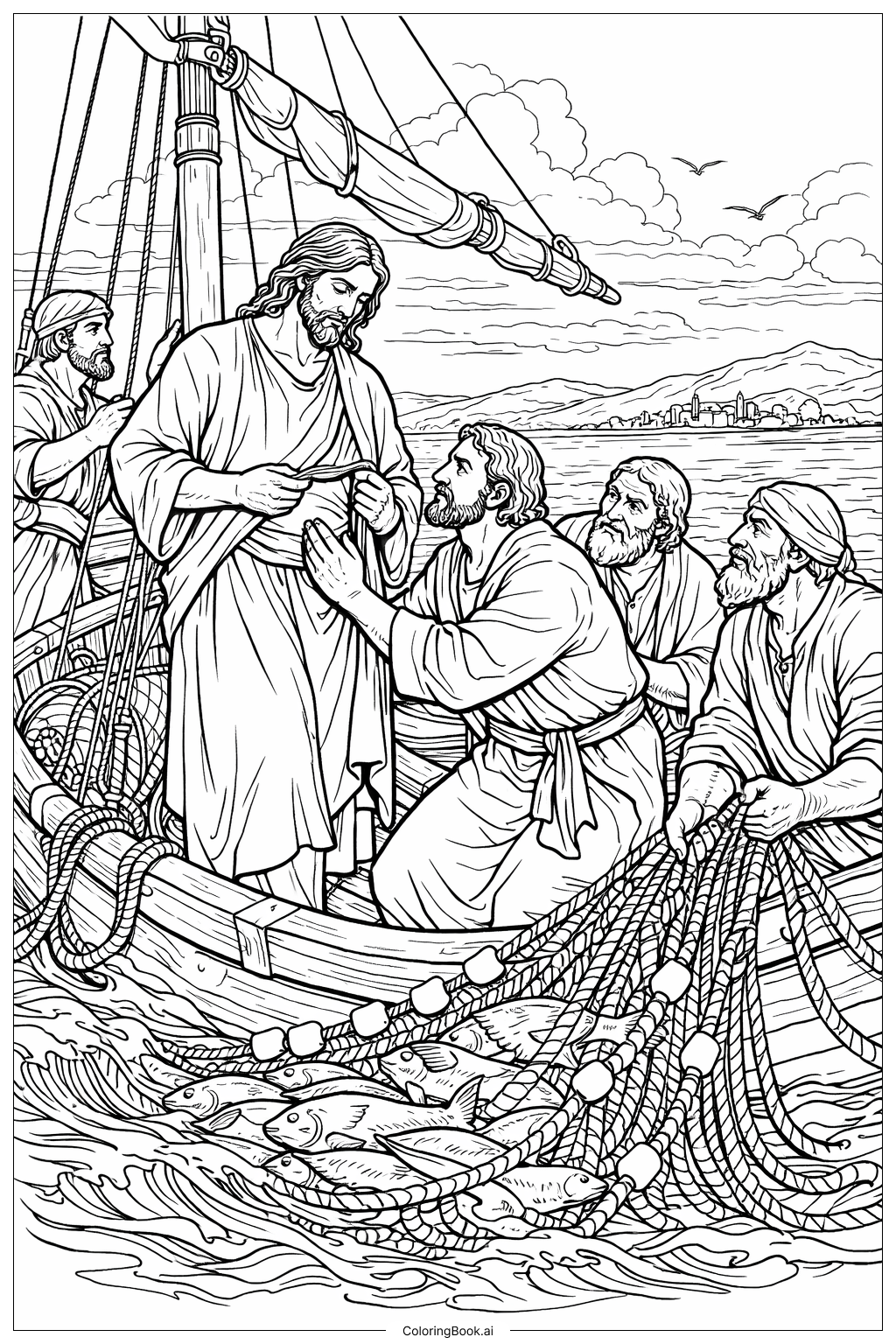
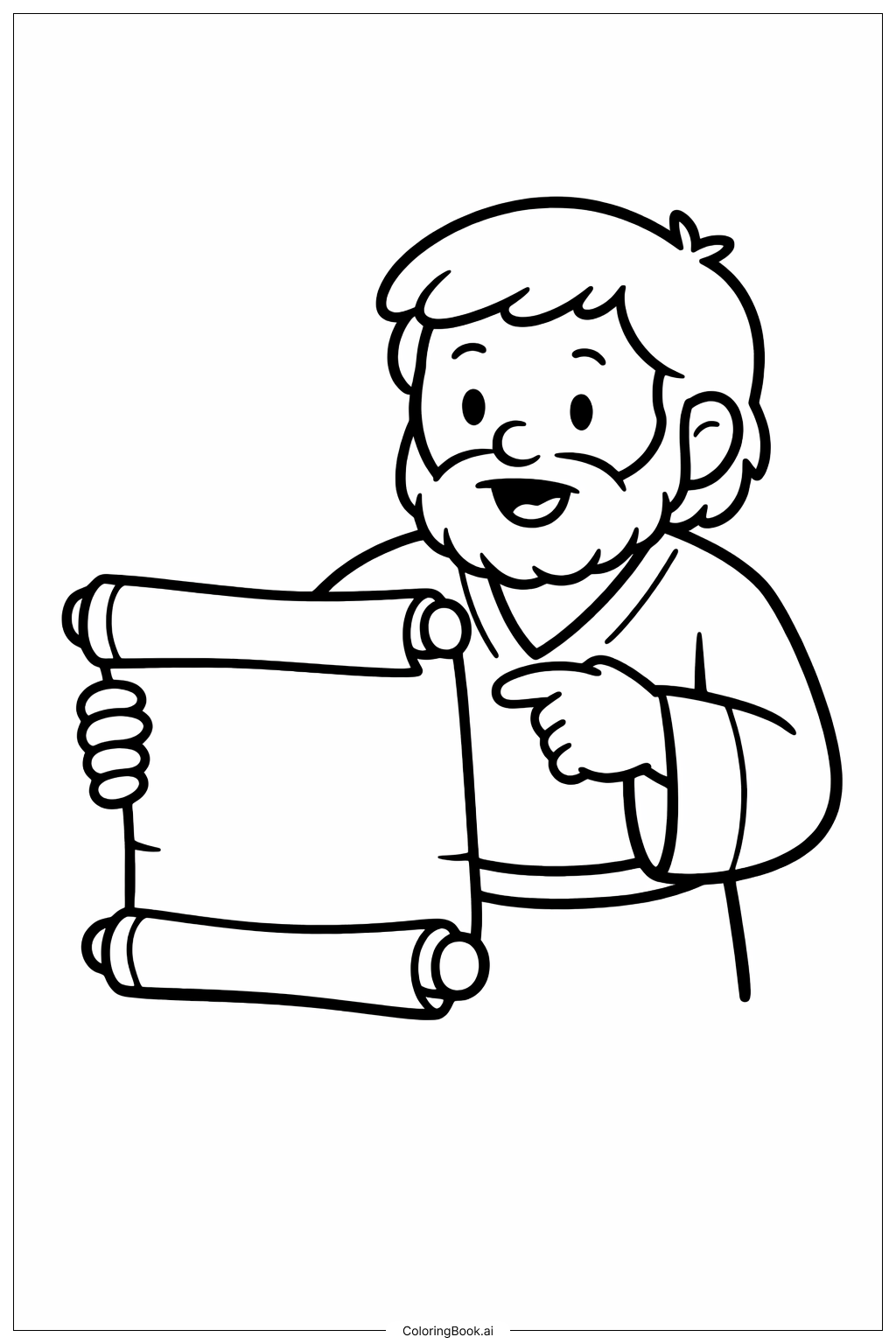
Start with Thomas's skin tones on his face and hands. Use warm shades like peach, tan, or light brown to bring him to life. For his robes, try earthy colors such as brown, olive green, cream, or deep burgundy. These colors feel natural and match the biblical setting. The scroll can be colored in parchment yellow or light tan to look like aged paper. Add a darker shade along the edges of the scroll to show depth. For the robe folds and fabric creases, use a slightly darker version of your base color to show shadows and dimension. Keep the background simple — use a soft sandy beige or pale sky blue so Thomas remains the main focus. Young colorists can use a single color for the robe to keep things easy. Older colorists can try layering two or three shades to make the clothing look more realistic. Take your time with the face — small details like eyebrows and beard can be colored with thin strokes in brown or dark gray for a natural look.
Coloring challenges: Which parts are difficult to color and need attention for Doubting Thomas with Simple Scroll coloring page?
• Facial Details: Thomas's face includes fine lines for his eyes, nose, mouth, and beard. These small areas require careful control of the coloring tool. Using a thin-tipped colored pencil or a fine marker works best here. Rushing through the face can cause colors to bleed into each other, so slow and steady strokes are key.
• Robe Folds and Drapery: The flowing robes of Thomas have many curved lines and overlapping folds. Each fold creates a light side and a shadow side. To make the fabric look three-dimensional, you need to apply a lighter base color first and then add a darker shade in the deeper fold areas. This shading technique can be tricky for younger colorists.
• Scroll Texture and Detail: The scroll Thomas holds is a simple but important part of the image. Getting the scroll to look like old parchment takes skill. You need to blend a light yellow or tan base with slightly darker edges to suggest that the paper is aged and rolled. Staying inside the scroll lines without coloring over the text lines inside it is a careful task.
• Clothing Layers and Depth: Thomas appears to wear more than one layer of garment. Distinguishing between the inner and outer layers by using different but complementary colors requires some planning before you begin. Picking the wrong combination can make the layers blend together and look flat.
• Staying Within Lines: For younger children, the overall size of the figure and the many curved outlines of the robes and scroll can make it hard to stay neatly within the lines. Practicing on a scrap piece of paper first or using chunky crayons can help build confidence before working on the final page.
Benefits of coloring books: Advantages of drawing Doubting Thomas with Simple Scroll coloring page
Coloring this image of Doubting Thomas with a scroll offers many wonderful benefits for children and learners of all ages. It helps build focus and concentration as children carefully fill in the detailed areas of the robes, face, and scroll. This kind of quiet, mindful activity is great for calming the mind and reducing stress after a busy day.
Working with different shades and colors also develops artistic skills. Children practice color selection, learn about light and shadow, and explore how blending works. These are creative skills that grow with every page they color.
This image also has educational value. It introduces children to the story of Doubting Thomas from the Bible in a gentle, visual way. Coloring can spark questions and conversations about faith, history, and what it means to seek truth. Parents and teachers can use this page as a starting point for storytelling and discussion.
For older colorists, the challenge of shading fabric folds and creating realistic skin tones offers a satisfying artistic exercise. It encourages patience and attention to detail, which are skills that carry over into many areas of life.
Overall, this coloring page combines creativity, learning, and quiet reflection — making it a meaningful and enjoyable activity for Boys and Girls, as well as Adults who appreciate biblical themes and fine-line illustration.