Coloring tips: How to color Doubting Thomas Reflecting by Window coloring page well?
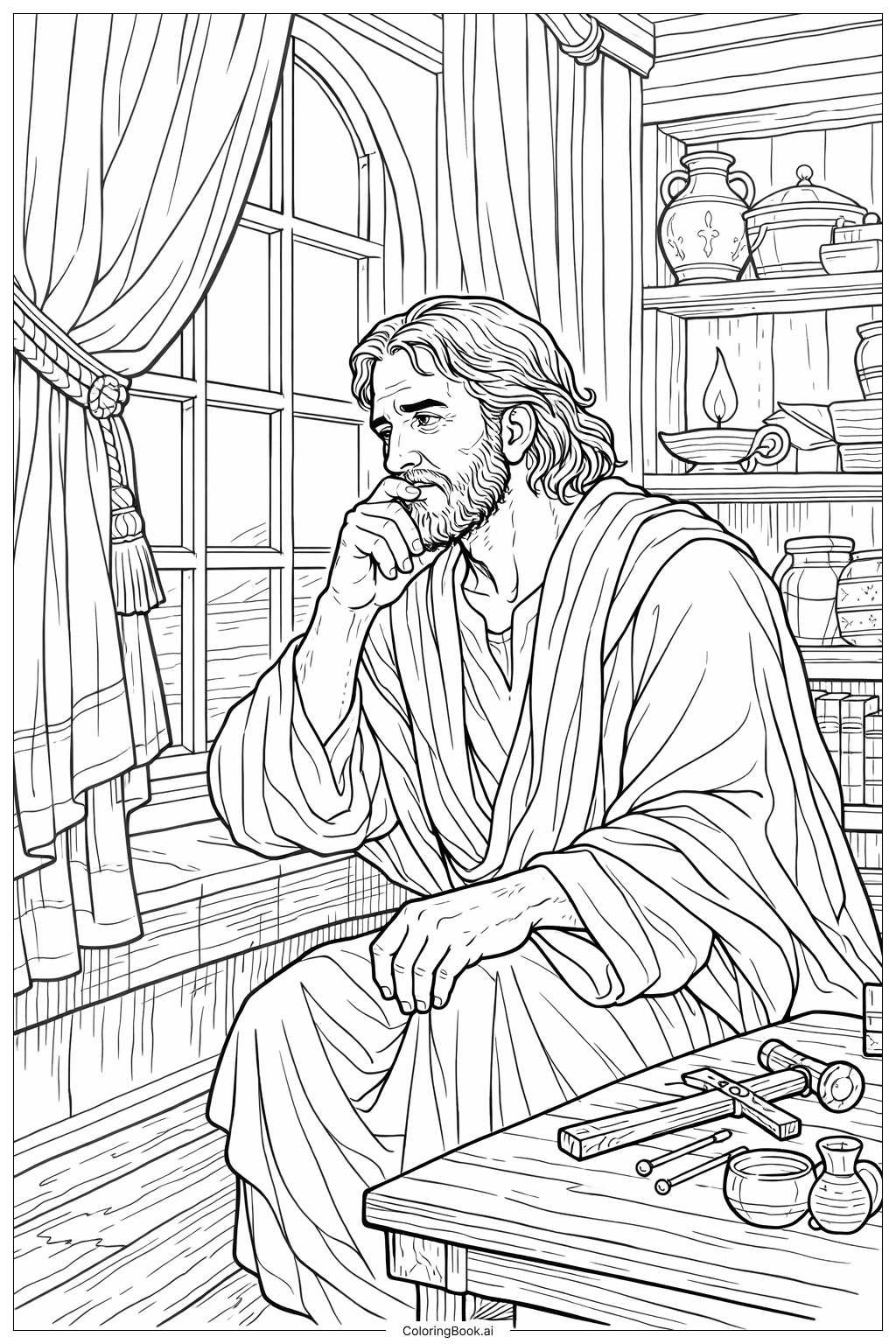
To color this image, start with soft and warm shades for the light coming through the window, like pale yellows or light oranges, to create a calm and hopeful atmosphere. For Thomas’s clothing, use earthy tones such as browns, creams, or muted greens to keep the look simple and natural. The wooden window frame can be done in warm browns with hints of darker shades for texture. You can color Thomas’s skin with gentle peach tones, and his hair a natural brown or dark color. Background details can be colored softly to keep the focus on Thomas’s face and his thoughtful expression. Experiment with shading around the folds of the clothes and the window area to add depth while coloring.
Coloring challenges: Which parts are difficult to color and need attention for Doubting Thomas Reflecting by Window coloring page?
• Facial Expression Details: Capturing the subtle doubt and reflection in Thomas's face requires careful shading and attention to the eyes, eyebrows, and mouth to convey the right emotion.
• Light and Shadow Effects: Coloring the light coming through the window realistically needs gradual shading from light to darker tones, which can be challenging.
• Clothing Texture: The simple, flowing robes have folds and creases that require careful coloring to show depth without overwhelming the calm mood.
• Window Frame and Background: Coloring the wooden window frame with texture details involves blending multiple shades of brown to make it look natural and aged.
• Limited Color Palette: The scene’s quiet mood means colors should be soft and subdued, which can be harder to balance than bright or bold colors when coloring children’s art.
Benefits of coloring books: Advantages of drawing Doubting Thomas Reflecting by Window coloring page
Coloring this image helps children practice patience and focus as they work on the finer details like facial expression and shading. It encourages mindfulness by inviting them to slow down and reflect on the emotions Thomas is feeling. This image also develops skills in blending and layering colors to create light effects and realistic textures. Additionally, it promotes creativity by allowing kids to choose natural, earthy tones that match the scene’s calm mood. Overall, coloring this picture supports emotional awareness, fine motor skills, and artistic expression in a thoughtful and meaningful way.