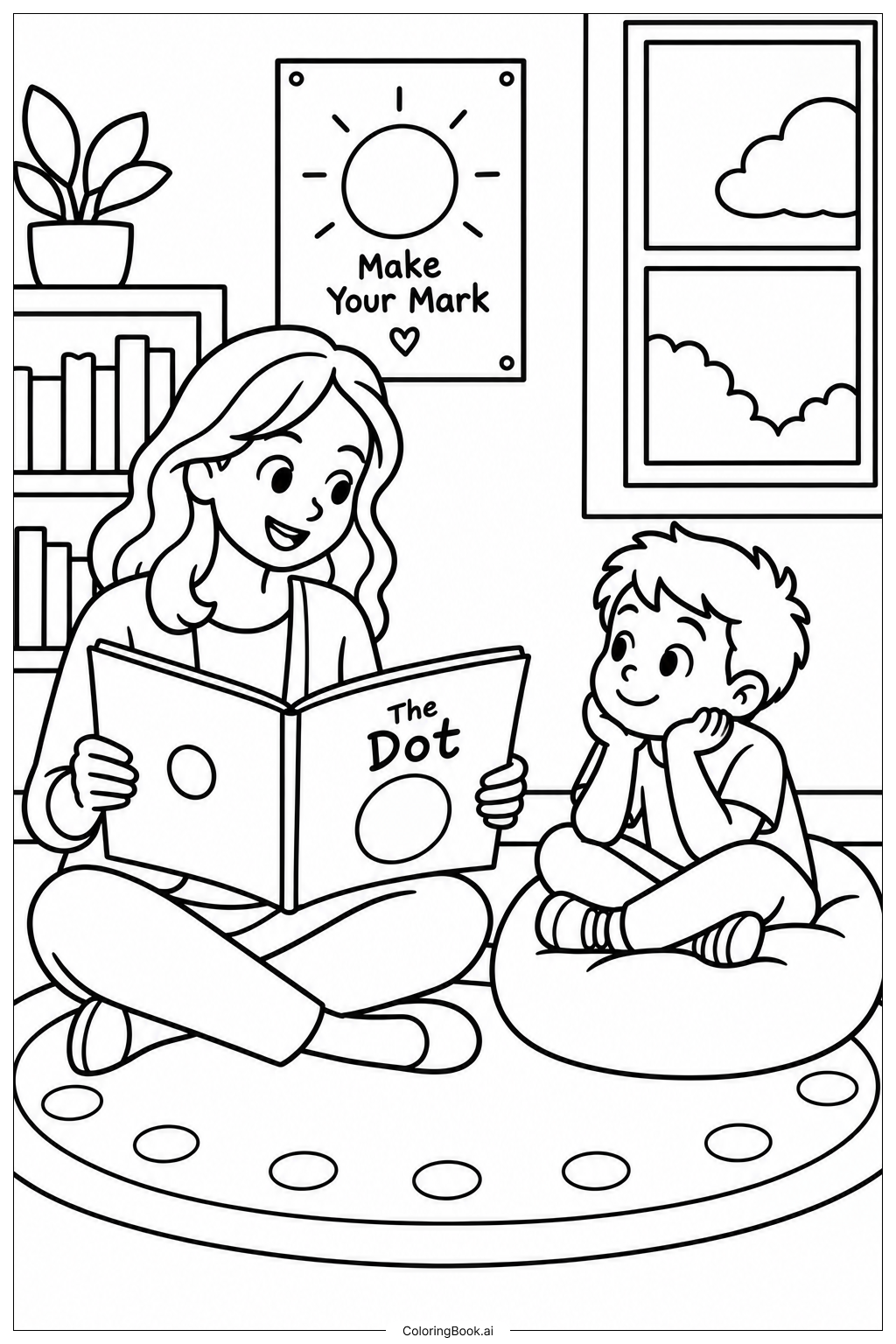
Coloring tips: How to color Dot Day Story Circle coloring page well?
Start by coloring each child's clothing in different bright colors to show their unique personalities. Use a rainbow of colors for the various dots they are holding—reds, blues, yellows, greens, purples, and oranges. The book in the center can be colored with a light cream or white for the pages and a bold color for the cover. Consider using skin tones that reflect diversity for each child. The floating decorative dots around the circle offer a perfect opportunity to practice blending colors or creating patterns—try polka dots, stripes, or gradient effects. Use warm browns or bright colors for the art supplies. The background can be left light or filled with a soft pastel wash to make the children and their dot creations stand out. Remember, there is no wrong way to color, just like there is no wrong way to make your mark.
Coloring challenges: Which parts are difficult to color and need attention for Dot Day Story Circle coloring page?
• Multiple Figures and Details: This image contains six separate children, each with distinct facial features, hair styles, and clothing. Keeping track of color choices for each character while maintaining variety and harmony requires planning and attention to detail, especially for younger colorists.
• Small Dot Elements: The numerous small dots held by the children and floating around the scene present a challenge for precise coloring within tiny spaces. Staying within the lines of these small circular shapes requires steady hand control and patience, particularly when using markers or crayons with broader tips.
• Overlapping Elements: The children are seated close together with arms, legs, and art supplies overlapping. Distinguishing where one element ends and another begins can be confusing, requiring careful observation to avoid coloring outside intended boundaries or mixing up which parts belong to which child.
• Artistic Decision Making: With so many dot creations in the image, deciding on a color scheme that makes each child's artwork unique while keeping the overall composition balanced is challenging. Colorists must think about color relationships, contrast, and visual interest across the entire circular arrangement.
• Background and Negative Space: Determining whether and how to color the background around the circle requires artistic judgment. Too much color might overwhelm the main subjects, while leaving it blank might make the image feel incomplete.
Benefits of coloring books: Advantages of drawing Dot Day Story Circle coloring page
Coloring this Dot Day Story Circle page reinforces the core message of the celebration: everyone can be creative and make their mark. As children color each unique child and their dot creation, they practice recognizing and celebrating diversity and individual expression. The circular composition teaches about balance and harmony in art while the multiple figures help develop planning skills as colorists must think ahead about their color choices. The variety of dot sizes improves fine motor control and hand-eye coordination, from the tiny floating dots to larger dot artworks. This page also encourages color theory exploration as children can experiment with different color combinations for each dot creation. The collaborative, friendly scene depicted promotes positive social-emotional learning about community and sharing creativity. Most importantly, coloring this image embodies the Dot Day spirit of courage and self-confidence in artistic expression, reminding children that their creative choices matter and there is no single right way to create something beautiful.