Coloring tips: How to color Dot Day Museum Visit coloring page well?
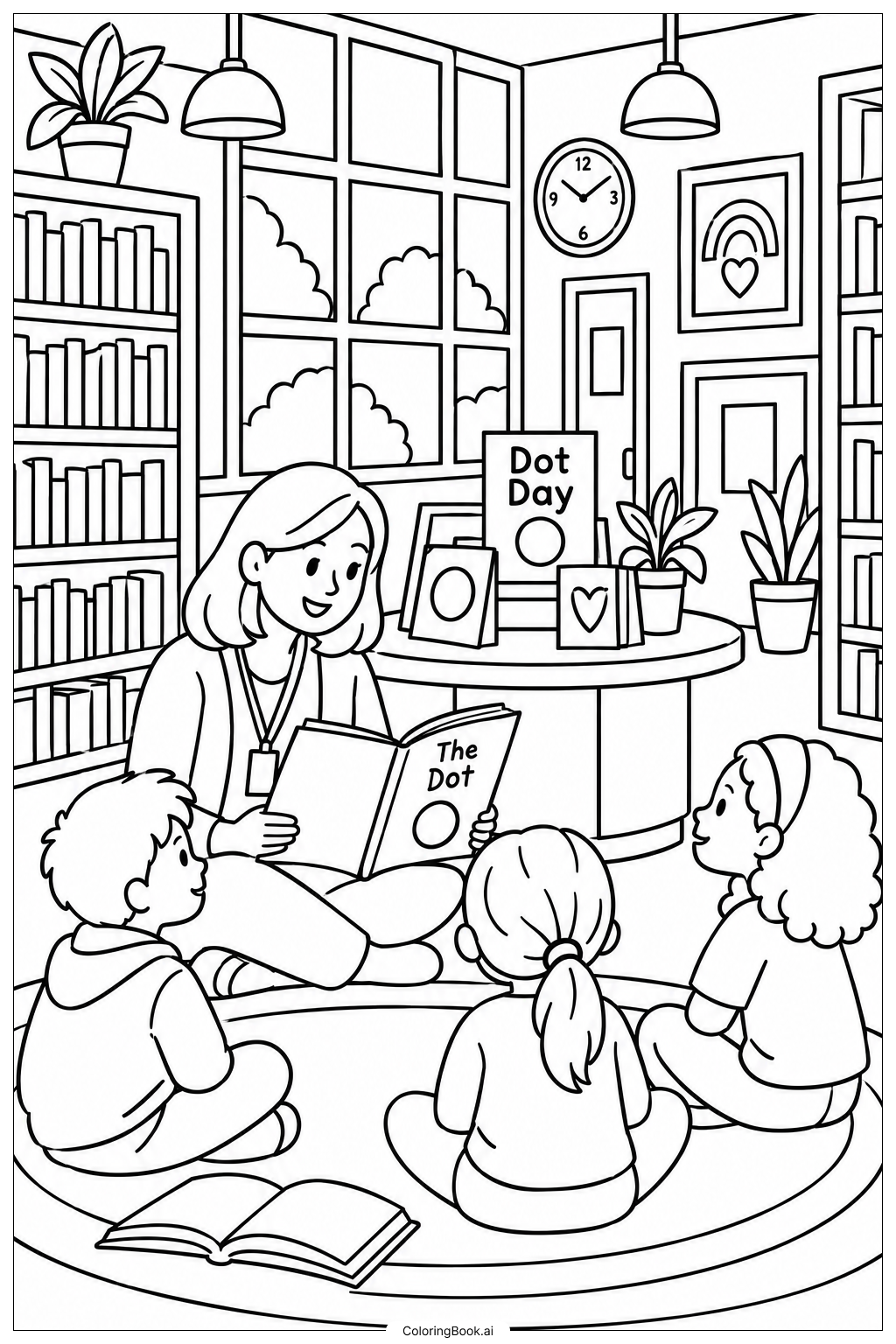
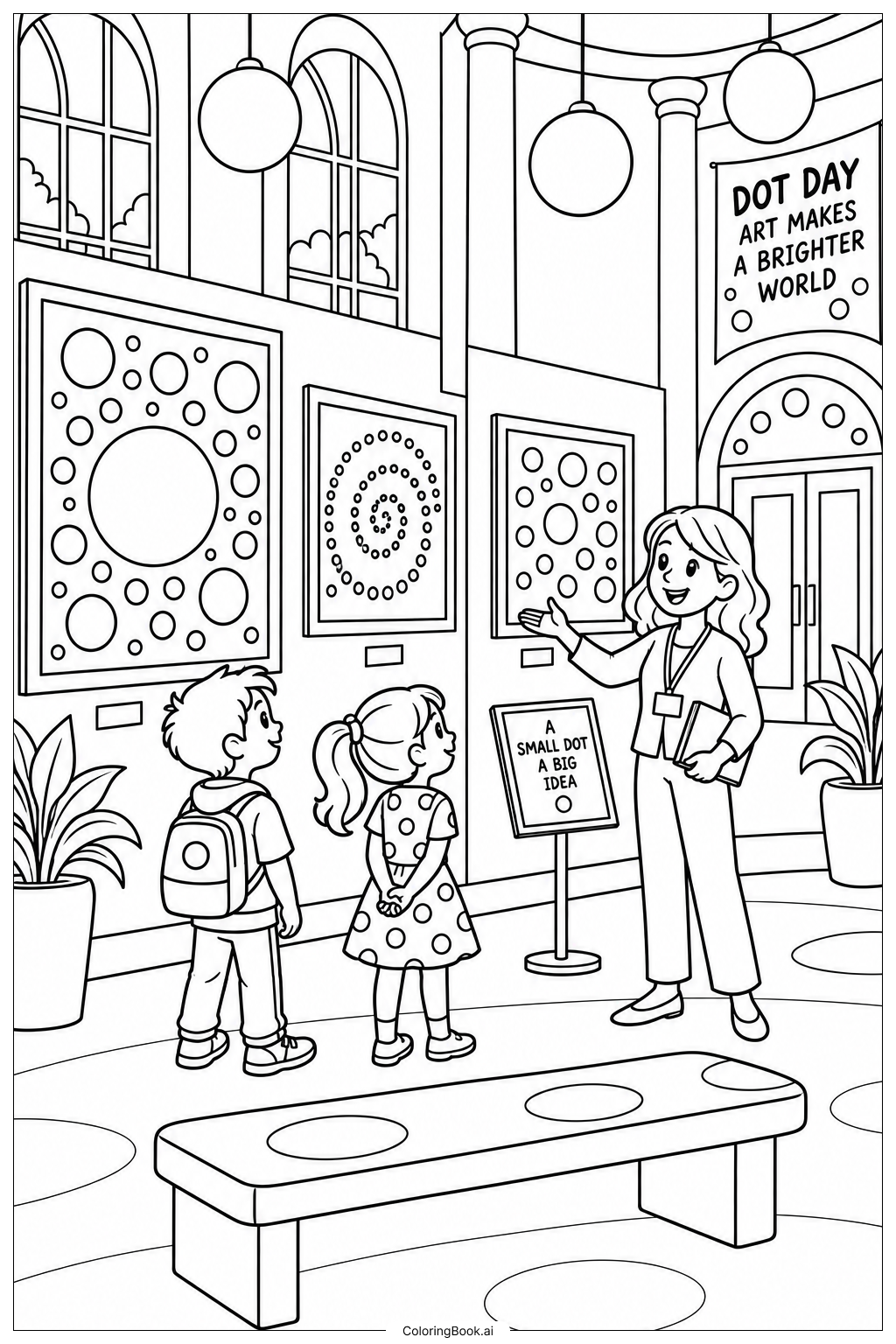
Start with the museum walls using soft beige or light gray tones to create a gallery atmosphere. Color the framed dot artworks in vibrant, contrasting colors like red, blue, yellow, and green to make them pop against the walls. Give each child different clothing colors to show diversity and energy. Use warm skin tones for faces and hands. The museum guide can wear professional attire in navy or burgundy. Color the display cases in light blue or transparent tones with darker frames. Make the ceiling banners bright and celebratory using rainbow colors or bold primary shades. The floor tiles can alternate between cream and tan with colorful dot accents. Add depth by using darker shades for shadows under benches and around doorways.
Coloring challenges: Which parts are difficult to color and need attention for Dot Day Museum Visit coloring page?
• Multiple Overlapping Figures: The scene includes several children, a museum guide, and various exhibit elements that overlap and intersect. Keeping track of where one figure ends and another begins requires careful attention, especially when coloring clothing and distinguishing between foreground and background characters.
• Detailed Architectural Elements: The museum setting features walls, frames, display cases, ceiling fixtures, and floor patterns that all need distinct coloring approaches. Maintaining consistent perspective and depth while differentiating between these structural elements can be challenging, particularly for younger colorists.
• Framed Artwork Within the Image: The dot paintings and exhibits displayed on the walls are pictures within the picture, each containing their own dot patterns and designs. Deciding whether to color these artworks differently from the main scene, and creating visual contrast between the frames, the artwork, and the wall behind them, adds an extra layer of complexity.
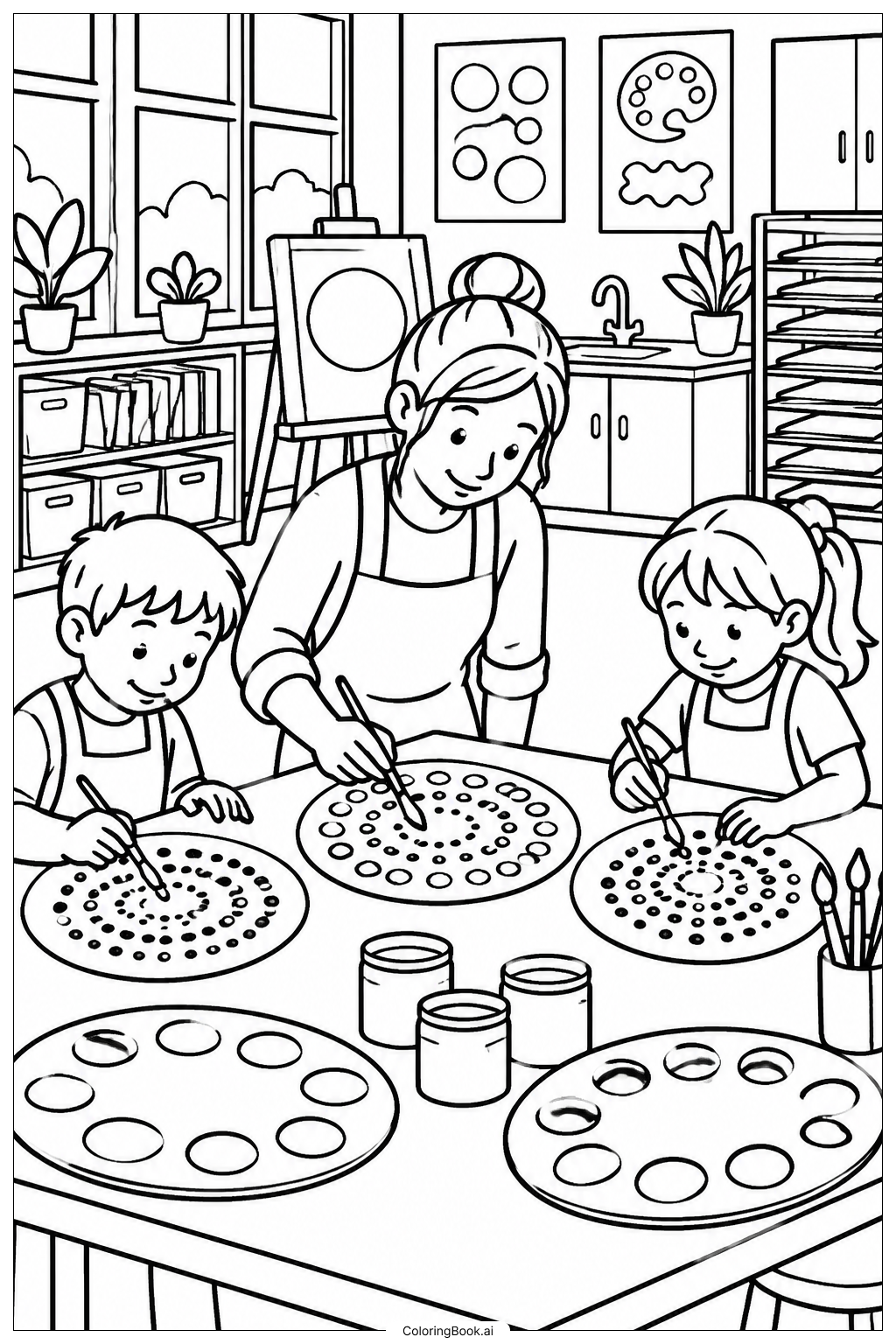
• Small Dot Patterns and Repeated Details: Many elements feature dot motifs and circular patterns that repeat throughout the composition. Coloring numerous small dots consistently while maintaining pattern integrity requires patience and steady hand control, especially in densely decorated areas like floor tiles or ceiling banners.
• Creating Museum Atmosphere: Achieving the right color balance to evoke a museum setting while keeping the image vibrant and engaging for Dot Day requires thoughtful color choices. Too muted and the celebration feels flat; too bright and the museum context may be lost.
Benefits of coloring books: Advantages of drawing Dot Day Museum Visit coloring page
Coloring this museum scene helps children develop spatial awareness and understanding of depth as they navigate foreground and background elements. It encourages decision-making skills when choosing color schemes for different artwork displays within the image. The repetitive dot patterns support focus and concentration while building fine motor control. This page celebrates creativity and self-expression, core themes of Dot Day, helping children understand that art takes many forms. The museum setting introduces cultural awareness and appreciation for visiting galleries and exhibitions. Working with multiple figures teaches children about community and shared experiences. The architectural elements provide practice with straight edges and geometric shapes, while the dot artworks allow for creative experimentation with color combinations. This coloring page reinforces that everyone can be an artist and that small marks can create beautiful, meaningful work.