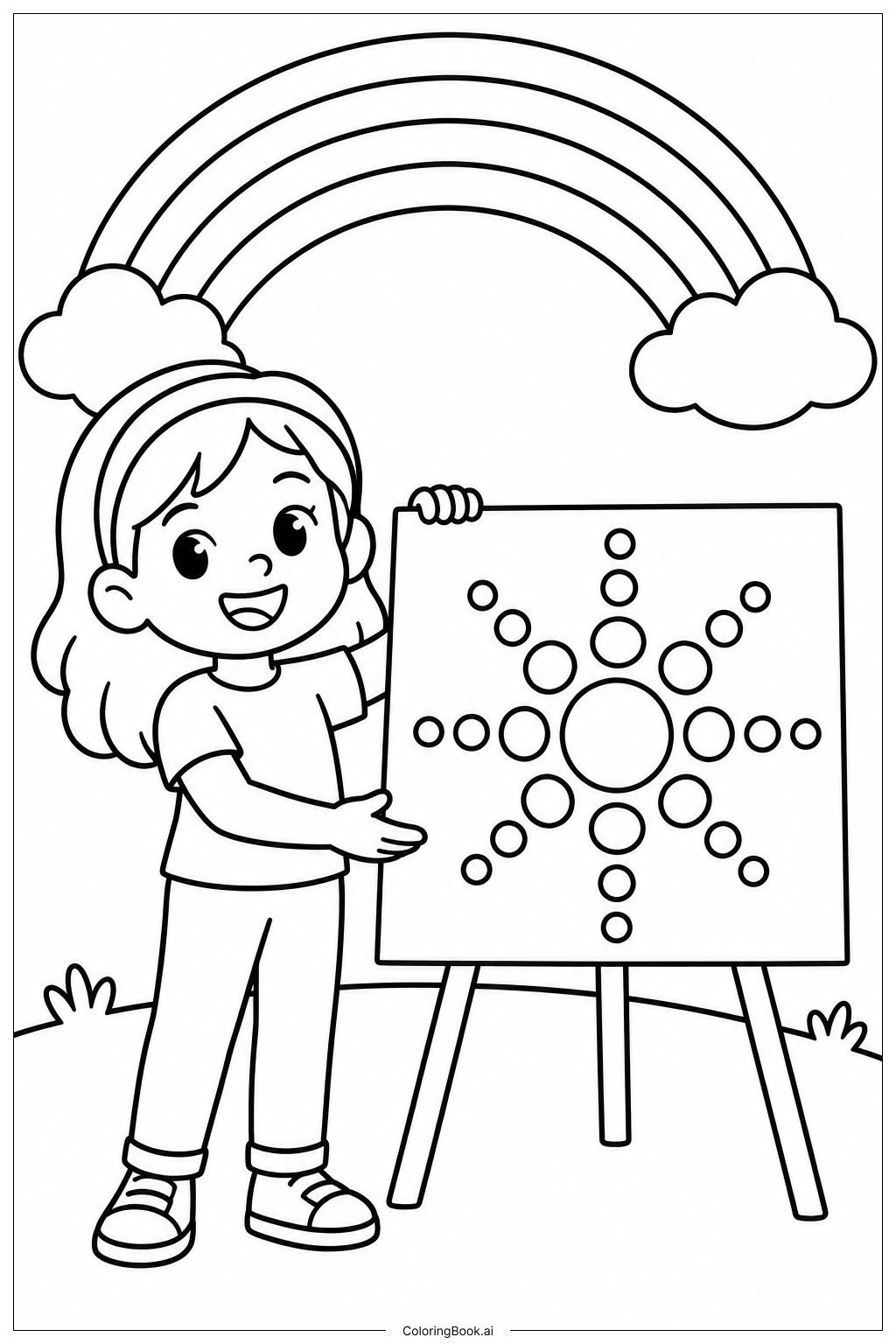
Coloring tips: How to color Dot Day Rainbow Art coloring page well?
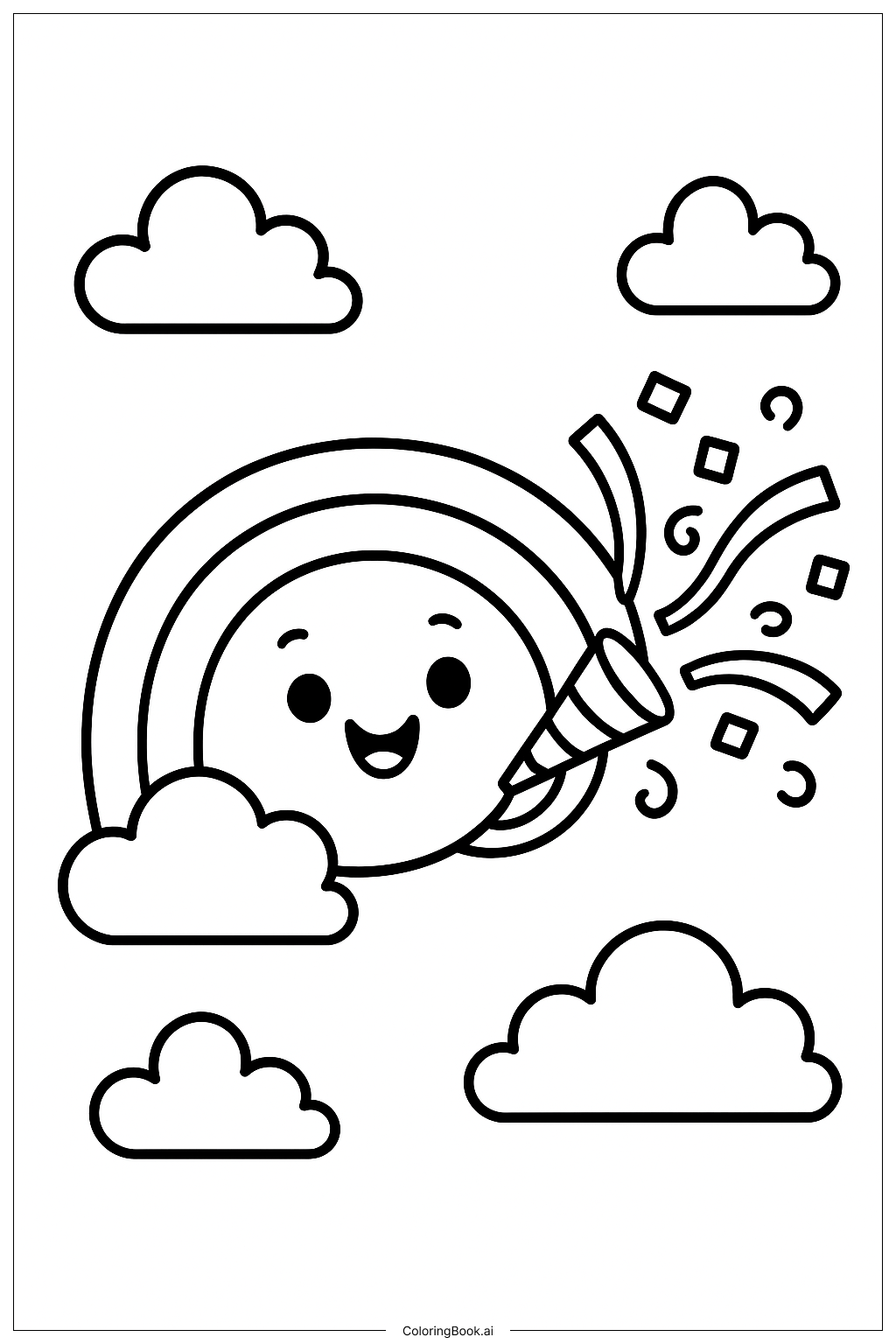
Start by selecting seven bright, bold colors for each rainbow band: red, orange, yellow, green, blue, indigo, and violet work beautifully. Color each stripe in its traditional rainbow sequence, making the dots within each band either the same color as the stripe or slightly darker shades for depth. Try using different colored pencils or markers to create contrast between the dots and their background bands. The clouds at the bottom can be colored in soft blues, purples, or even left white with light gray shadows. For the scattered dots around the rainbow, use a mix of all your rainbow colors to create a festive, confetti-like effect. Consider adding metallic gold or silver to the stars and sparkles for extra shimmer. You might also experiment with patterns within each dot, filling some with stripes or swirls for added interest.
Coloring challenges: Which parts are difficult to color and need attention for Dot Day Rainbow Art coloring page?
• Dot Density Management: The image contains numerous dots of varying sizes packed throughout the rainbow bands and surrounding areas. Keeping each dot distinct and neatly colored without bleeding into adjacent dots requires patience and precision. Younger children may find it challenging to stay within the boundaries of smaller dots, while older colorists must maintain focus to create clean, uniform circles throughout the entire composition.
• Rainbow Band Transitions: Coloring seven separate rainbow stripes while maintaining clear boundaries between each color band presents a significant challenge. The curves of the rainbow require steady hand control, especially where bands meet. Colorists must decide whether to create sharp transitions between colors or blend them softly, and must maintain consistent pressure and technique across large curved areas to avoid streaking or uneven coverage.
• Detail Consistency: With so many repetitive dot elements throughout the design, maintaining consistent coloring technique becomes challenging. Each dot ideally should receive the same amount of attention and color saturation as the others in its section. This repetitive work can test concentration and stamina, particularly for children with shorter attention spans. The scattered decorative elements like stars and small circles add additional small details that require careful coloring.
• Color Harmony Balance: Successfully balancing seven different rainbow colors plus additional accent colors for clouds, stars, and background dots requires thoughtful color planning. Colorists must ensure that no single area overwhelms the design while maintaining the celebratory, energetic feel of Dot Day. Deciding which dots to emphasize and which to keep subtle requires artistic decision-making skills.
Benefits of coloring books: Advantages of drawing Dot Day Rainbow Art coloring page
Coloring this Dot Day Rainbow Art page offers wonderful developmental benefits for children and relaxation for adults. The repetitive nature of filling numerous dots helps develop fine motor control and hand-eye coordination, essential skills for young learners. The rainbow theme provides an excellent opportunity to learn and practice color recognition, sequencing, and understanding color relationships. As colorists work through the many dots and bands, they build patience, focus, and the ability to complete detailed tasks. The celebratory theme connects to the inspiring message of International Dot Day, encouraging self-expression and confidence in creative abilities. The meditative quality of coloring repetitive patterns can reduce stress and promote mindfulness. Completing this intricate design provides a strong sense of accomplishment and pride. The artwork also reinforces positive messages about creativity and the idea that great things can start from small beginnings, just like a single dot can become magnificent art.