Coloring tips: How to color Dot Day Plate coloring page well?
Start by choosing a base color for the plate's rim - perhaps a warm golden yellow or soft sky blue. For the dots themselves, embrace variety and creativity! Use different colors for each dot to create a vibrant, rainbow-like effect, or try a harmonious color scheme using shades of similar hues like blues and purples. Consider making larger dots bolder colors while smaller dots are lighter pastels. You could create patterns by coloring dots in sections - warm colors on one side transitioning to cool colors on the other. Add dimension by coloring dots with gradients or leaving small white highlights to make them appear three-dimensional. The background of the plate can remain white or be filled with a very light wash of color to make the dots pop even more.
Coloring challenges: Which parts are difficult to color and need attention for Dot Day Plate coloring page?
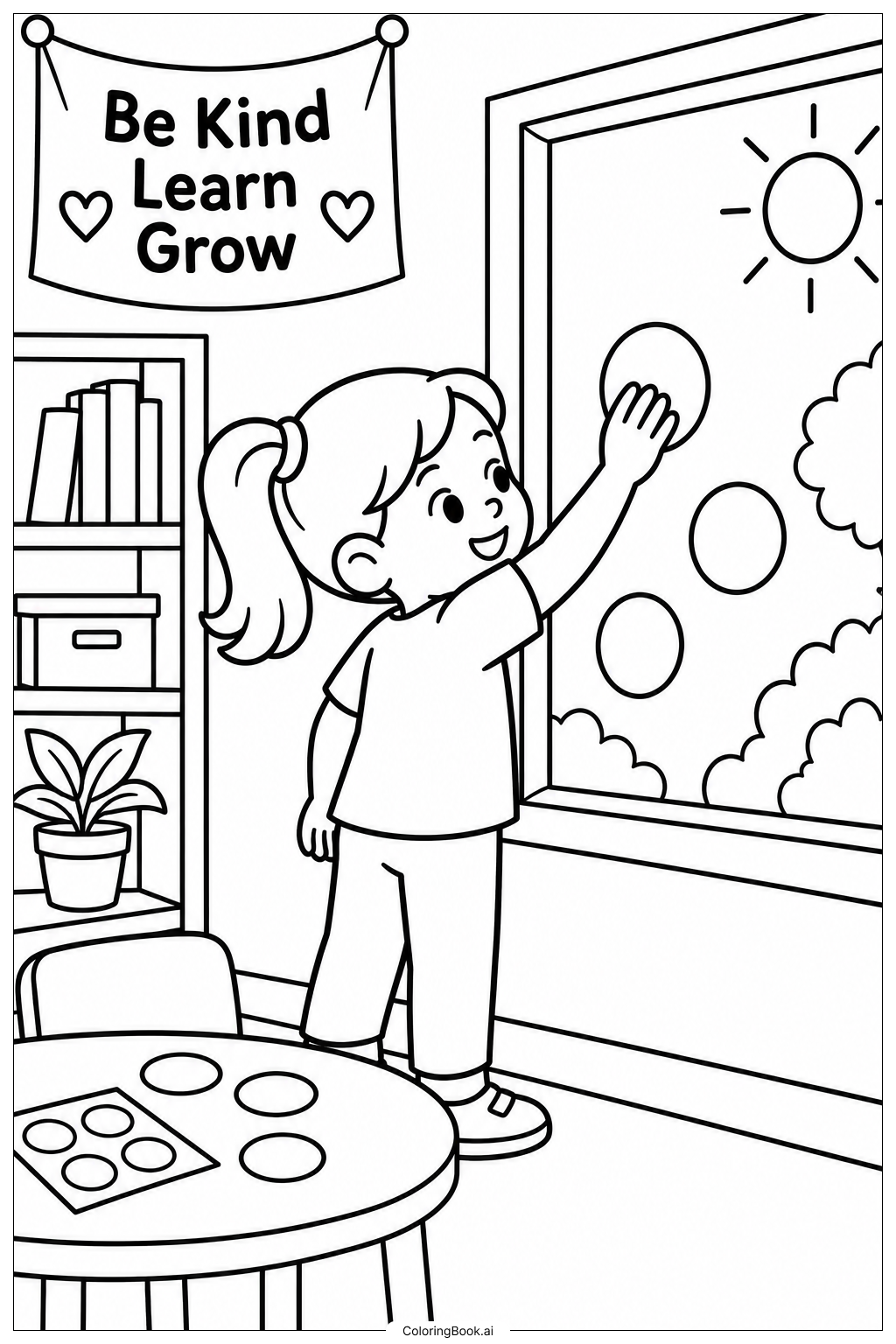
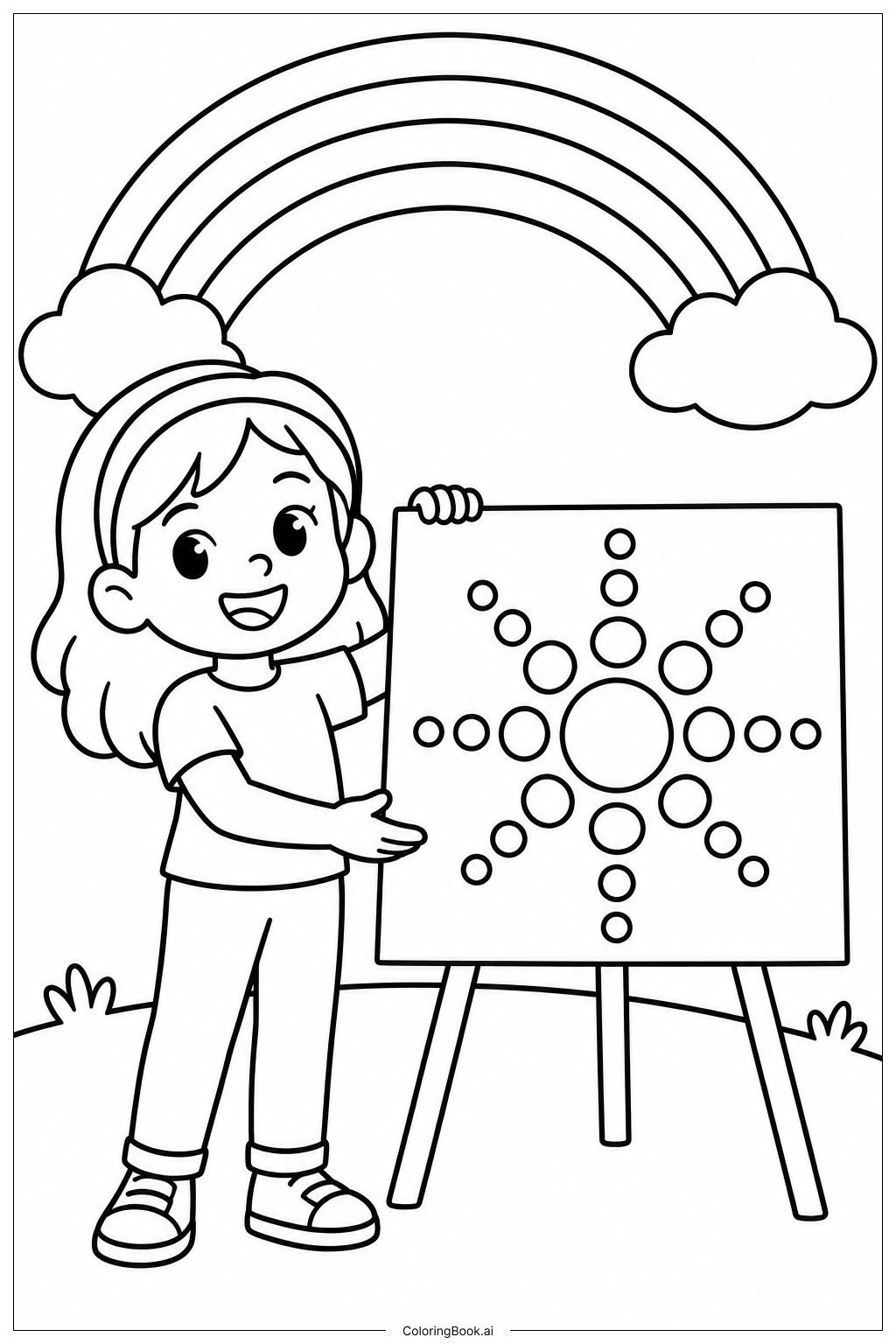
• Dot Size Variation: The image contains dots of many different sizes, from very small to quite large. Coloring the tiniest dots requires precision and fine motor control, especially when trying to stay within their small boundaries. Younger children may find it challenging to color these without going outside the lines, while the variety offers opportunities to practice control with coloring tools.
• Dot Density and Spacing: The numerous dots scattered across the plate create a dense pattern that requires patience and sustained attention. Keeping track of which dots have been colored and which remain can be mentally taxing, especially if you are trying to create a specific color pattern or avoid repeating colors in adjacent dots. This challenges planning and organizational skills.
• Color Selection and Harmony: With so many individual dots to color, deciding on a pleasing color scheme that works across the entire composition can be difficult. Balancing colors so the overall effect is harmonious rather than chaotic requires artistic judgment and an understanding of color theory, making this more challenging than images with larger, defined sections.
• Maintaining Clean Boundaries: The circular shape of each dot means constantly adjusting hand position and angle to follow curved edges rather than straight lines. This circular coloring motion is more demanding than filling rectangular or simple angular shapes, requiring consistent pressure and smooth movements to avoid streaky or uneven coloring within each dot.
Benefits of coloring books: Advantages of drawing Dot Day Plate coloring page
Coloring this Dot Day Plate offers wonderful developmental benefits for children. The variety of dot sizes helps improve fine motor skills and hand-eye coordination, as young artists practice precision with both large and small spaces. The numerous individual dots encourage focus and concentration, teaching patience as children work through the complete design. This image provides excellent opportunities for color recognition, creativity, and decision-making as children choose their palette and plan their approach. The connection to Dot Day makes this coloring page especially meaningful, reinforcing themes of self-confidence, creativity, and the idea that everyone can be an artist. The repetitive nature of coloring many dots can also be calming and meditative, reducing stress while building a sense of accomplishment as the plate fills with color and comes to life.