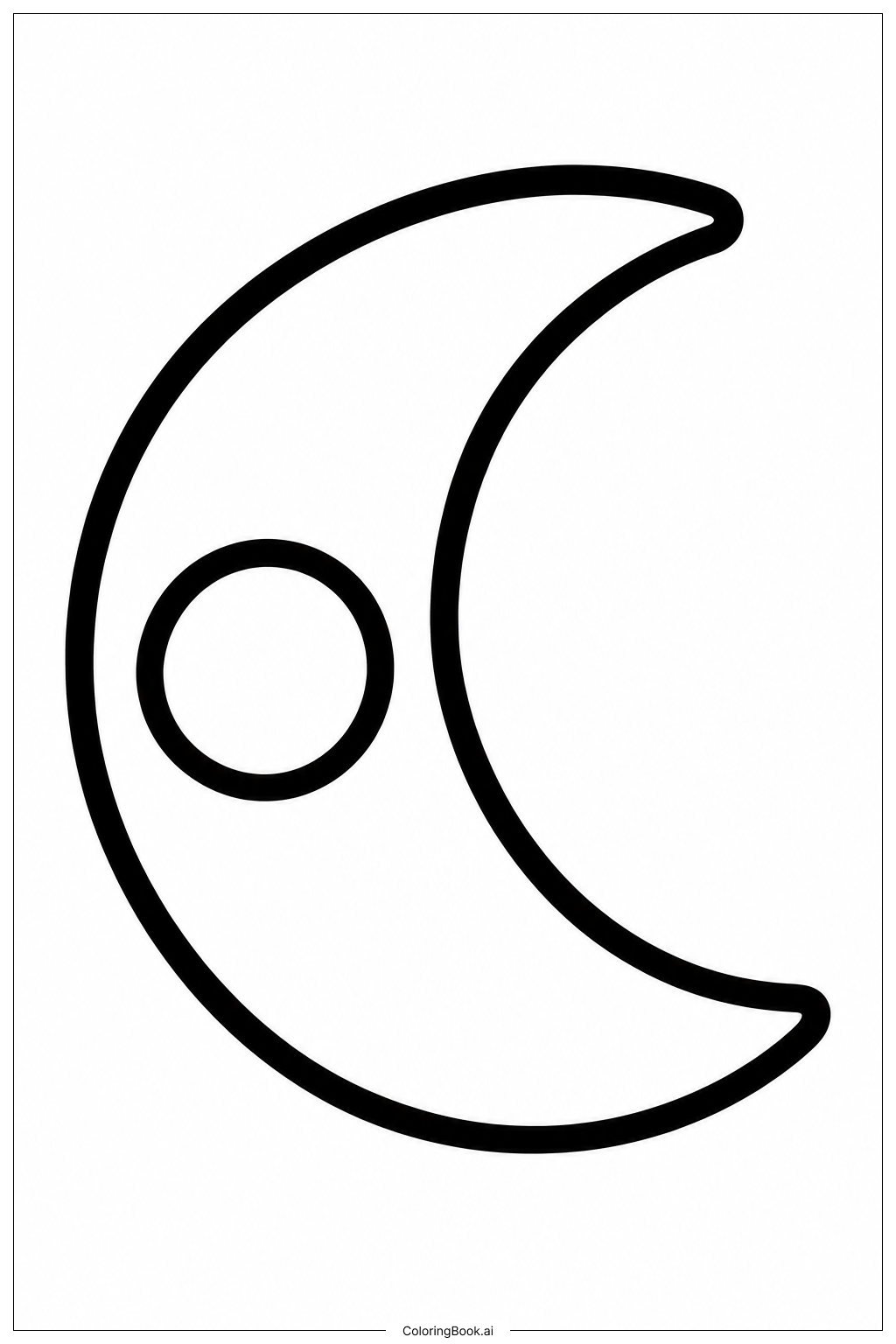
Coloring tips: How to color Dot Day Moon coloring page well?
For the crescent moon, consider warm yellows, soft golds, or even a pale cream to create a glowing nighttime feel. You might add subtle shading along the curved edge to give it dimension. The dots offer wonderful creative freedom—try creating a rainbow pattern by coloring groups of dots in different colors, or use various shades of blue and purple for a twilight sky effect. You could color some dots in metallic colors like silver or gold to make them sparkle. For a cohesive look, choose a dark blue or deep purple background to make the moon and dots pop. Younger artists might enjoy using bright, bold colors for each dot, while older colorists can experiment with gradients, making dots fade from dark to light, or creating a color story that moves across the page.
Coloring challenges: Which parts are difficult to color and need attention for Dot Day Moon coloring page?
• Dot Variety and Patience: With numerous dots scattered across the page, maintaining focus and patience can be challenging, especially for younger children. Each dot requires individual attention, and the repetitive nature of coloring many small circles might test concentration. However, this also provides an excellent opportunity to practice staying power and completing detailed work.
• Size Control for Small Dots: Many of the dots are quite small, requiring careful motor control to stay within the lines. Younger artists may find it tricky to color tiny circles without going outside the boundaries. Using fine-tipped markers or colored pencils with sharp points can help, but it requires steady hands and deliberate movements.
• Color Planning and Distribution: Deciding on a color scheme for dozens of dots presents a creative challenge. Should the dots be random colors, follow a pattern, or create a gradient effect? Planning how colors will be distributed across the entire page requires forethought and artistic decision-making. Without a plan, the result might feel chaotic rather than intentional.
• Background Consideration: Determining whether and how to color the background space between the dots and around the moon adds complexity. Leaving it white creates one effect, while coloring it creates another. If coloring the background, working carefully around all the dots without accidentally coloring over them requires precision and patience.
Benefits of coloring books: Advantages of drawing Dot Day Moon coloring page
This Dot Day Moon coloring page offers wonderful developmental benefits for young artists. The variety of dot sizes helps children practice fine motor control and hand-eye coordination as they carefully fill each circle. The repetitive nature of coloring multiple dots builds patience, focus, and the satisfaction of completing a detailed project. Children learn color theory and pattern recognition by deciding how to distribute colors across the page—whether creating rainbows, gradients, or random bursts of color. The creative freedom inherent in choosing colors for each dot encourages individual artistic expression and decision-making. The simple, joyful design reduces anxiety and provides a calming, meditative activity that can help children relax and express themselves. Completing this page builds confidence and pride in their artistic abilities while celebrating the spirit of creativity that Dot Day represents.