Coloring tips: How to color Dot Day Garden Art coloring page well?
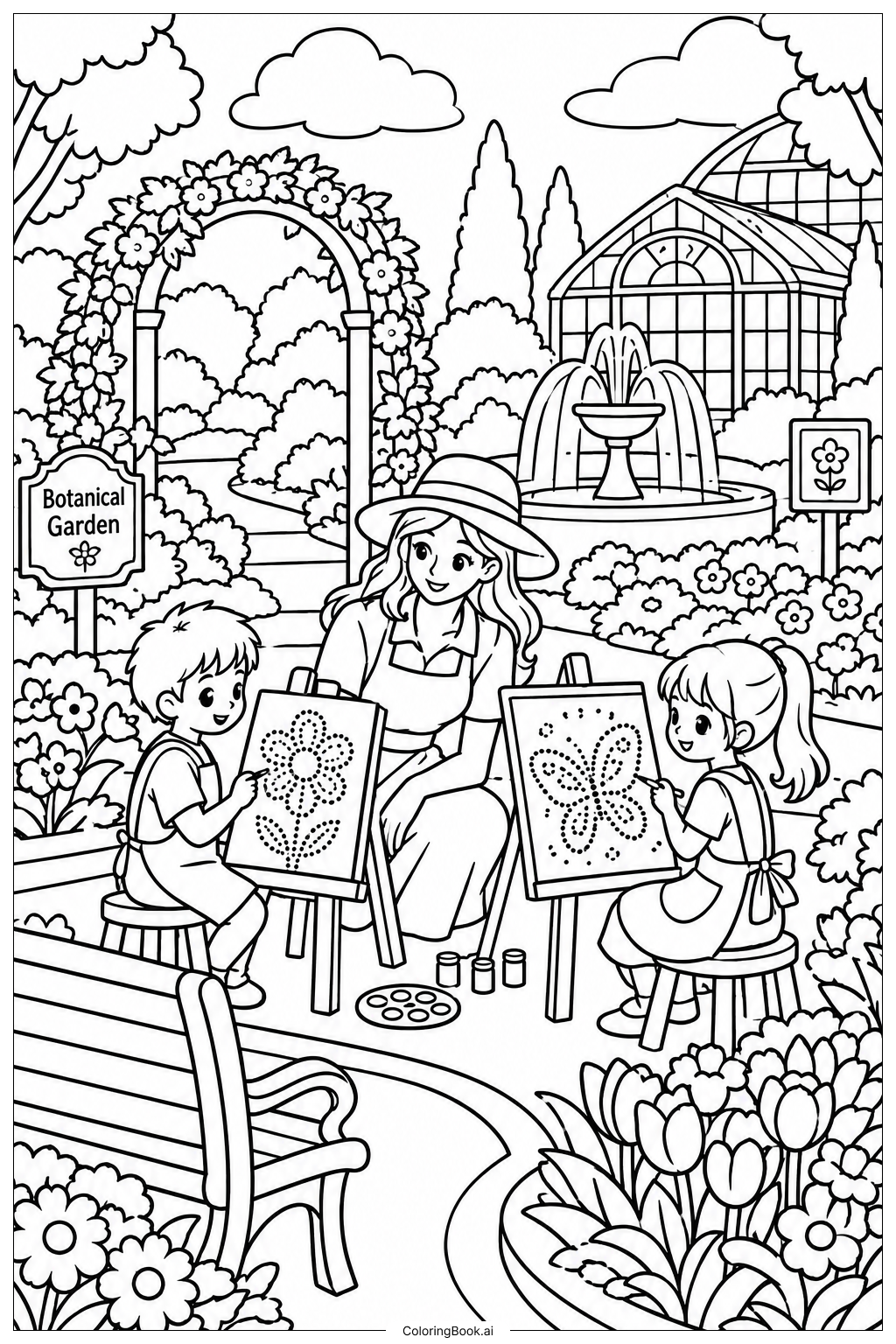
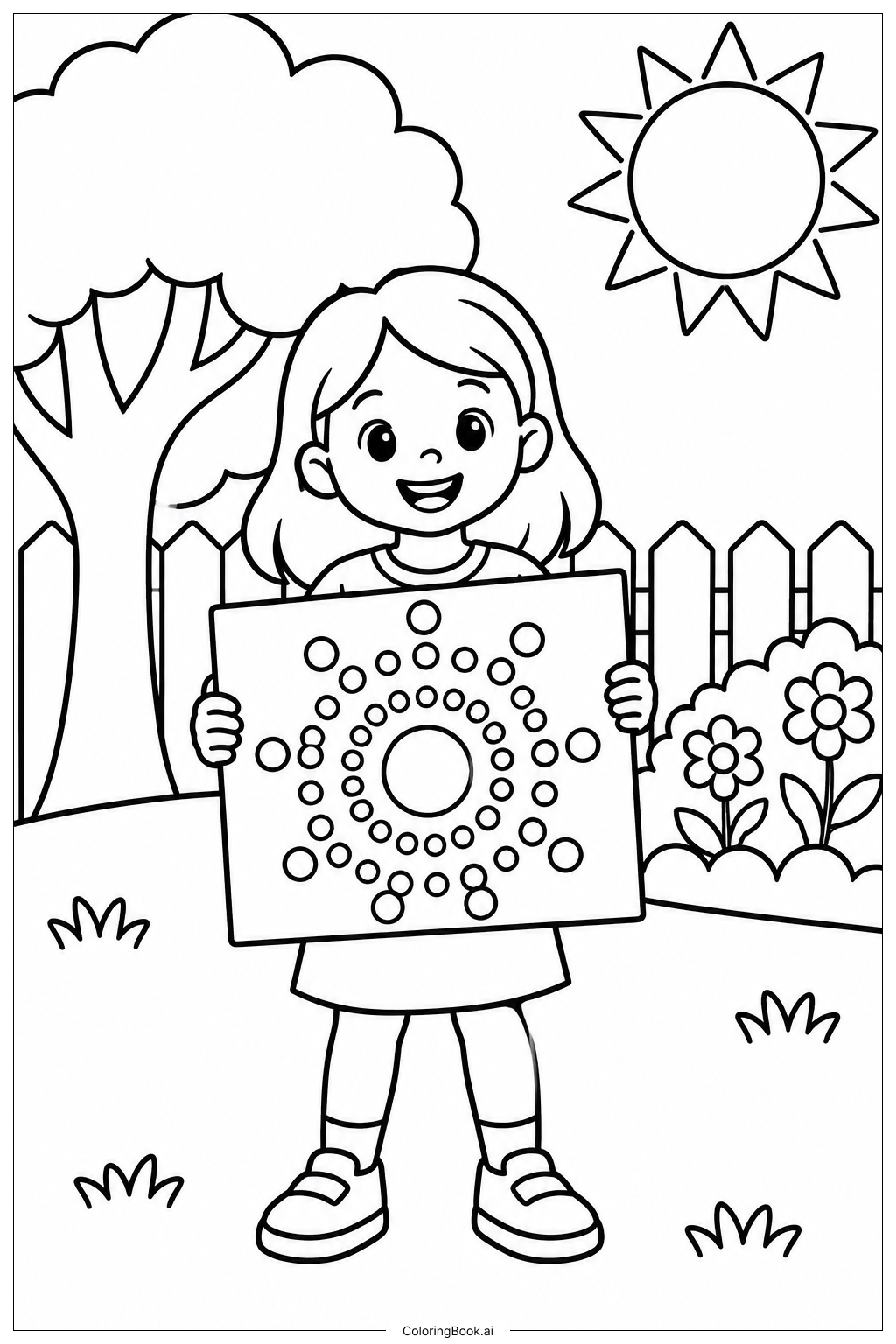
Start with the child at the center, using skin tones for the face and hands, and choose bright, cheerful colors for their clothing. The paintbrush and palette offer a wonderful opportunity to show multiple paint colors like red, blue, yellow, and green. For the garden, create variety by using different colors for each flower—try pink and purple tulips, yellow and orange daisies, and red blooms scattered throughout. Color the leaves in various shades of green, from light lime to deep forest green, to add depth. The decorative dots can be colored in rainbow hues or coordinated patterns. Make the butterflies vibrant with orange, blue, or yellow wings. The sun can be bright yellow or golden orange. Consider using lighter colors for background elements and bolder, saturated colors for foreground flowers to create visual depth in your garden scene.
Coloring challenges: Which parts are difficult to color and need attention for Dot Day Garden Art coloring page?
• Intricate Dot Patterns: The page features numerous small circular dots scattered throughout the design, which require steady hand control and patience. Young colorists may find it challenging to stay within these tiny circular boundaries, especially when using markers or crayons with broader tips. The repetitive nature of coloring many small dots can test concentration skills.
• Overlapping Floral Elements: The garden contains multiple layers of flowers, leaves, and stems that overlap and interweave. Distinguishing where one petal ends and another begins requires careful observation. Choosing colors that allow each element to stand out while maintaining harmony can be tricky, particularly for children still developing their color theory understanding.
• Fine Detail Work: The child's facial features, fingers holding the paintbrush, and the small palette require precision coloring. The butterfly wings contain delicate patterns, and various flower centers have tiny details that need careful attention. These small spaces are challenging for younger children or those still developing fine motor control.
• Balanced Color Distribution: With so many flowers and decorative elements competing for attention, creating a balanced, visually pleasing color scheme across the entire page requires planning. Deciding which areas should be bold and which should be subtle to avoid overwhelming the composition is an advanced skill that develops with practice.
Benefits of coloring books: Advantages of drawing Dot Day Garden Art coloring page
Coloring this Dot Day garden scene helps children develop fine motor skills and hand-eye coordination through detailed work on small dots and intricate floral patterns. The repetitive action of staying within lines strengthens pencil grip and control, preparing young hands for writing tasks. This image encourages creative decision-making as children choose color combinations for dozens of different flowers and elements, building confidence in artistic expression—the core message of Dot Day itself. The theme reinforces that everyone can create art and that starting small, like with a single dot, can lead to beautiful results. The garden setting provides opportunities to learn about nature, plant varieties, and color observation from the real world. Completing this detailed page builds patience, focus, and the ability to work on longer projects. The joyful subject matter promotes positive associations with creativity and self-expression, helping children understand that art is about personal expression rather than perfection.