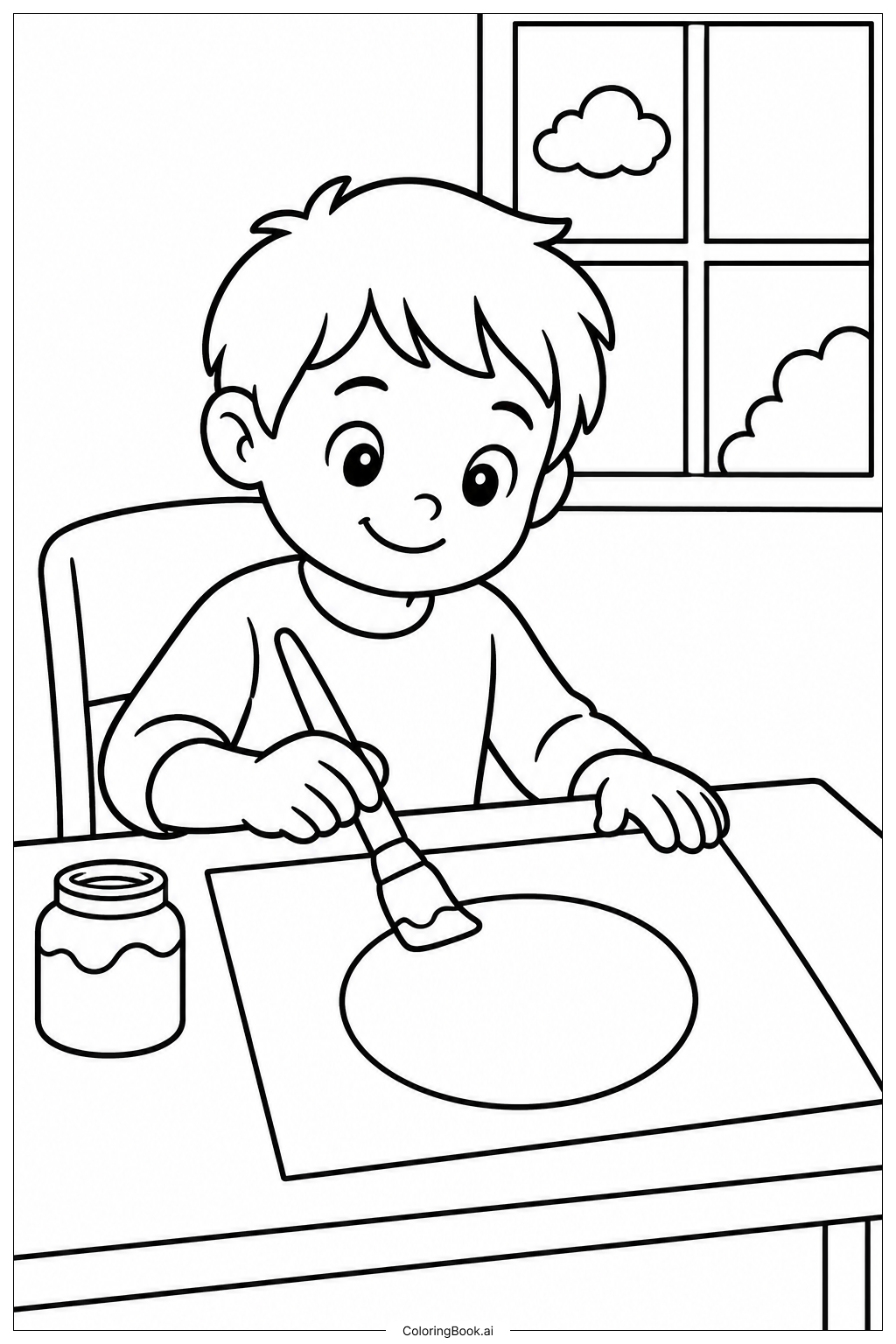
Coloring tips: How to color Dot Day Art Table coloring page well?
Start with the table itself using warm wood tones like browns, tans, or honey colors to create a sturdy foundation. Color the paper in the center white or cream, leaving it mostly blank to show it's ready for art. Use bright, varied colors for the paint bottles—reds, blues, yellows, greens, purples, and oranges to show a full rainbow of choices. Make the brush handles different colors or natural wood tones, with dark bristles in black, brown, or gray. Color markers and crayons in their typical vibrant shades. Fill palette wells with different paint colors, perhaps showing some mixing. Use metallic silver or gray for any metal parts like bottle caps or ferrules. Add shadows under objects with light gray or purple to give depth. Keep backgrounds simple—perhaps a soft blue or warm beige for the wall behind the table.
Coloring challenges: Which parts are difficult to color and need attention for Dot Day Art Table coloring page?
• Small Supply Details: The art supplies contain many small elements like bottle caps, brush ferrules, marker tips, and paint palette wells that require careful coloring within tight spaces. Young children may find it challenging to stay within these tiny boundaries, especially when supplies overlap or sit close together. Using fine-tipped coloring tools like colored pencils or thin markers helps achieve precision in these detailed areas.
• Overlapping Objects: The art table scene shows supplies scattered and layered on top of each other, creating overlapping sections where one item sits partially behind another. Deciding which areas belong to which object and maintaining consistent colors as items move behind others requires spatial awareness and planning. Colorers must think about depth and which items are in front versus in back to create a realistic scene.
• Varied Textures: Different materials appear in this image—smooth plastic bottles, soft brush bristles, wooden table surfaces, paper texture, and glass or plastic cups. Each material should ideally be colored differently to show its unique quality. Bottles might have shine spots, wood shows grain, and bristles need fine lines. Creating these different textures while coloring adds complexity but also makes the finished page more interesting and realistic.
• Color Coordination: With so many individual supplies to color, choosing a pleasing combination without making the scene too chaotic or random requires thoughtful planning. Colorers must decide whether to use realistic colors that match actual art supplies or take creative freedom with imaginative choices while still keeping the overall composition balanced and visually appealing.
Benefits of coloring books: Advantages of drawing Dot Day Art Table coloring page
Coloring this Dot Day art table helps children develop fine motor skills through the precise movements needed for small supply details. It encourages planning and organization as they decide which colors to use for different objects and how to create a harmonious scene. The image celebrates creativity itself, reminding young artists that making art is valuable and fun. Recognizing different art tools helps children become familiar with various supplies they might use in real life. The overlapping objects teach spatial reasoning and depth perception. Completing this detailed scene builds patience and focus. The Dot Day theme connects to the beloved children's book and reinforces messages about courage, creativity, and self-expression. It's perfect for celebrating International Dot Day on September 15th or any time young artists want to honor the creative spirit.