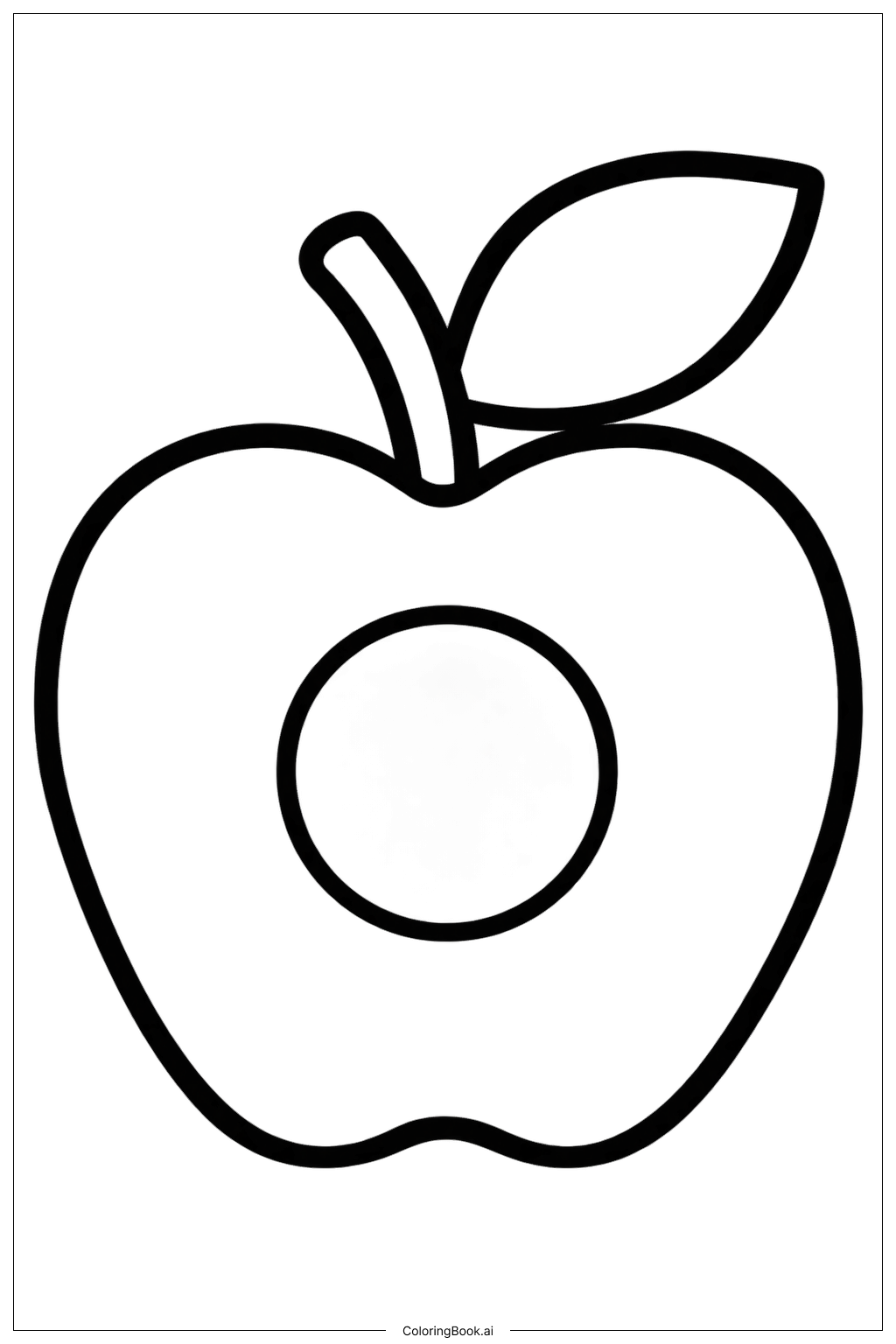
Coloring tips: How to color Dot Day Apple coloring page well?
Start with the apple's main body using bright red, crimson, or even yellow for a Golden Delicious variety. The central dot can be a bold contrasting color—try bright blue, purple, or green to make it stand out and celebrate creativity. Color the stem in rich brown or tan, adding darker shading on one side for dimension. The two leaves offer a chance to use various shades of green: light lime, forest green, or even add yellow-green highlights where light might hit. Consider adding a soft pink or light red blush on one side of the apple to show where sunlight touches it. You might outline the dot with a darker shade to emphasize it further. Encourage young artists to experiment with unexpected colors—perhaps a rainbow apple or polka-dotted leaves—to truly embrace the spirit of Dot Day's message about making your mark.
Coloring challenges: Which parts are difficult to color and need attention for Dot Day Apple coloring page?
• Central Dot Emphasis: The circular dot at the apple's center is the symbolic heart of this Dot Day image, and colorists may find it challenging to choose a color that stands out boldly against the apple body while maintaining visual harmony. Younger children might struggle to stay within the circular boundary, especially if using markers that bleed or crayons that require pressure. Creating contrast without clashing requires thoughtful color selection.
• Facial Features and Expression: The apple's eyes and smile are small, detailed elements that require careful coloring, particularly for children ages 4-7 who are still developing fine motor control. Keeping color inside the eye shapes and maintaining the white highlights that make eyes look alive can be tricky. The curved smile line is narrow and staying within it without going outside the lines takes concentration and a steady hand.
• Leaf Details and Symmetry: The two leaves have visible vein lines and natural curves that add realism but also require attention to detail. Colorists may want to shade the leaves to show dimension—lighter on one side, darker on the other—which involves blending or layering colors. Keeping both leaves colored similarly while adding individual character takes planning, and younger children may find the smaller spaces between veins difficult to fill neatly.
• Stem Shading and Texture: Though the stem is a small element, adding realistic brown tones with highlights and shadows helps it look three-dimensional. Children may press too hard or use only one flat color, missing the opportunity to practice shading techniques that bring the image to life.
Benefits of coloring books: Advantages of drawing Dot Day Apple coloring page
Coloring this Dot Day Apple offers multiple developmental and creative benefits for children. It reinforces the core message of International Dot Day—that everyone can be creative and make their mark—by providing a simple, welcoming image that builds confidence. The clear outlines and friendly design are perfect for younger children developing fine motor skills, hand-eye coordination, and pencil grip. Focusing on staying within the lines improves concentration and patience. The central dot invites experimentation with color choices, encouraging self-expression and decision-making. Children practice color recognition and learn about contrast by choosing colors that make the dot pop against the apple. The apple's facial features add an emotional connection, making the activity more engaging and fun. Coloring the leaves and stem introduces basic concepts of nature and healthy eating. Completing the page gives a sense of accomplishment and pride, which is central to Dot Day's mission of celebrating courage and creativity in all forms.