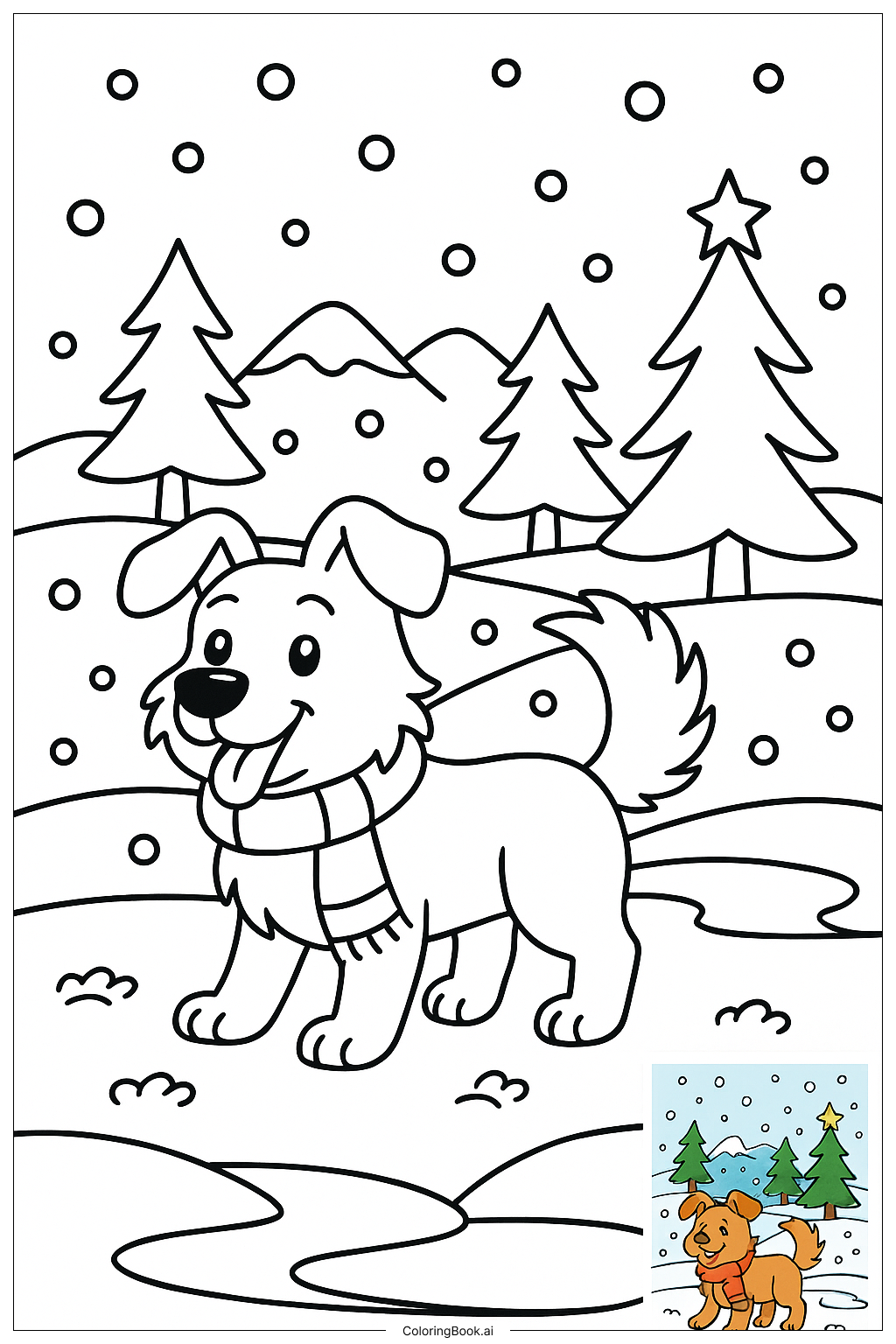
Coloring tips: How to color Winter Dog In Snow Scene coloring page well?
Start with the dog's fur. Use warm browns, creamy whites, or golden yellows to make the coat look soft and fluffy. For the scarf or accessories, pick bright holiday colors like red, green, or deep blue to add a festive pop. Color the snow in light shades of blue, lavender, or pale gray instead of plain white — this gives the snow a realistic, cool glow. Use darker shades of the same color to add depth and shadow in the snow drifts. The pine trees in the background look great in forest green with white tips to show snow resting on the branches. Try a soft sky blue or light purple for the winter sky. Add small yellow or white dots for falling snowflakes. Keep the dog's eyes dark brown or black with a tiny white dot to make them look bright and lively. Use light pink inside the ears and on the nose for a cute, warm touch.
Coloring challenges: Which parts are difficult to color and need attention for Winter Dog In Snow Scene coloring page?
• Dog Fur Texture: The dog's fluffy coat has many small overlapping lines and curves that represent individual tufts of fur. Staying within these tiny sections while blending multiple shades to create a soft, realistic look can be tricky, especially for younger colorists. Using short, light strokes that follow the direction of the fur will help achieve a natural appearance.
• Snow Shading and Depth: Snow might look simple, but coloring it well is a real challenge. Flat white makes the scene look empty, while blending light blue, lavender, and soft gray creates the sense of shadow and dimension. Getting gradual, smooth transitions between these shades without harsh lines takes patience and a gentle hand.
• Background Detail: The pine trees, falling snowflakes, and distant landscape in the background contain many small, close-together shapes. Carefully filling each one without accidentally bleeding color into neighboring areas requires focus and a fine-tipped coloring tool. Younger children may find this section the most demanding.
• Facial Expression: The dog's face has several small features close together — eyes, nose, mouth, and inner ear details. Keeping each element clean and distinct while still making the face look expressive and cute is a careful, precise task. A sharp pencil or thin marker works best here.
• Color Harmony Across the Scene: Balancing warm tones on the dog against cool tones in the snow and sky so the whole image feels unified and visually pleasing is an artistic challenge that encourages colorists to think about the overall composition, not just individual sections.
Benefits of coloring books: Advantages of drawing Winter Dog In Snow Scene coloring page
Coloring this Winter Dog In Snow Scene offers a wide range of benefits for kids and creative minds of all ages. First, it builds fine motor skills. Carefully filling in the dog's fur, tiny snowflakes, and tree branches strengthens hand control and pencil grip, which supports handwriting and other daily tasks. Second, it encourages color theory thinking. Choosing shades for snow, sky, and the dog's coat teaches children how colors interact, how to create contrast, and how warm and cool tones can work together. Third, it supports emotional well-being. The peaceful winter scene and happy dog create a calming, joyful activity that helps reduce stress and anxiety. Focusing on coloring can feel like a mini mindfulness session. Fourth, it sparks creativity and imagination. There is no single right way to color this page, so children feel free to experiment, make choices, and express their own style. Finally, completing the page gives a real sense of accomplishment. Finishing a detailed scene builds confidence and encourages kids to take on more complex creative challenges. It is a simple, screen-free activity with lasting positive effects.