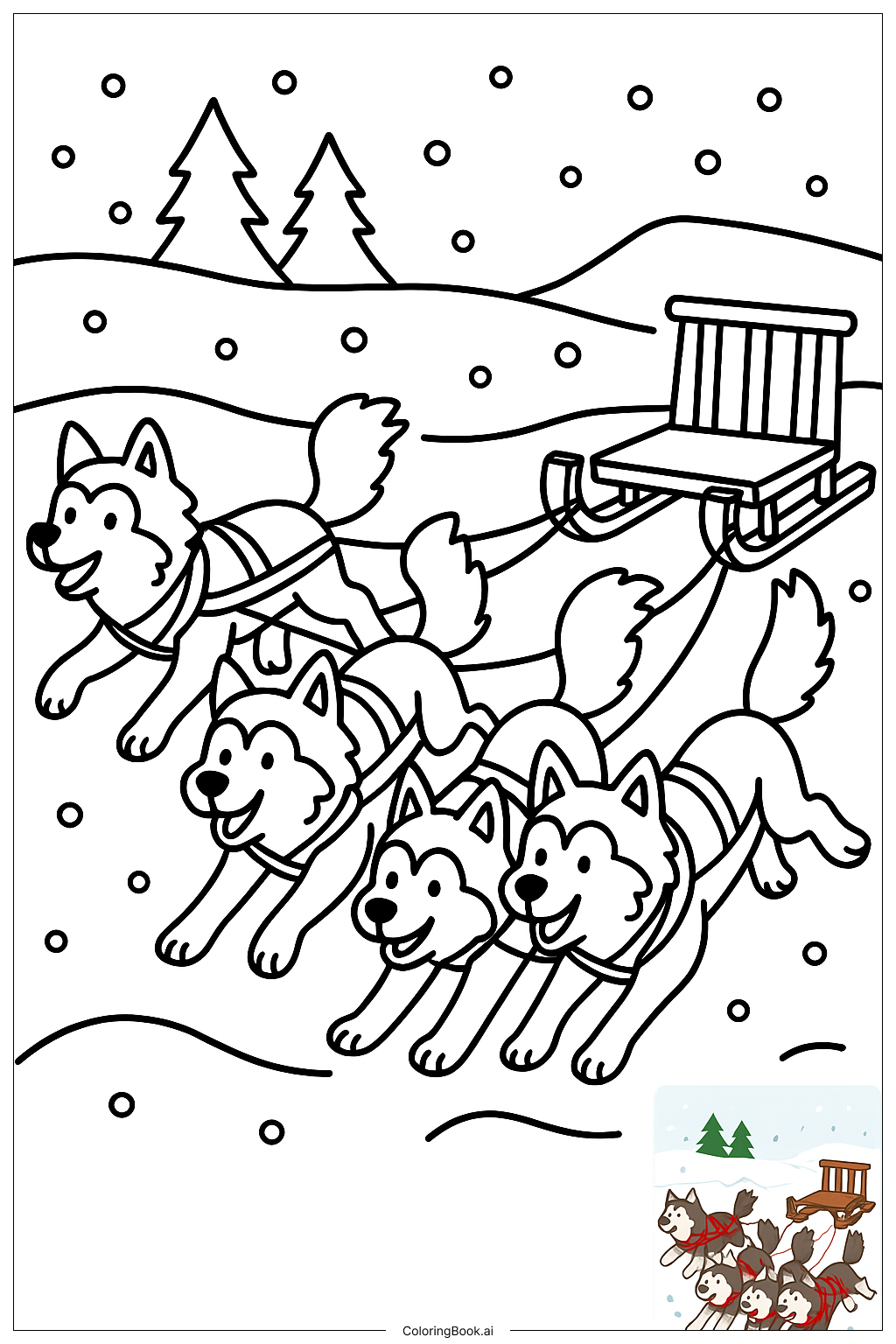
Coloring tips: How to color Sled Dog Team Harnessed coloring page well?
Start with the dogs' fur. Huskies often have gray, white, black, or brown coats. You can mix two or three colors on each dog to show their natural markings. Use light blue or white for their underbelly and darker shades on their backs. Give each dog a unique pattern to make the team look more exciting. Color the harnesses in bright reds, oranges, or blues so they stand out from the fur. For the sled lines, try a strong yellow or orange. The snow on the ground can be light blue or pale lavender instead of plain white — this adds depth. Use soft grays or purples for shadows in the snow. If there is a background with trees, use dark greens and deep blues to show a cold winter forest. Add a bit of warm color to the dogs' eyes to give them life and energy.
Coloring challenges: Which parts are difficult to color and need attention for Sled Dog Team Harnessed coloring page?
• Fur Texture and Layering: Each sled dog has thick, multi-layered fur with complex directional flow. Capturing this texture requires careful blending of at least two to three colors per dog. Coloring the fur in short, overlapping strokes that follow the natural direction of growth will help create a realistic look. This is one of the most time-consuming parts of the image and requires patience and a steady hand.
• Harness and Line Details: The harnesses wrap around each dog's chest and back in a series of straps and buckles. These are small and closely spaced, making them tricky to color neatly without going outside the lines. Using a fine-tipped marker or a sharpened colored pencil will help you stay within the narrow strap areas and keep each strap cleanly colored.
• Multiple Dogs with Consistent Style: With several dogs in the team, it can be a challenge to keep the overall color scheme balanced. If one dog is too dark or too bright, it can throw off the whole image. Planning your color palette before you start and applying similar tones across the team will help create a unified look while still letting each dog have its own personality.
• Snow and Ground Shadows: The snow beneath and around the dogs needs shading to show movement and depth. Flat white coloring will make the scene look dull. Layering light blue, soft gray, and pale purple in the shadows and under the paws will give the snow a realistic, cold, and dynamic feel without overcomplicating the image.
• Background Depth: If the image includes a distant landscape or tree line, keeping the background lighter and less detailed than the foreground dogs is important. Beginners may color the background too boldly, which flattens the sense of depth. Using softer, cooler tones in the back helps push the sled dog team visually forward.
Benefits of coloring books: Advantages of drawing Sled Dog Team Harnessed coloring page
Coloring this sled dog team image offers a wonderful mix of fun and learning for kids and beginners alike. Working through the details of each dog builds fine motor skills and hand-eye coordination, especially when staying within the harness straps and fur outlines. Choosing colors for each dog encourages creative thinking and helps children explore how colors can show texture, shadow, and light. The scene also teaches kids about real working dogs and winter environments, making it an educational experience alongside the artistic one. Because the image includes multiple dogs with similar but slightly different shapes, children practice patience and consistency — two skills that carry over into everyday life. The challenge of blending fur colors introduces basic color theory in a hands-on way, which can spark a lasting interest in art. Completing a detailed scene like this also builds a sense of accomplishment and pride. For older kids or adults, the complexity of the image provides a calming, focused activity that reduces stress and encourages mindfulness. Overall, this coloring page is both an adventure and a learning tool wrapped into one.