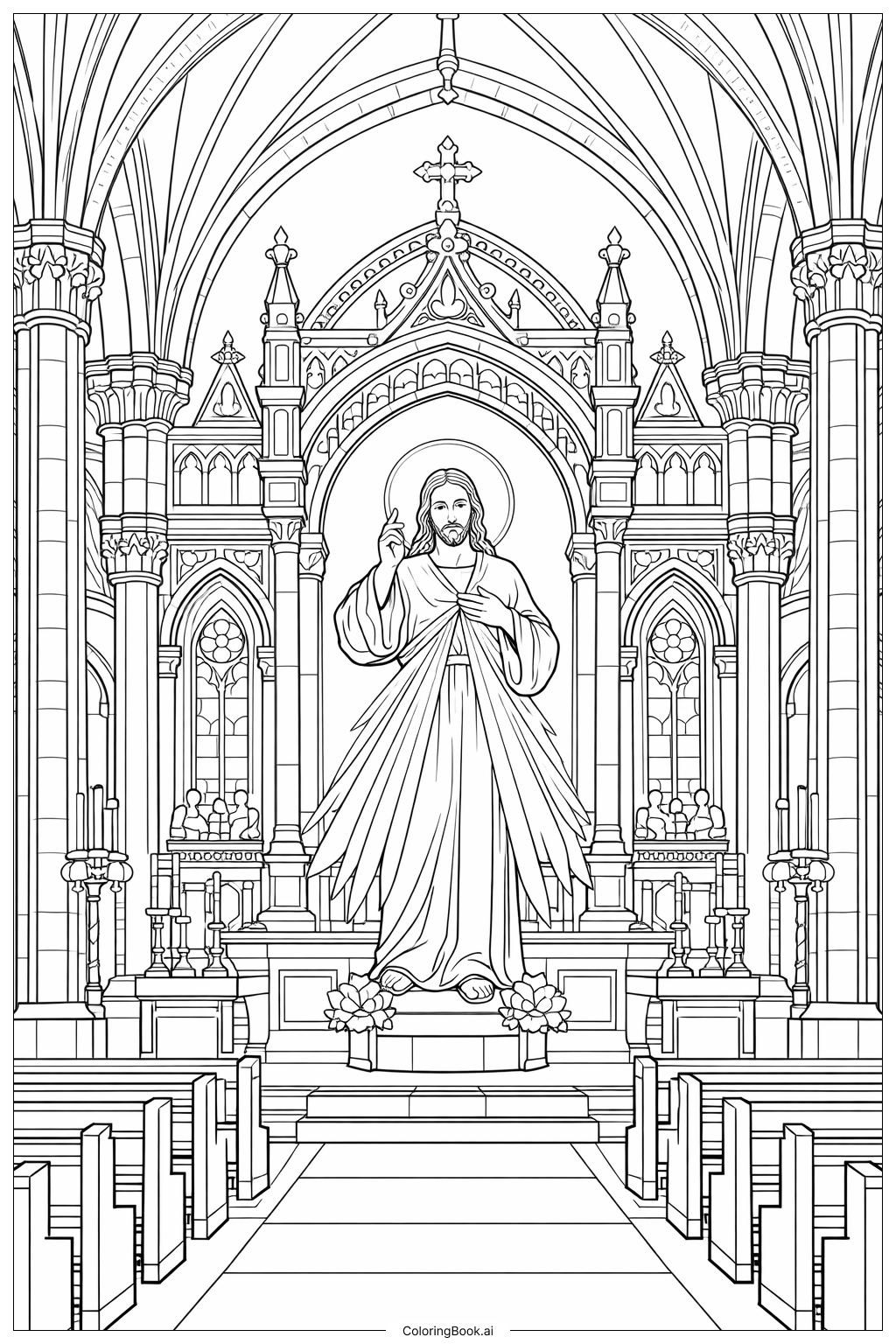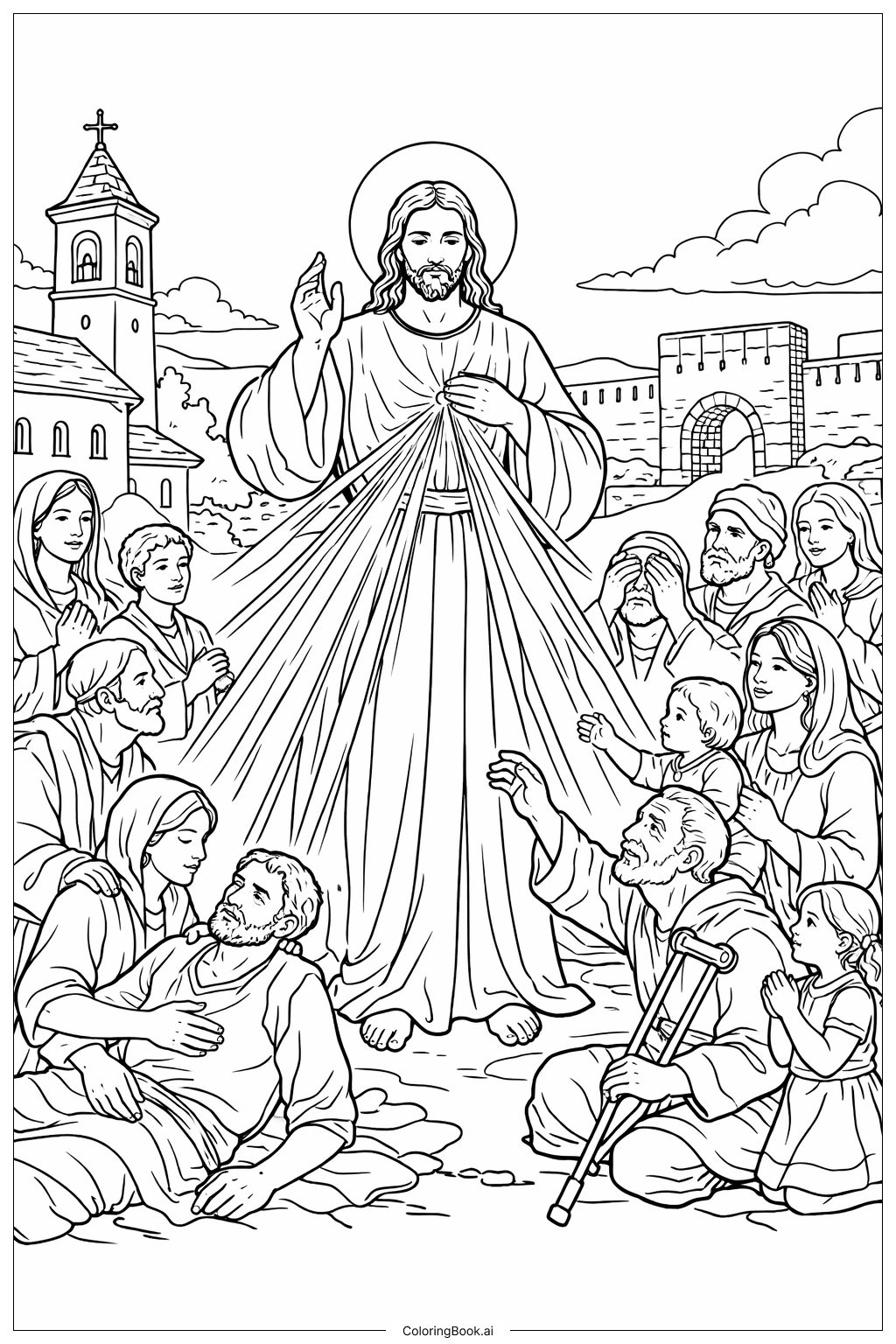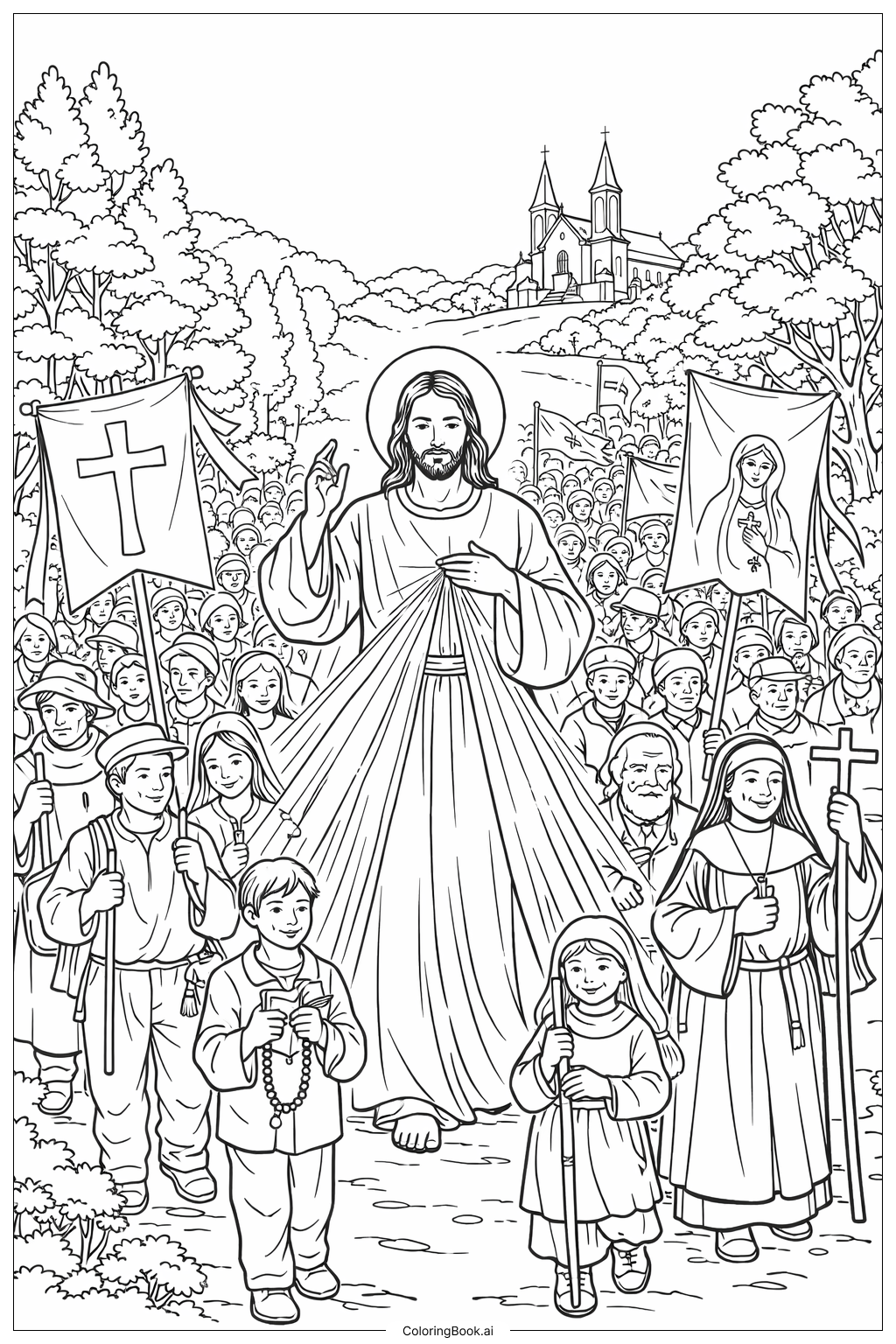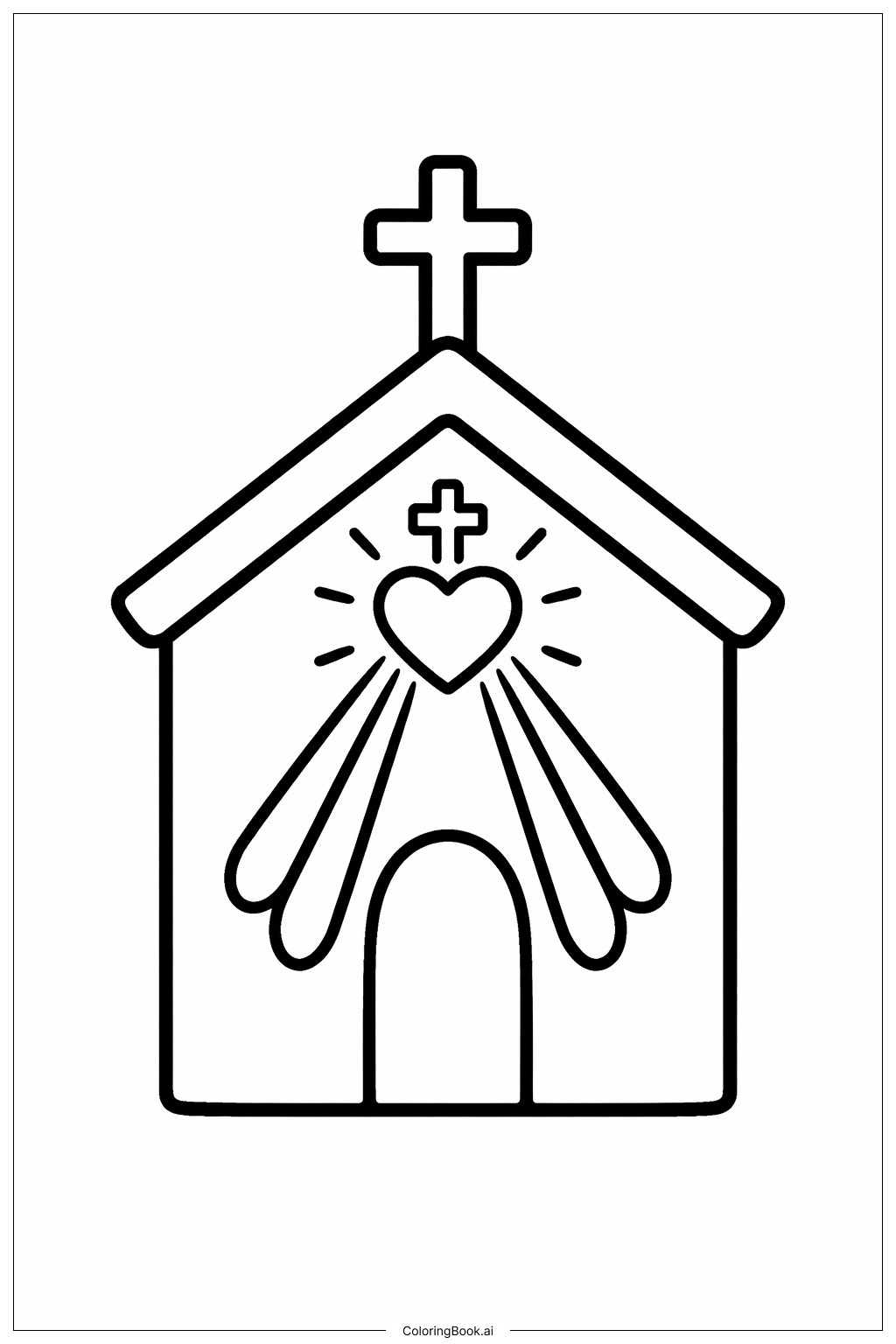
Coloring tips: How to color Divine Mercy Simple Church coloring page well?
Use soft colors like light blues, gentle whites, and warm yellows to give a peaceful feeling to the church. Color the steeple in light brown or gray to show the wood or stone texture simply. Add fresh greens and bright colors to the bushes and flowers around to make them lively and natural. The doors can be a deep red or brown for contrast. For the windows, cool blues or light purples work well to suggest stained glass. Try blending light and dark shades to create depth but keep the colors calm and soothing to reflect the spirit of Divine Mercy.
Coloring challenges: Which parts are difficult to color and need attention for Divine Mercy Simple Church coloring page?
• Architectural Lines: The church’s simple lines require careful coloring to keep the clean, sacred look without smudging outside the lines. Staying neat helps maintain the peaceful atmosphere.
• Small Details: The cross on the steeple and the window panes are small and need precise coloring to highlight these important parts without coloring outside the box.
• Floral Elements: The bushes and flowers include many small shapes together. Balancing different colors without making it too busy can be a challenge.
• Shaded Effects: Showing light and shadow on the church walls with simple colors demands some gentle blending and attention to avoid harsh contrasts.
• Maintaining Balance: Coloring the church and surroundings evenly requires patience so no area becomes too dull or too bright compared to others.
Benefits of coloring books: Advantages of drawing Divine Mercy Simple Church coloring page
Coloring this image helps improve focus and hand-eye coordination as the details encourage careful attention. It offers a chance to learn about the symbol of Divine Mercy and what a church represents in a gentle way. Filling the calm shapes with peaceful colors supports emotional relaxation and mindfulness, especially for children. The simple style lets children build confidence while trying shading and color blending. Overall, it combines creativity with a quiet moment of reflection and respect, making it a meaningful activity for both Boys and Girls aged 4–16.