Coloring tips: How to color Divine Mercy Cathedral Interior coloring page well?
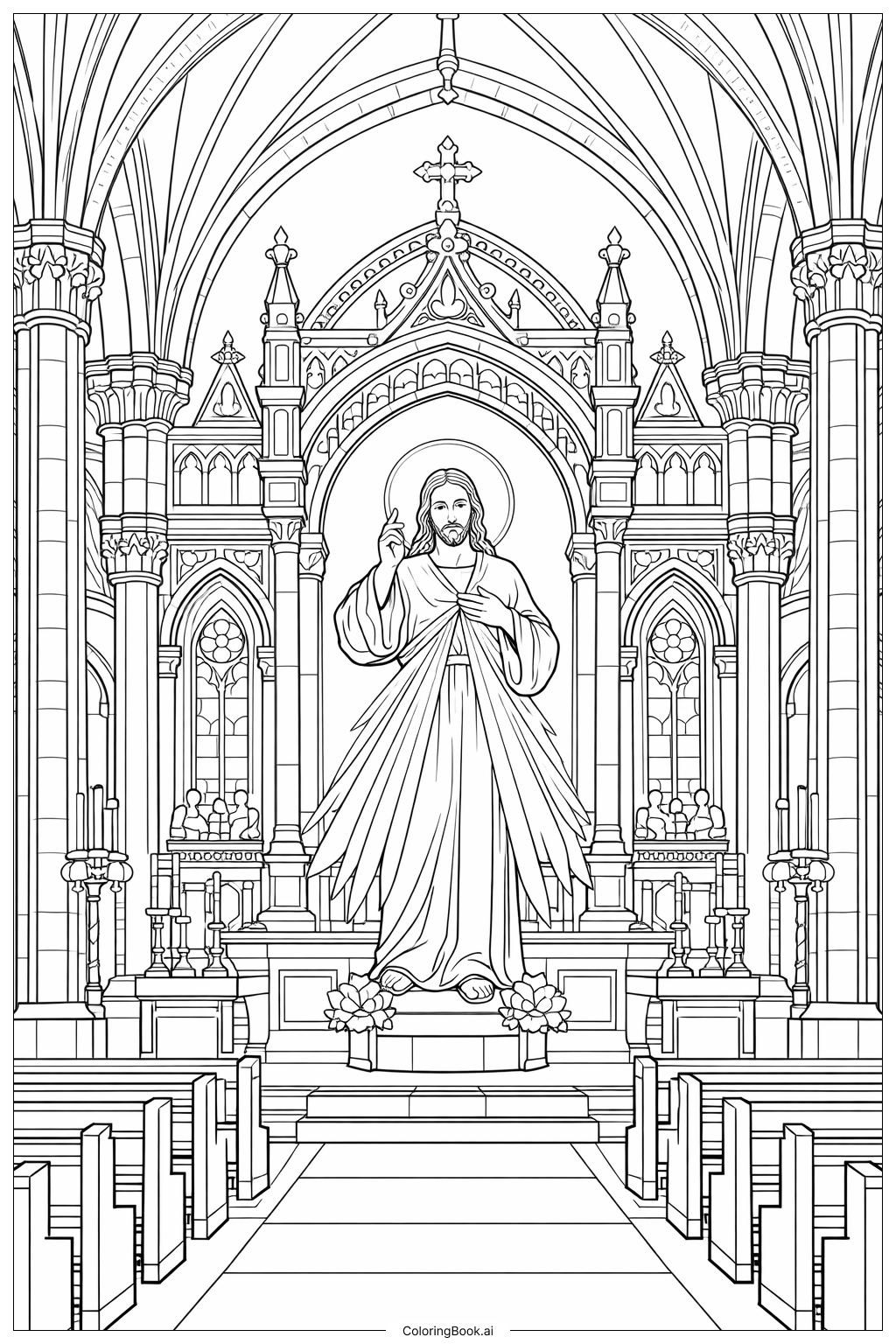
Start with the large Divine Mercy image above the altar. Use soft white and pale gold for Jesus's robe, with one ray in bright white and the other in deep red — these two rays are the heart of the image. Color the altar in warm cream or ivory tones with gold accents on the carvings. For the arched ceilings and walls, try light beige or soft off-white to give the space a peaceful, holy feel. The pews look best in warm brown or chestnut tones. Use rich jewel colors — deep blue, ruby red, and emerald green — for the stained glass windows to make them glow. Add light yellow or gold to the candle flames and metallic fixtures. Take your time with the columns and moldings — soft gray or stone white works well. Children can keep colors simple and bright, while older colorists can try shading and blending for a more realistic effect.
Coloring challenges: Which parts are difficult to color and need attention for Divine Mercy Cathedral Interior coloring page?
Coloring this cathedral interior comes with several challenges that require patience and care:
• Architectural Detail Overload: The interior is filled with arches, columns, moldings, and decorative carvings. Each element has its own shape and texture. Staying inside the fine lines without smudging nearby areas takes a steady hand and a sharp pencil or fine-tipped marker. Rushing through these sections can easily make the image look messy.
• The Divine Mercy Image: The central figure of Jesus with the two rays of light is the most meaningful part of the image. Getting the balance right between the white ray and the red ray — while also coloring the figure's robes, face, and hands carefully — requires attention to detail. The rays need to look soft and glowing, not flat or harsh.
• Stained Glass Windows: These windows are made up of many small sections with complex geometric and floral patterns. Each section may need a different color. Keeping the colors vibrant yet balanced across many small cells is tricky. Using the wrong shade can make the windows look muddy instead of luminous.
• Depth and Perspective: The long nave with receding pews and tall ceilings creates a strong sense of depth. To bring this to life, colorists need to think about light and shadow — areas farther from the light source should be slightly darker. This kind of tonal variation is challenging, especially for younger colorists.
• Consistent Lighting: The entire space is lit by both candlelight and the light coming through the stained glass. Keeping a consistent warm glow across the whole image without making any single area look too dark or too bright requires careful planning before you begin.
Benefits of coloring books: Advantages of drawing Divine Mercy Cathedral Interior coloring page
Coloring this Divine Mercy Cathedral Interior offers a wide range of benefits for children and adults alike.
For children, tracing the detailed lines of arches, pews, and windows helps build fine motor skills and hand-eye coordination. Choosing colors for the stained glass and altar encourages creativity and color awareness. It also introduces kids to the beauty of sacred art and architecture in a hands-on, engaging way.
For older colorists and adults, this page offers a meditative, calming experience. Focusing on the intricate details of a cathedral interior can quiet a busy mind and reduce stress. The spiritual subject matter — centered on the Divine Mercy image of Jesus — adds a layer of peaceful reflection that goes beyond ordinary coloring.
Working through the complex sections of this image also builds concentration and patience. Planning which colors to use and in what order develops decision-making and artistic thinking. Completing such a detailed page gives a strong sense of accomplishment.
Families can color this page together, using it as a starting point for conversations about faith, beauty, and sacred spaces. Whether used for quiet personal time or shared as a group activity, this coloring page nurtures both the mind and the spirit.