Coloring tips: How to color Crab With Map coloring page well?
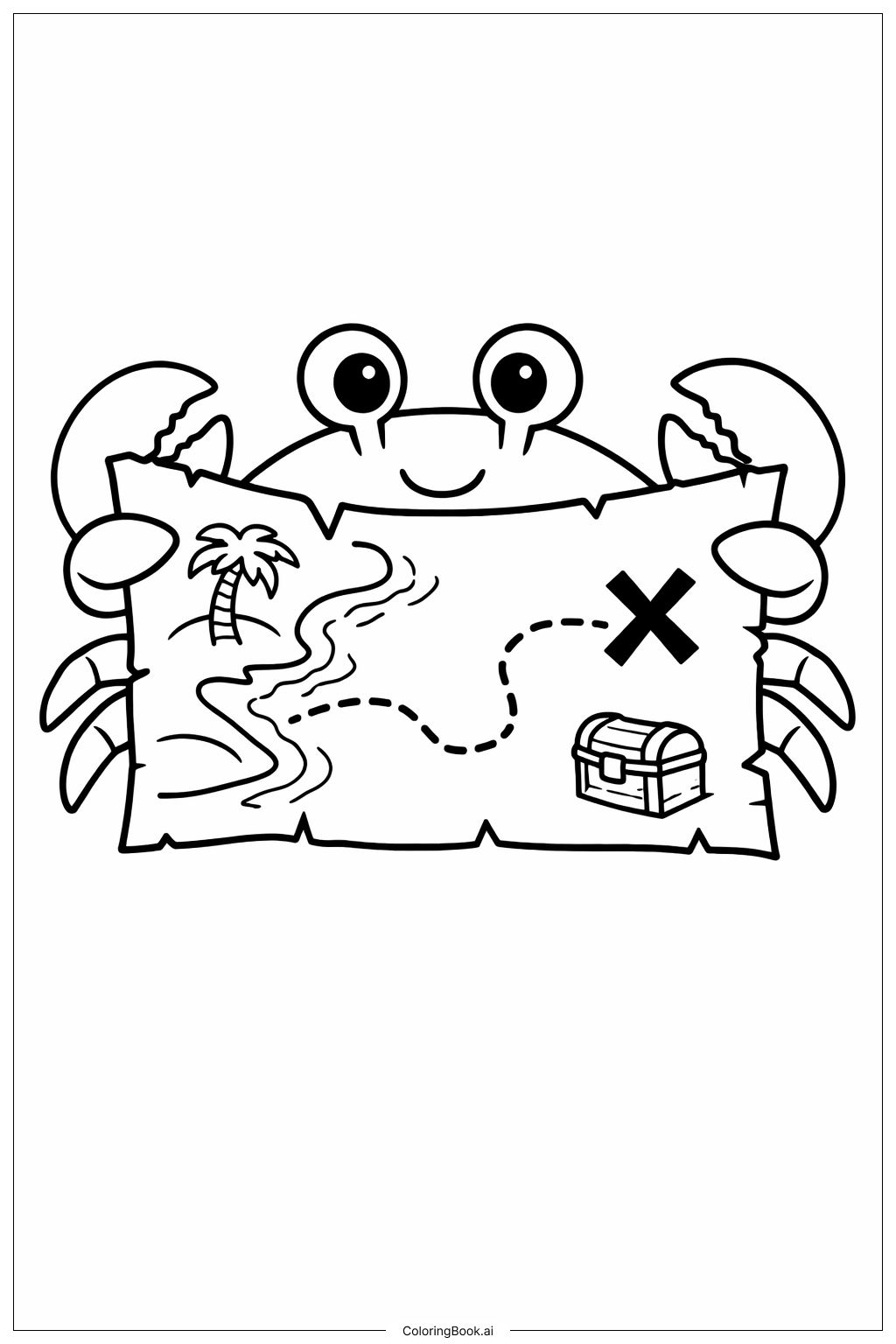
Start with the crab's body. Use bright orange or red for the shell and body to give it a classic crab look. You can also try purple or pink for a fun, fantasy feel. Use a slightly darker shade on the edges of the shell to add depth. Color the claws a deeper tone than the body so they stand out. For the eyes, use black pupils with white highlights to make them look lively. The map can be colored in warm tan or light brown, like old parchment. Use dark brown or red for the trail lines and X mark. Add a pop of color to the compass or island details to make them exciting. The background, if any, can be light blue for water or sandy yellow for a beach feel. Encourage kids to mix colors and add their own creative touches to make this adventurous crab truly their own.
Coloring challenges: Which parts are difficult to color and need attention for Crab With Map coloring page?
• Crab Body Segmentation: The crab's shell and body may include curved lines and segmented sections that require careful attention. Staying inside the rounded edges without smudging into the legs or claws takes patience, especially for younger colorists who are still building fine motor control.
• Small Leg Details: The crab has multiple thin legs extending from its body. These narrow sections are tricky to color neatly. Using a fine-tipped colored pencil or marker works best here. Rushing through these areas can cause colors to bleed into each other or into the body.
• Map Texture and Details: The treasure map held by the crab contains small elements like dotted paths, a large X, and possibly compass markings or coastline shapes. These tiny details require a steady hand and a sharp coloring tool. Choosing contrasting colors for each element helps them stand out clearly on the parchment background.
• Claw Proportions: The claws are larger and more complex than the legs, with inner and outer edges that need different color values to look three-dimensional. Shading the inner curve slightly darker than the outer surface can make the claws look rounder and more realistic.
• Eye Expression: The crab's expressive eyes are small but important to the overall feel of the image. Carefully coloring around the pupils and leaving a white spot for a highlight can bring the character to life. Over-coloring this area can flatten the expression and make the crab look less lively.
Benefits of coloring books: Advantages of drawing Crab With Map coloring page
Coloring this fun crab and map scene offers a wide range of benefits for children and young learners. First, it helps build fine motor skills. Carefully filling in the crab's small legs, claws, and map details trains hand muscles and improves pencil control, which supports handwriting development. Second, it encourages creativity and self-expression. Choosing colors for the crab's shell, the old map, and the background lets kids make unique artistic decisions and build confidence in their own choices. Third, it sparks imagination and storytelling. The treasure map theme invites children to think about adventures, hidden treasures, and ocean journeys, making coloring a gateway to creative play and narrative thinking. Fourth, it supports focus and patience. Completing a detailed image like this one requires sustained attention, which helps children practice sitting with a task and seeing it through to the end. Fifth, it can be a calming and enjoyable activity. The repetitive, gentle motion of coloring reduces stress and creates a sense of achievement when the page is finished. Overall, this Crab With Map coloring page is both educational and entertaining for kids of all ages.