Coloring tips: How to color Crab Night Sky coloring page well?
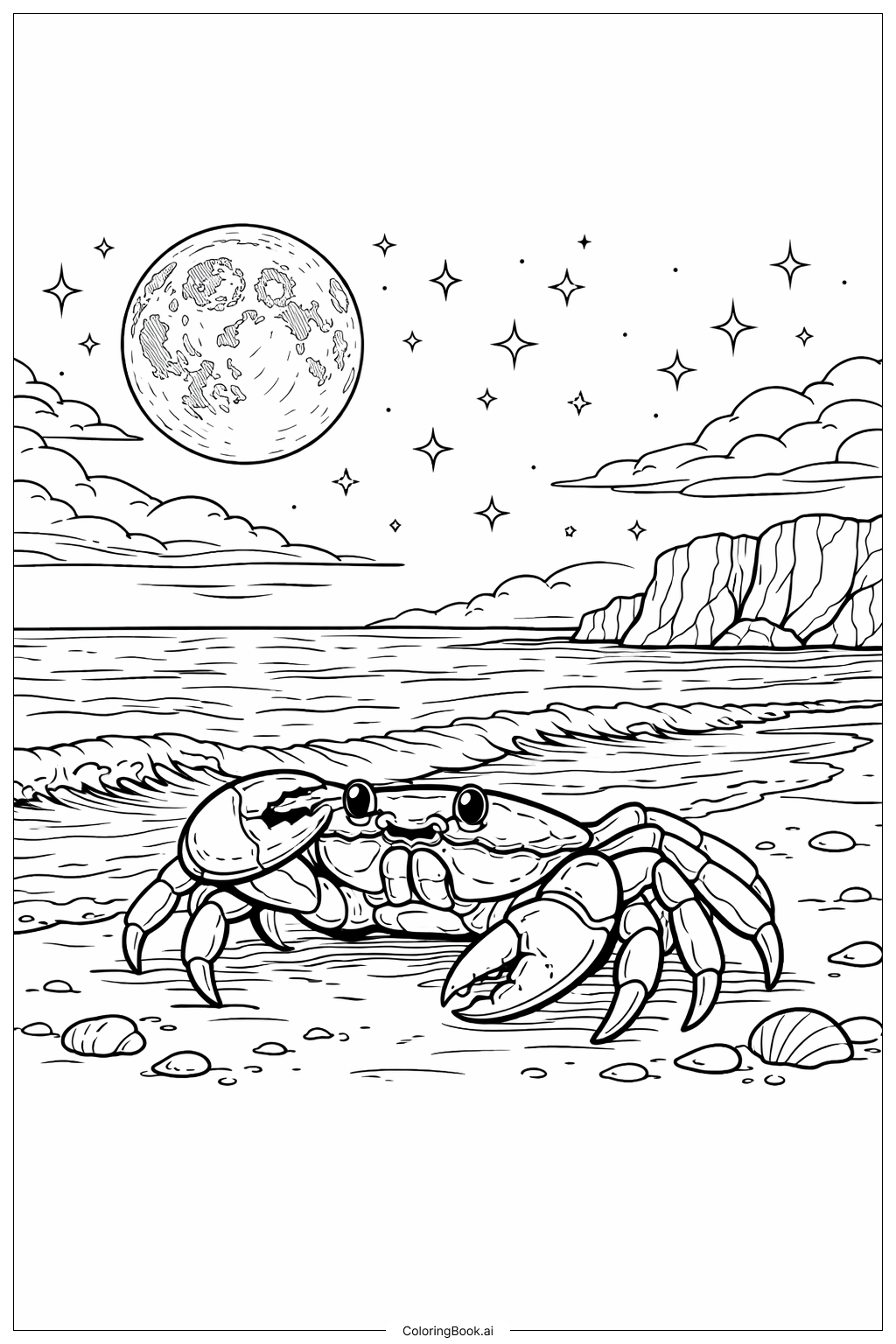
Start with the night sky first. Use deep navy blue or dark purple for the background sky. Add hints of dark teal near the horizon for depth. Color the stars bright yellow or white, and give the moon a warm golden or pale yellow glow. For the crab, go with classic shades of orange, red, or coral. Use a slightly darker tone on the edges of the shell and claws to create a sense of shape. The tips of the legs can be a lighter tan or cream. If there are waves or sand at the bottom, try soft seafoam blue for the water and sandy beige for the shore. This contrast between the warm crab and the cool night sky will make the whole image pop. Kids can also get creative and use pink or purple crabs for a fun, imaginative touch.
Coloring challenges: Which parts are difficult to color and need attention for Crab Night Sky coloring page?
• Night Sky Gradient: Filling the large sky area with a smooth, even color is tricky. Achieving a gradual shift from deep navy at the top to a slightly lighter shade near the horizon takes patience. Using colored pencils in overlapping circular strokes or layering multiple shades of blue and purple will help create a realistic night sky effect without streaks or blotches.
• Stars of Different Sizes: The scene likely includes both tiny dot stars and larger star shapes. Keeping small stars neat and bright without accidentally coloring over them requires a fine-tipped tool and steady hands. Leaving white paper showing through or using a white gel pen afterward can help stars stand out against the dark background.
• Crab Shell Detailing: The crab's rounded body and claws have curved surfaces that benefit from shading. Applying a darker tone along edges and a lighter tone at the center helps give the shell a three-dimensional, glossy look. This technique can be challenging for younger colorists who are still learning about light and shadow.
• Small Leg Sections: Crab legs are narrow and segmented, making them one of the harder areas to color precisely. Each small segment benefits from a consistent color application without bleeding into the surrounding sky or sand. Thin markers or sharpened colored pencils work best here.
• Balancing Warm and Cool Colors: The warm orange crab against the cool dark sky is a beautiful contrast, but keeping both sides vibrant without one overpowering the other takes some color awareness. Choosing the right intensity for each area ensures the overall image stays balanced and eye-catching.
Benefits of coloring books: Advantages of drawing Crab Night Sky coloring page
Coloring this Crab Night Sky page offers wonderful benefits for children and creative minds alike. Working on the large night sky background builds patience and focus, as filling a wide area evenly requires sustained attention. Choosing colors for the crab, stars, and moon sparks creativity and encourages kids to experiment with color combinations. The contrast between warm and cool tones introduces basic color theory in a fun, hands-on way. Fine details like the crab's legs and tiny stars help develop fine motor skills and hand-eye coordination, which are important for writing and other everyday tasks. The calming nature of this nighttime scene also makes it a relaxing activity that can ease stress and quiet a busy mind. Younger children gain confidence as they complete each section, while older kids can challenge themselves with shading and blending techniques. Overall, this page combines artistic fun with meaningful developmental growth, making it a rewarding experience for Boys, Girls, and Adults of all skill levels.