Coloring tips: How to color Crab Explorer Map coloring page well?
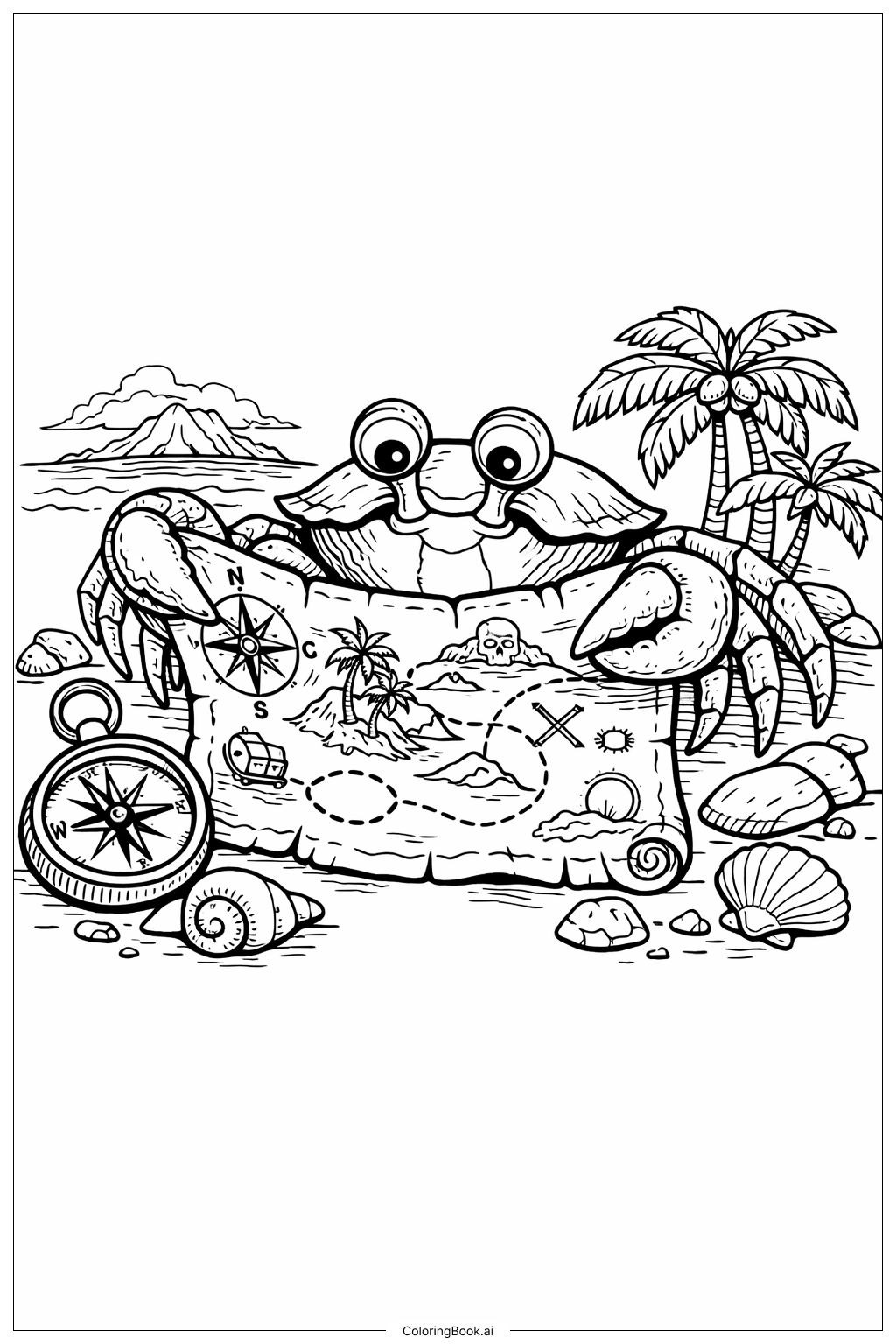
Use bright colors for the crab, like orange or red, to make it stand out. Color the map with light brown or yellowish shades to look like old paper. Make the islands green to show trees and plants. Use blue colors for the ocean water around the islands. The compass can be silver or metallic colors. Seashells and rocks can be in natural colors like tan, white, or light gray. Remember to color the palm trees green with brown trunks. Have fun mixing colors to bring the adventure scene alive!
Coloring challenges: Which parts are difficult to color and need attention for Crab Explorer Map coloring page?
1. The crab's claws and eyes have small details that need careful coloring to stay inside the lines.
2. The map has many small images like islands, trees, and treasure marks that may be tricky to color neatly.
3. The compass has fine lines and different directions that require attention to detail.
4. The background palm trees have many leaves, which can be hard to color without overlapping outside the lines.
5. The shells and rocks have small parts and textures that need gentle coloring to look natural.
Benefits of coloring books: Advantages of drawing Crab Explorer Map coloring page
Coloring this picture helps children improve their fine motor skills because it needs careful control to color small details. It also encourages creativity as kids choose different colors for the crab, map, and environment. The treasure map story promotes imagination and adventure thinking. Additionally, coloring the nature elements like palms and shells teaches kids about sea life and beach scenes. Overall, it is a fun and educational activity that builds patience and focus.