Coloring tips: How to color Crab Market coloring page well?
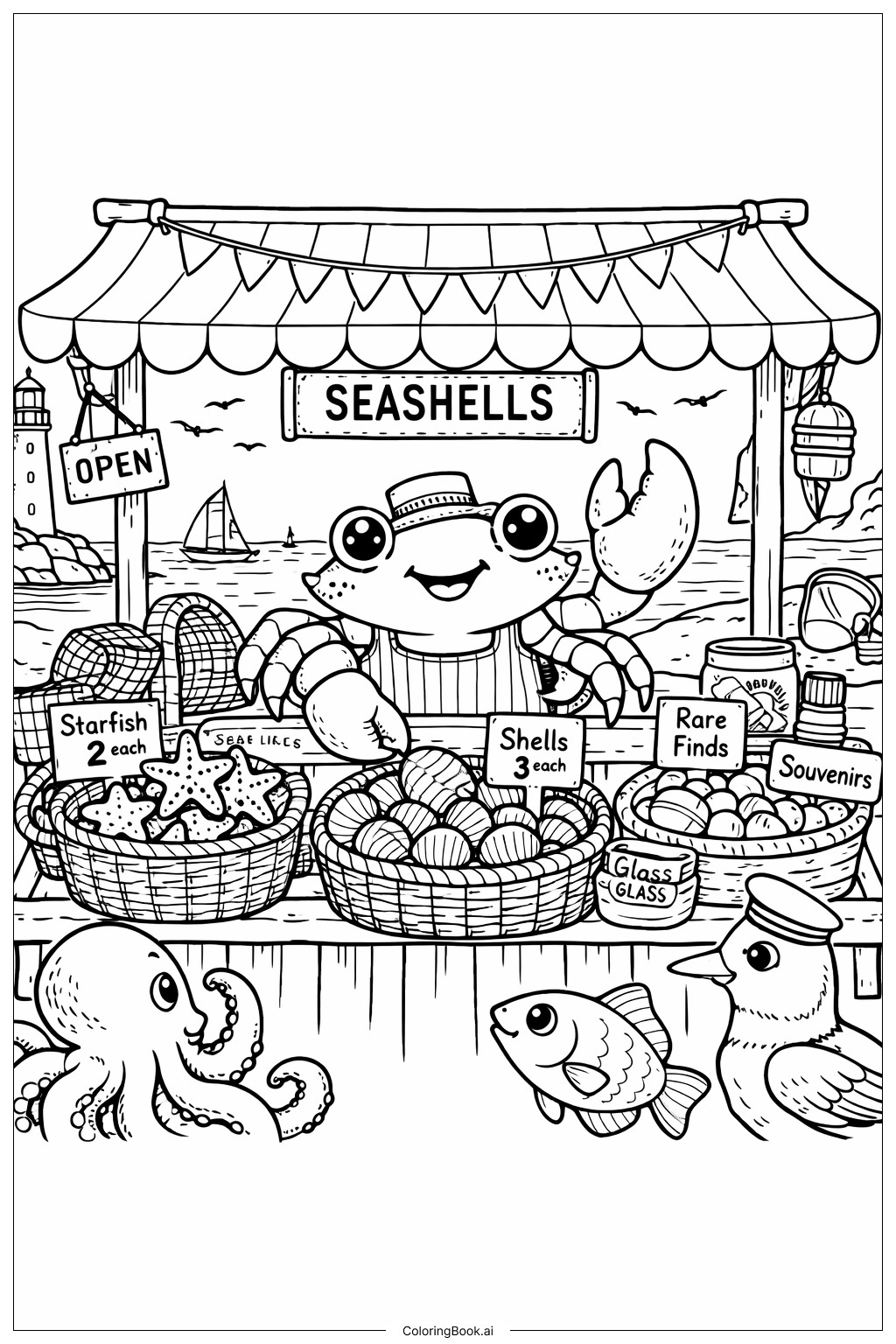
For coloring this Crab Market scene, start with bright colors for the crabs like shades of red, orange, and even some yellow to show their hard shells. Use brown and beige tones for the market stalls and wooden crates for a natural look. The background water and sky can be colored in cool tones like blue and turquoise. You can add creative touches by coloring some crabs with spots or unique patterns. Don’t forget to use different shades of gray and beige for the stones and nets to give depth. Keep the colors soft but vivid to bring the lively market to life. Feel free to experiment with contrasting colors to make the crabs stand out against their environment.
Coloring challenges: Which parts are difficult to color and need attention for Crab Market coloring page?
• Detailed Crab Claws: The claws have many small sections and edges, which require careful coloring to stay inside the lines and to show their 3D shape.
• Overlapping Crabs: Many crabs overlap or are very close to each other, making it challenging to choose where one ends and another begins while coloring.
• Textures of Market Stalls: The wooden crates and nets have fine lines and patterns that need delicate and patient coloring.
• Small Background Elements: The scattered stones and shells are tiny and detailed, which requires steady hand control and precision.
• Maintaining Contrast: Coloring a scene with many similar shapes and sizes means making sure to use colors that clearly separate each crab and object from one another so the picture doesn’t look flat.
Benefits of coloring books: Advantages of drawing Crab Market coloring page
Coloring this Crab Market image helps develop fine motor skills because of the many small details like claws and nets. It encourages focus and concentration when filling overlapping shapes with different colors. This activity also teaches children about patterns and textures found in nature and markets. Moreover, coloring the various crabs and objects allows creativity in choosing colors and shading techniques. Overall, it’s a fun way to learn patience and improve hand-eye coordination while exploring the lively world of sea creatures and markets.