Coloring tips: How to color Crab With Ball coloring page well?
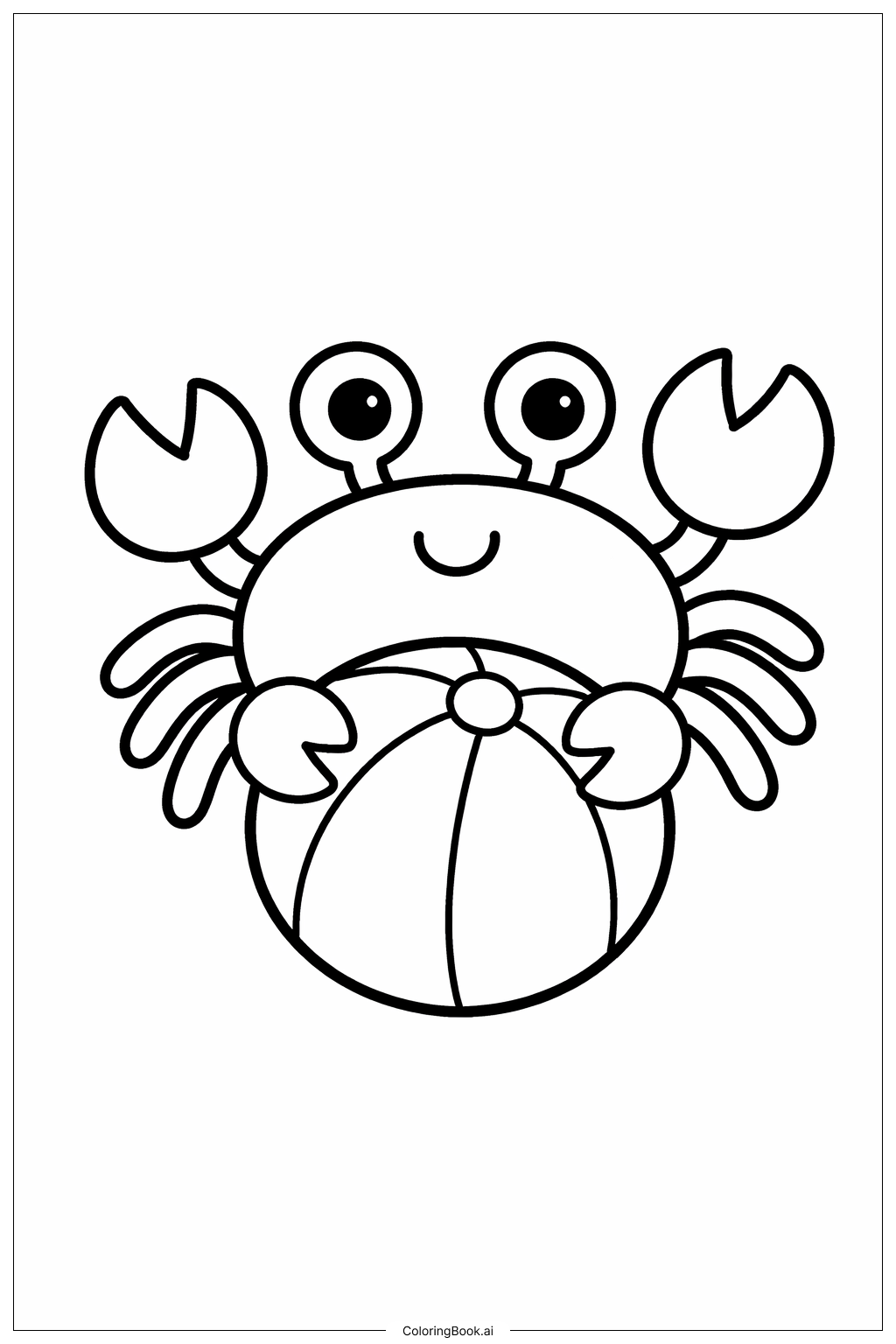
Try using bright colors for the crab, like reds, oranges, or even purples, to make it lively and eye-catching. For the ball, you can choose contrasting colors such as blue, green, or yellow to help it stand out. You could also add some shading by coloring darker near the edges of the crab’s shell and claws, and lighter colors in the middle to create a sense of depth. Feel free to color the background with sandy beige or light blue to represent a beach or underwater setting. Let your imagination guide you to create a colorful and fun scene!
Coloring challenges: Which parts are difficult to color and need attention for Crab With Ball coloring page?
• Small Details: The crab’s eyes and the patterns on its shell require careful coloring within small spaces, which can be tricky for younger children. Staying inside the lines will need focus and steady hands. • Claw Grip: Coloring the claws holding the ball might be challenging because you have to distinguish between the claw parts and the ball underneath. Using different colors or shading helps to separate these elements visually. • Textured Shell: The crab’s shell has patterns that need to be colored consistently while making the crab look natural. Balancing colors to keep the texture visible demands patience and planning. • Leg Positioning: With many legs overlapping or bent, figuring out which leg belongs where can be confusing. Choose different shades for each leg to improve clarity. • Ball Smoothness: The ball’s smooth surface contrasts with the crab’s textured body, so coloring it evenly without streaks is important for a polished look.
Benefits of coloring books: Advantages of drawing Crab With Ball coloring page
Coloring this image helps develop fine motor skills because it requires careful control to color the crab’s claws and eyes. It also encourages creativity by letting children experiment with different color combinations for the crab and the ball. Concentrating on small details like the shell texture boosts patience and focus. Additionally, coloring overlapping parts such as legs and claws teaches children how to see shapes clearly and improve hand-eye coordination. Overall, this image is a fun way for kids to practice important skills while expressing themselves artistically.