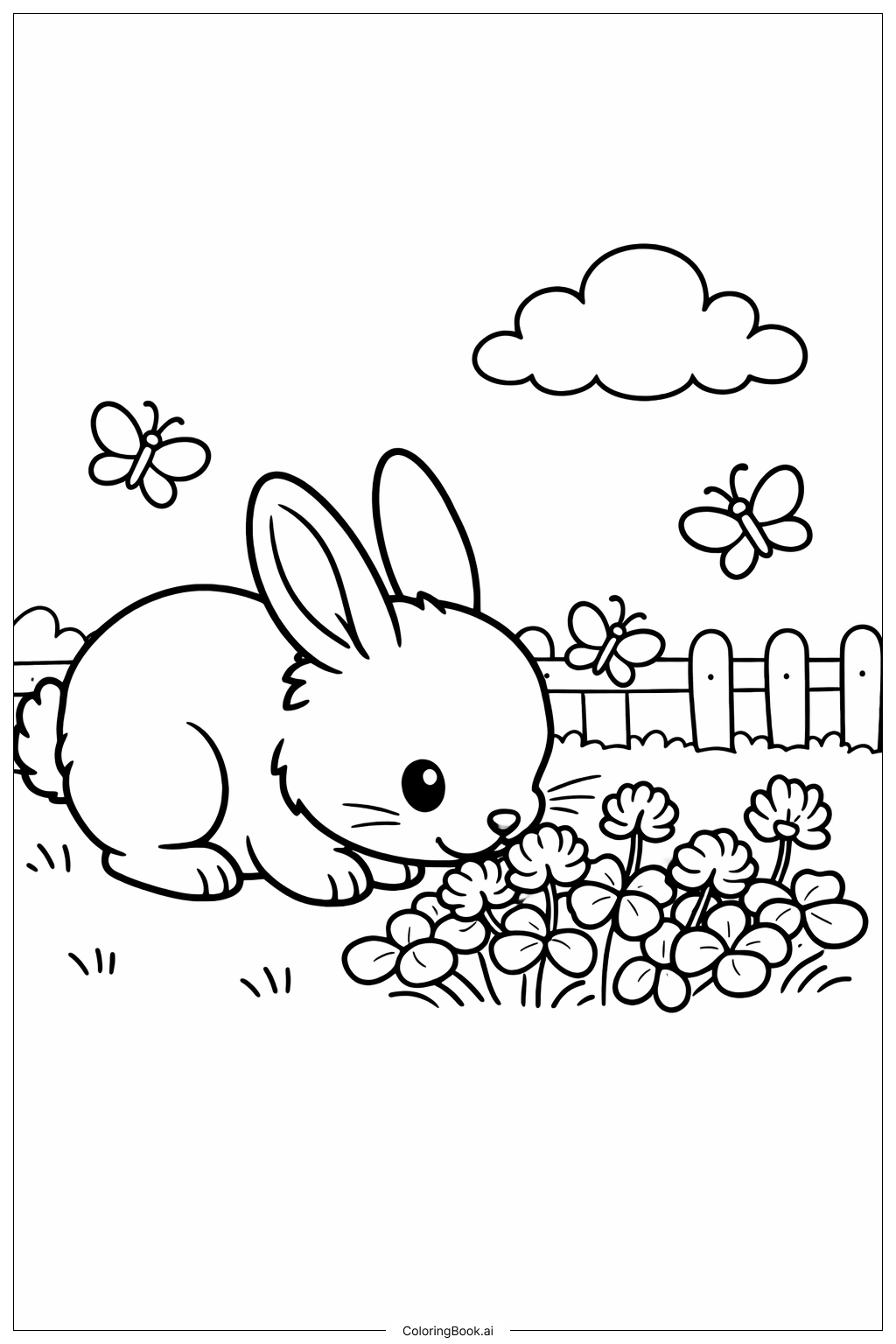
Coloring tips: How to color Rabbit and Clover Patch coloring page well?
Start with the rabbit's body using soft, warm tones like light gray, cream, or pale tan. Use a slightly darker shade on the ears, nose, and along the back to add gentle shading and dimension. Color the inner ear pink for a lifelike touch. For the clover leaves, use different shades of green — bright green for young leaves and a deeper forest green for older ones — to make the patch feel lush and varied. The clover blossoms look lovely in white, soft pink, or light purple. Use a warm yellow or golden tone for any sunny background areas. If butterflies are present, let kids go wild with bright, cheerful colors. Encourage children to try blending two colors side by side to create smooth transitions, especially on the rabbit's fur and the grassy ground.
Coloring challenges: Which parts are difficult to color and need attention for Rabbit and Clover Patch coloring page?
• Rabbit Fur Texture: The rabbit's body has smooth, rounded outlines that look simple but can be tricky to shade well. Keeping the coloring even without streaks requires patience, especially for younger children. Using short, light strokes in the direction of the fur helps create a soft and realistic look.
• Small Clover Leaves: The clover patch contains many small three-leaf shapes packed closely together. Coloring each leaf individually without going outside the lines takes careful control. A fine-tipped colored pencil or a thin marker works best for these detailed areas.
• Clover Blossoms: The round, multi-petal blossoms of the clover are small and made up of many tiny sections. Filling in each petal neatly with consistent color, especially using light shades like white or pale pink, can be challenging. Lightly layering color and leaving a touch of white space helps preserve the soft look of the flower.
• Background Depth: Creating a sense of foreground and background within the clover patch requires using different tones of green. Children may find it hard to decide where one plant ends and another begins. Using a lighter green in the back and darker green in the front helps separate the layers naturally.
• Smooth Blending on the Rabbit: Achieving a gradual transition from the lighter belly to the slightly darker back of the rabbit without harsh lines can be difficult. Practicing slow, gentle strokes and building color in thin layers makes the blending much smoother and more natural-looking.
Benefits of coloring books: Advantages of drawing Rabbit and Clover Patch coloring page
Coloring this Rabbit and Clover Patch page offers a wide range of benefits for children of all ages. The detailed clover leaves and small blossom shapes are excellent for building fine motor skills and improving hand-eye coordination. Carefully staying within the lines of the tiny three-leaf clovers trains pencil control in a fun and rewarding way.
The peaceful nature scene encourages children to slow down, focus, and practice patience — skills that are valuable both in school and in everyday life. Choosing colors for the rabbit's fur, the green leaves, and the colorful blossoms also sparks creativity and builds color awareness.
For younger children, this page introduces the concept of nature and simple plant shapes in a gentle, engaging way. For older children, the shading and blending challenges offer a more advanced creative exercise that builds confidence as they see their finished artwork come to life.
Coloring also has a calming effect. The quiet, repetitive motion of filling in shapes helps children manage stress and find a sense of calm focus. Completing a full coloring page gives children a satisfying sense of achievement. Sharing or displaying the finished page boosts self-esteem and pride in their work. Overall, this is a joyful and enriching activity for kids at any skill level.



